
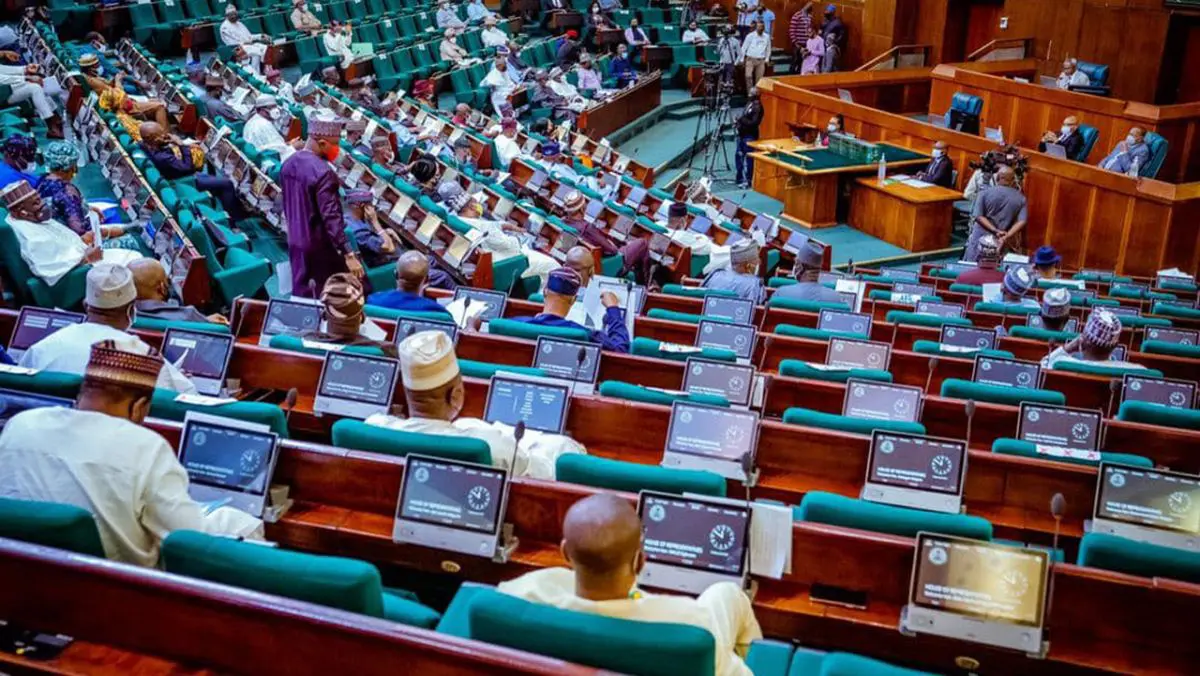
The Public Accounts Committee (PAC) of the House of Representatives has issued summons to the chairmen and finance directors of the six Advisory Councils in the Federal Capital Territory (FCT) in relation to alleged financial irregularities surpassing N100 billion.
This action came after an audit report prepared by the Auditor-General for the FCT Municipal Areas highlighted significant breaches of financial protocols within Abaji, Abuja Municipal, Bwari, Gwagwalada, Kuje, and Kwali Area Councils.
The audit for the financial year ending December 31, 2021, disclosed numerous cases of unremitted taxes and Value Added Tax (VAT) deductions, as well as deficiencies in maintaining and updating Fixed Asset Registers. Additionally, improper accounting was noted for various expenditures across these councils.
The report indicated that as of December 31, 2021, the total outstanding liabilities among the six councils amounted to N7.65 billion, which included taxes like unremitted pension deductions, Pay-As-You-Earn (PAYE), obligations for unpaid capital projects, and overdue VAT and withholding taxes owed to the Nigeria Revenue Service (NRS), the FCT Inland Revenue Service, Pension Fund Administrators, and contractors.
The details outlined in the report showed that the Abuja Municipal Area Council (AMAC) had N2.19 billion in liabilities, followed by Bwari Area Council with N1.49 billion and Kwali Area Council with N1.46 billion. Gwagwalada Area Council recorded N1.01 billion, Kuje Area Council had N892.2 million, and Abaji Area Council reported N593.8 million.
The Auditor-General criticized the councils for ineffective asset management, highlighting pervasive failures in properly maintaining and updating their Fixed Asset Registers. For instance, in Gwagwalada Area Council alone, non- current assets valued at N336 million were reportedly inadequately documented, raising concerns about potential asset losses. Similar issues were reported in other councils as well.
Additional concerns arose regarding a total expenditure of N24.87 billion incurred by the councils in 2021, which spanned personnel costs, overheads, and capital projects. Despite an 89% increase in total expenditures, amounting to N11.7 billion compared to the previous year, the report noted that 37% of funds allocated for capital projects were not properly accounted for.
An expenditure breakdown revealed that AMAC spent N5.03 billion, while Gwagwalada spent N4.66 billion, Kuje N3.85 billion, Kwali N3.84 billion, Bwari N3.74 billion, and Abaji N3.71 billion.
Further audit findings for 2022 and part of 2023 highlighted additional infractions, including the understatement of Internally Generated Revenue (IGR), unauthorized disposal of assets, failure to disclose statutory revenues, and non-remittance of withholding tax.
In response to these findings, the Chair of the Public Accounts Committee, Rep. Bamidele Salam, confirmed that the audit results had been received by the committee. He announced that letters summoning the chairperson and finance directors of the six councils had been dispatched, requiring their appearance before the committee to address the audit discrepancies.
Salam stressed that the officials have been formally notified to appear on Wednesday, February 11, 2026, warning that failure to show could result in the House invoking its constitutional authority, including arrest.
He further remarked that the councils failed to conduct audits and submit their financial accounts for the years 2023, 2024, and 2025, in contradiction to statutory regulations. Salam emphasized the necessity for transparency and sound management of public funds, cautioning that any individuals found guilty of misconduct would face legal repercussions.
Comments (0)
You must be logged in to comment.
Be the first to comment on this article!