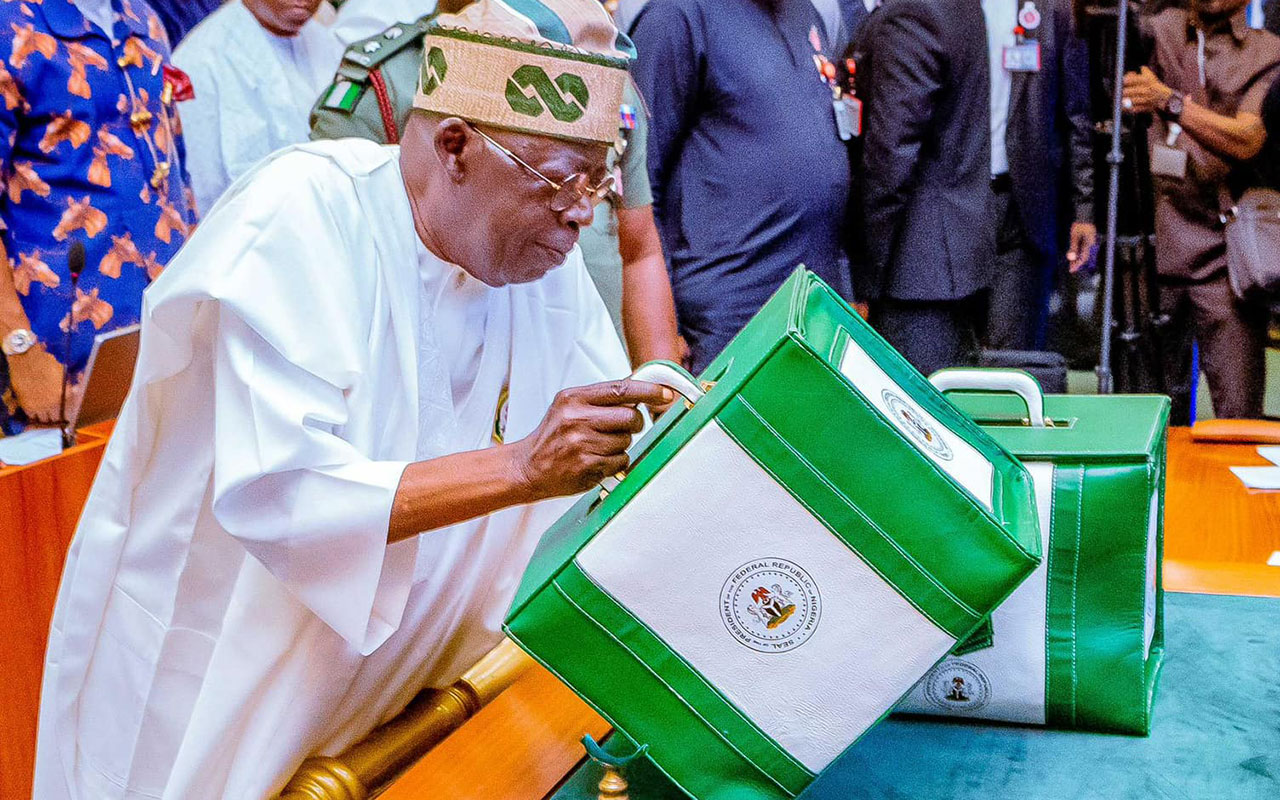
President Bola Tinubu has formally requested the House of Representatives to endorse the specific terms governing ₦10.79 trillion in external borrowing already embedded within the 2026 Appropriation Act. During Wednesday's plenary session, Speaker Tajudeen Abbas read the official communication from the executive and promptly directed it to the joint committees on Aids, Loans and Debt Management, as well as Finance, for thorough legislative scrutiny. Calculated at the budget's benchmark exchange rate of ₦1,400 per United States dollar, this foreign financing component translates to roughly $7.7 billion.
This legislative development follows the Senate stage of the same statutory process, which previously advanced through the upper legislative chamber. Leadership in both chambers has emphasized that this communication does not represent a fresh borrowing authorization. The National Assembly already granted the underlying loan approval when it passed the 2026 budget framework. Instead, the current legislative action seeks formal statutory sign-off specifically on the repayment terms, interest structures, and operational conditions associated with the credit facilities.
The ₦10.79 trillion represents the external segment of an aggregate ₦29.2 trillion new borrowing plan slated for the 2026 fiscal year. The remaining ₦18.4 trillion is scheduled for domestic mobilization. Collectively, these financing strategies are designed to partially bridge an overall fiscal deficit of ₦31.4 trillion. This current framework supersedes an earlier, larger proposal submitted by the executive in October, which covered approximately $20.5 billion and €1.045 billion across the 2026 and 2027 fiscal periods. Senate President Godswill Akpabio noted that the revised arrangement provides enhanced transparency and operational flexibility regarding capital mobilization.
Where will the borrowed funds be channeled?
According to the official correspondence transmitted to the legislature, the proceeds are earmarked for critical national sectors, including infrastructure and transport, power generation and transmission, agricultural development, defence and security, as well as healthcare and education systems. Disbursement of these funds will be channeled through the Central Bank of Nigeria on behalf of the Federal Government, a mechanism the executive administration states will also bolster the country's foreign exchange reserves.
To raise these external funds, the government intends to utilize international capital markets primarily through Eurobonds due to their relative execution speed. Additional funding streams include concessional and commercial credits, facilities from the International Monetary Fund, bridge financing arrangements, and syndicated loan structures. Final interest rates and repayment tenors will ultimately depend on prevailing global market conditions at the exact time individual agreements are finalized.
How does this impact Nigeria's existing liabilities?
Official data released by the Debt Management Office places Nigeria's aggregate public debt at ₦166.79 trillion as of the end of June 2026. This reflects a substantial increase of ₦7.44 trillion over the preceding three months and an expansion of ₦14.39 trillion compared to the corresponding period in the previous year. Consequently, servicing this accumulated debt burden remains one of the largest expenditure commitments in the national budget.
Out of the ₦68.32 trillion total appropriation approved for 2026, debt servicing accounts for ₦15.81 trillion. This translates to roughly 23.14 percent of the entire budget—meaning nearly one out of every ₦4.32 spent by the government goes toward debt obligations before allocations are made for critical infrastructure, public sector wages, or medical supplies. For perspective, the total capital expenditure allocation for 2026 stands at ₦32.29 trillion, making debt servicing approximately half of all planned capital investments.
What factors require close monitoring?
Economic analysts point out that public borrowing is not inherently detrimental if capital is directed toward productive ventures that generate economic returns. However, external borrowing introduces unique fiscal vulnerabilities, notably exposure to foreign exchange fluctuations. Because the ₦10.79 trillion liability is denominated in foreign currency based on an exchange rate of ₦1,400 to the dollar, any depreciation of the naira over the lifecycle of the loans will correspondingly elevate domestic repayment costs, placing additional pressure on the national budget.
Furthermore, because debt servicing obligations take statutory precedence over discretionary spending, every naira committed to loan repayment reduces the fiscal space available for underfunded domestic priorities. As the joint committees continue their legislative review, economic observers await the official publication of the definitive loan terms and associated interest rates.