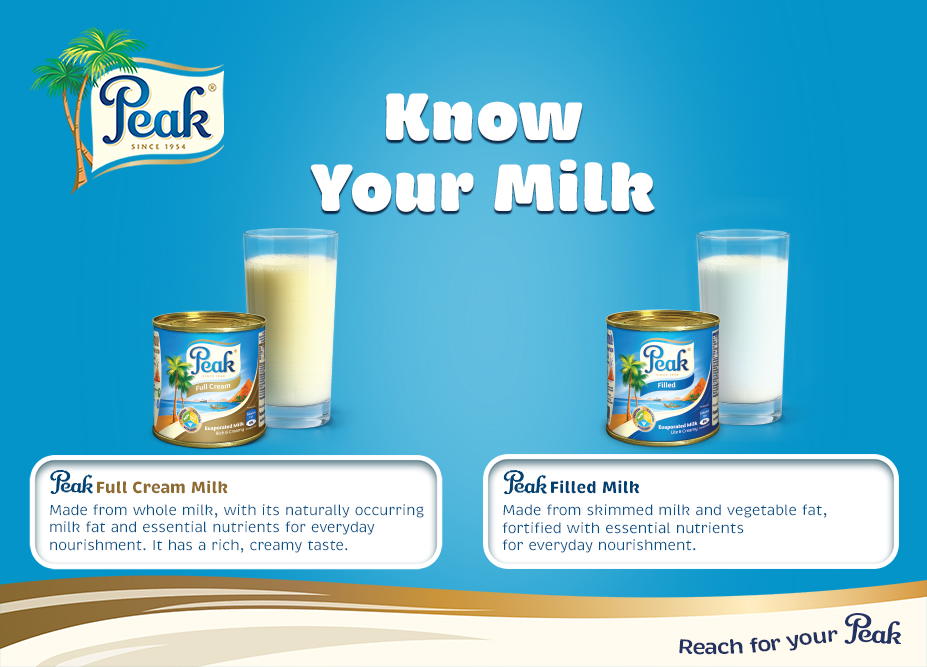
A dietitian in a Lagos supermarket stepped in to assist a young couple who were unsure which milk to buy, explaining the distinction between dairy and non‑dairy options and clarifying the roles of full‑cream, filled and child‑specific milks, enabling them to select the product that best meets their household’s nutritional needs.
**Key facts**
- Dairy milk comes from animals such as cows, goats or sheep and supplies high‑quality protein, calcium and essential vitamins.
- Full‑cream milk retains the natural milk fat, giving it a rich, creamy texture and a complete nutrient profile.
- Filled milk substitutes part or all of the milk fat with vegetable oils, altering its fat composition while still delivering protein and calcium.
- Peak 456 Growing‑Up Milk is fortified with DHA and vitamins to support brain development in children aged four to six.
- The guide recommends asking three questions before purchase: which dairy type is needed, who the milk is for, and whether it meets the intended nutritional purpose.
What are the two main milk categories?
When shoppers enter the dairy aisle, the first decision is whether to choose **[dairy milk](https://en.wikipedia.org/wiki/Milk)** or a plant‑based alternative. Dairy milk is derived from animal sources, most commonly cows, and naturally contains a balance of protein, calcium and vitamins that support growth and bone health.
How do full‑cream and filled milks differ?
Within the dairy group, the two most common products are **[Full Cream Milk](https://en.wikipedia.org/wiki/Full_cream_milk)** and **[Filled Milk](https://en.wikipedia.org/wiki/Filled_milk)**. Full‑cream milk is made from whole cow’s milk and retains its natural fat, delivering a creamy taste and a full complement of nutrients. Filled milk, on the other hand, replaces some or all of the milk fat with vegetable oils, resulting in a different fat profile while still providing protein, calcium and essential vitamins. The choice depends on personal health goals and taste preferences.
Which milk is suitable for young children?
For children aged four to six, **[Peak 456 Growing‑Up Milk](https://www.peakmilk.com.ng/peak-456/)** is formulated to meet their specific nutritional requirements. It supplies high‑quality protein, calcium, and is enriched with DHA, an omega‑3 fatty acid that aids normal brain development during early childhood.
How can shoppers make an informed choice?
The dietitian advised the couple to consider three simple questions before adding any milk to their basket:
- Which dairy type do I need – Full Cream or Filled?
- Who is the intended consumer – an adult, a child, or someone with specific dietary needs?
- Does the product’s nutrient profile align with my health goals and intended use (drinking, cooking, baking, etc.)?
By answering these questions, shoppers can move beyond attractive packaging or brand familiarity and select the milk that truly fits their lifestyle.
Choosing with confidence
The encounter highlighted that many Nigerian consumers face uncertainty amid an expanding range of milk products. Understanding that the market offers both dairy and non‑dairy options, and that within dairy there are distinct products such as Full Cream, Filled and age‑appropriate milks, empowers shoppers to make decisions based on nutrition rather than guesswork. Knowledge, therefore, is the first step toward confident, health‑focused purchasing.