
Throughout her life, a girl reaches a stage where societal expectations compel her to adopt a more 'professional' demeanor. This often includes conforming to standards like long skirts, minimal makeup, single pearl accessories, and foregoing braids in favor of straight wigs. The perception of braids as 'ghetto' and 'unprofessional' not only stemmed from racial biases but also mirrored the esteem accorded to the hairstyles of their white counterparts. This urge for conformity had an unfortunate infiltrative effect on urban Nigeria, leading to the view that a woman with natural hair was seen as immature.
The discourse began to shift noticeably in 2017, catalyzed by the Nollywood movie Isoken, featuring Dakore Akande. In the film, the protagonist Isoken encounters peer pressure advising her to modify her natural hair, which she prefers. This illustrates how Eurocentric beauty standards permeate Nigerian culture, fueled by the dominant media narratives of Hollywood and corporate influences. Such internalized racism forced many women to sacrifice their personal heritage for the sake of fitting in.
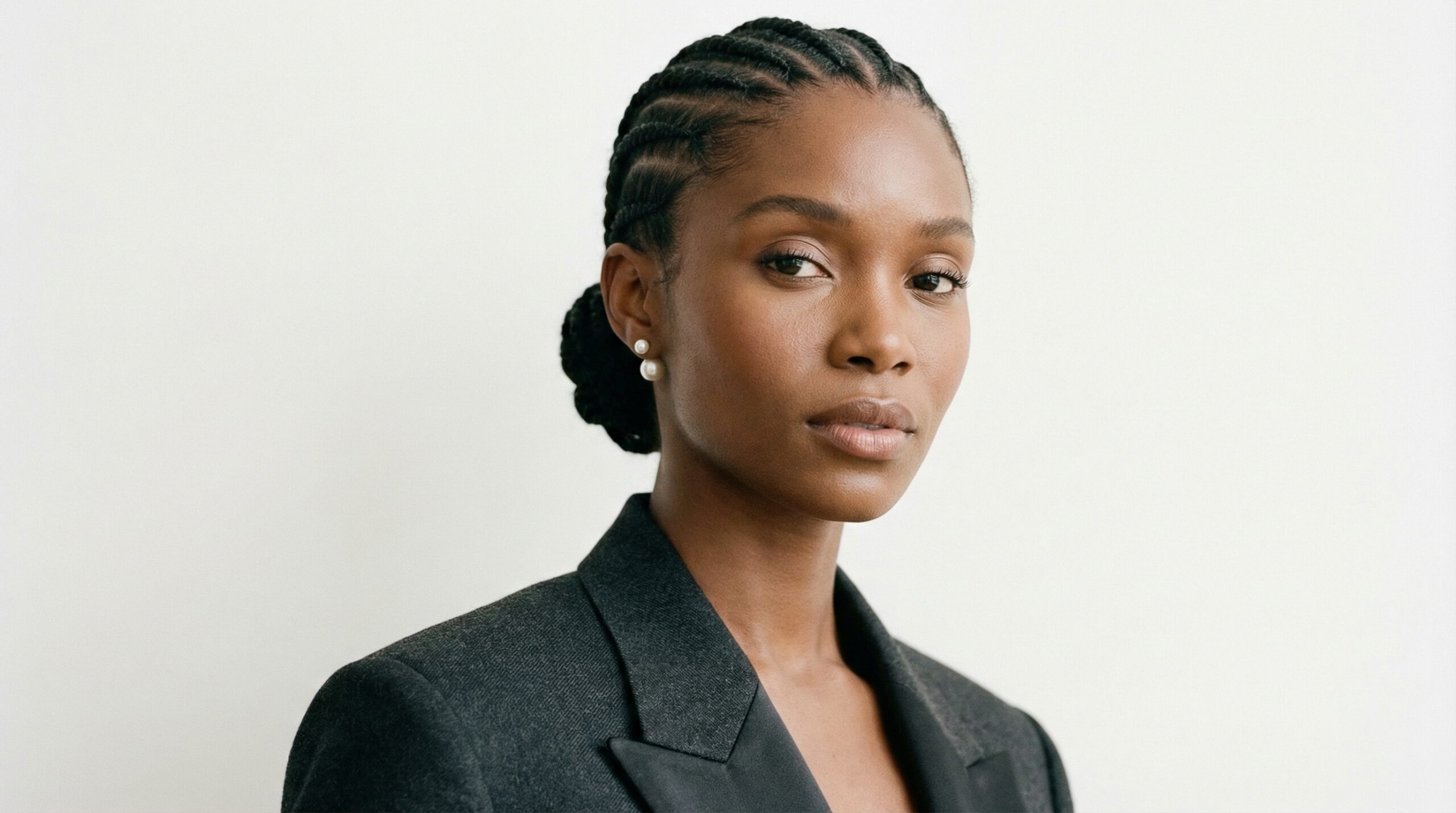
Given Nigeria's rich cultural traditions surrounding protective hairstyles, the adverse perceptions eventually started to fade, particularly with the emergence of social platforms like TikTok, and a nostalgic revival of early 2000s Nollywood films showcasing actresses with innovative braid designs. Various trends dubbed #Y2K Nollywood or #NollyBabes became popular, encouraging women to reinterpret these classic styles. Influential actresses, including Genevieve Nnaji, Rita Dominic, and Thelma Okhaz, inspired many to explore diverse hairstyles beyond the previously acceptable fade.
The trend was not limited to women, as male actors like Maurice Ndubueze and Jim Iyke also contributed to the growing acceptance of expressive hairstyles. The infiltration of bold braided hairstyles into the workplace was solidified by the fresh wave of female musicians such as Tems, Ayra Starr, and Tyla, who embraced these styles as a form of self-expression, departing from traditional weave styles familiar to audiences.
As braids gained visibility at major events, music videos, and award ceremonies, they became aspirational and fashionable, creating a sense of belonging as new trends emerged regularly, inviting everyone to partake in this cultural shift.
The rise of younger professionals in both corporate and startup environments has further relaxed traditional grooming norms. This new cohort of professionals, often labeled as the 9-to-5 Baddies, along with the less rigid workplace cultures, has played a pivotal role in dismantling older beauty standards driven by conformity.
Though the stigma associated with braids has not been entirely eradicated, it is starting to wane. Today, braids are acknowledged as a glamorous and sophisticated choice that honors cultural roots while allowing for creative expression without compromising individuality.
Comments (0)
You must be logged in to comment.
Be the first to comment on this article!