
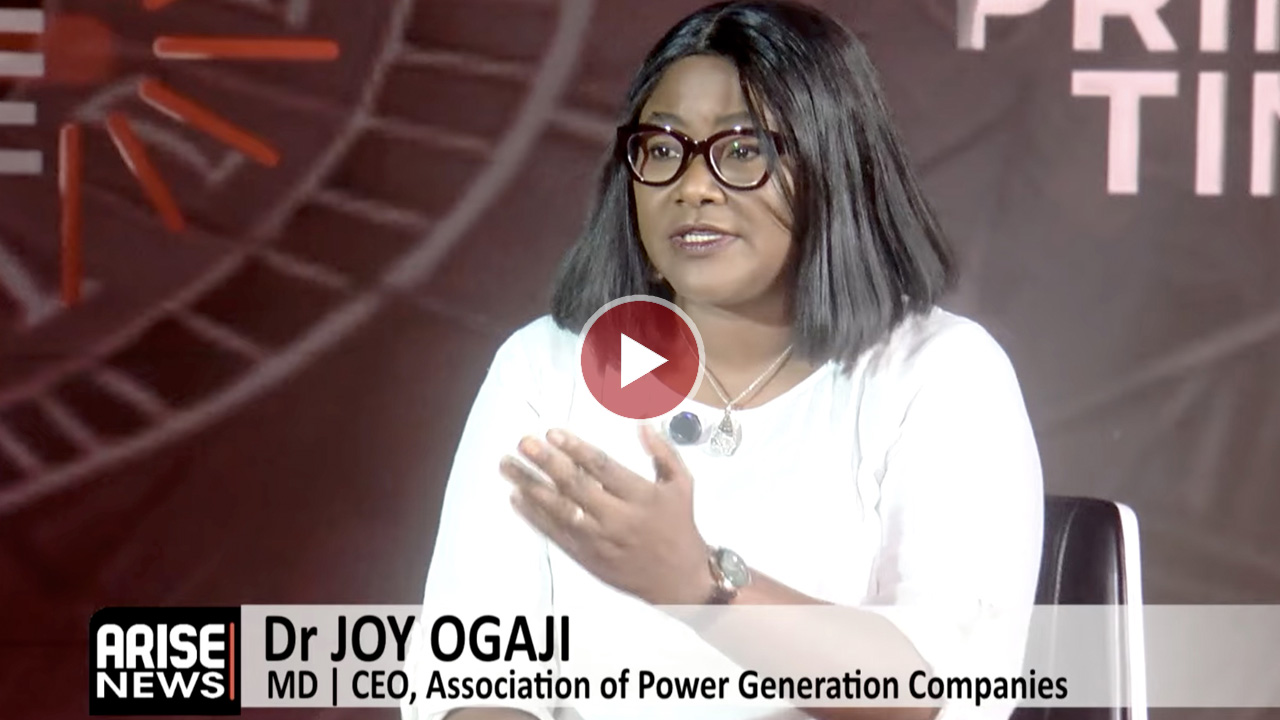
Dr. Joy Ogaji, the Managing Director and CEO of the Association of Power Generation Companies, has claimed that the longstanding power outages in Nigeria are caused by inadequate monitoring and enforcement throughout the industry. She emphasized that the repeated instances of grid failure are not random occurrences but are indicative of more profound issues related to governance and coordination failures affecting the power sector.
These statements were made during a recent discussion with ARISE NEWS regarding the ongoing challenges facing Nigeria's power sector.
Ogaji commented, "The process of privatizing the power sector was well thought out, designed, and executed. However, where we fell short was in the monitoring and enforcement processes, which have consistently been problematic not just in the power sector. We excel in formulating plans, but when it comes to actual implementation and enforcement, we encounter numerous obstacles. This is not a new fact for anyone in this discussion."
She further noted, "Monitoring and enforcement still face major challenges today; these challenges reflect underlying structural issues related to leadership, coordination, and accountability within the sector."
Addressing concerns about rising electricity tariffs, Dr. Ogaji acknowledged shared responsibility among stakeholders but maintained that the root of the power sector’s issues lies in ineffective leadership and a lack of accountability.
"As mentioned earlier, this is fundamentally a leadership issue. If the President were to mandate that, ‘The power sector must rectify its issues within the next six months or those in charge will be dismissed,’ significant changes would likely occur," she remarked.
In reference to the Minister of Power’s recent apology to the public, Dr. Ogaji expressed skepticism regarding promises for rapid resolution of the power situation, stating, "I am not involved in politics. I do not fully grasp the political landscape. I am a technocrat and will speak from an expert perspective. The Minister has a constitutional right to express his view, and the public can either accept or reject that. However, I remain unconvinced about the credibility of the minister’s two-week promise to restore normalcy."
Dr. Ogaji highlighted that a resolution to Nigeria's electricity crisis is feasible with the right political will. "When there is a commitment, solutions can emerge. The primary requirement is political will. We must prioritize this as a critical issue."
She advocated for placing electricity at the forefront of national agendas, arguing that doing so could significantly enhance the economy, improve industrial productivity, elevate educational standards, boost healthcare, and support small and medium enterprises (SMEs).
"Once we resolve power issues, industries will thrive, educational challenges will diminish, healthcare will improve, and many SMEs will operate smoothly," she stated.
Additionally, Dr. Ogaji affirmed that Nigerians are ready to pay for consistent electricity. "There is a misconception among the government that Nigerians are unwilling to pay for power, which leads to efforts to provide patronizing assistance. However, I want it to be clear: Nigerians are ready to pay for reliable electricity. If we can guarantee consistent service, people are willing to pay for it."
Beyond just political will, she insisted that the government must introduce transparent policies, enforce accountability, and tackle the structural difficulties within the sector to secure a reliable power supply.
"These issues can be managed effectively with strong leadership and coordination. The resolution of leadership issues will consequently align everything else. Leadership dictates policy, and policy governs regulation," she concluded.
Acknowledging public frustration regarding the high costs of electricity and poor service delivery, Dr. Ogaji reiterated that the challenges facing the power sector are manageable with strong leadership. "I can empathize with the frustrations experienced by Nigerians. However, I firmly believe that the issues within the power sector, while daunting, are not impossible to resolve. We simply need effective leadership. If we address the leadership question, everything else will follow. A declaration of a state of emergency in the power sector from the Presidency would be a significant first step."
Comments (0)
You must be logged in to comment.
Be the first to comment on this article!