
Nigeria's macroeconomic landscape has evolved from a state of systemic fragility to one of managed stability, bolstered by stronger financial fundamentals, improved foreign exchange supply, and significant policy reforms.
In an interview with ARISE News, economist and energy analyst Kayode Omosebi emphasized that the nation’s economic outlook has seen a considerable upswing due to a solid framework in its balance of payments and a stabilized monetary framework.
Omosebi stated that Nigeria's external financial position has strengthened remarkably, with a reported net balance of payments surplus approaching $6 billion, largely due to a trade surplus amounting to $13 billion. He highlighted that this reflects a decrease in reliance on imports and a growth in local refining capacity.
"The naira now enjoys a more robust medium-term anchor," Omosebi remarked. "This is a result of a blend of fundamental and monetary stability. Our balance of payments stands more favorably, featuring a net surplus of about $6 billion spurred by a $13 billion trade surplus."
He observed that the dynamics of Nigeria's foreign exchange market have improved compared to past experiences marked by scarcity and instability.
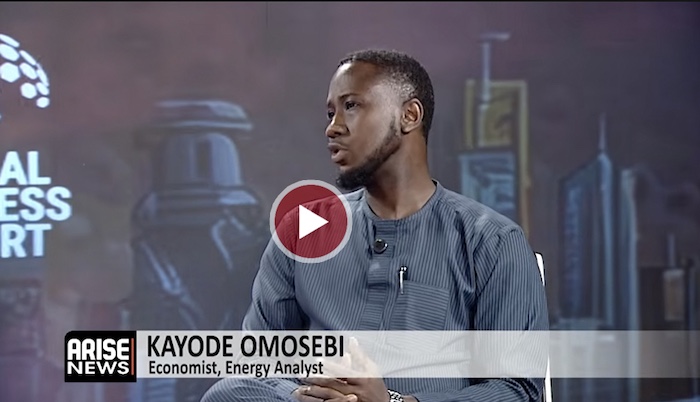
"Currently, there isn’t a dominant buyer or seller disrupting the market. It is mainly a free market where supply is adequate," he elaborated.
Moreover, Omosebi attributed part of the progress to higher portfolio investments and increased remittances from Nigerians living abroad, which he described as vital support for the country’s foreign exchange inflows.
"Portfolio investments have reached approximately $6 billion, a significant jump from around $1.2 billion previously," he mentioned. "Concurrently, remittances from Nigerians abroad have proven to be a game changer in our foreign exchange revenue."
The economist further observed that Nigeria's foreign exchange reserves now afford a more robust import cover, endowing monetary authorities with enhanced flexibility in navigating economic shocks.
"In the past, we struggled with a cover of four to six months for imports, but we are now seeing over twelve months’ worth. This situation empowers the Central Bank to better manage the market," he asserted.
Nonetheless, Omosebi cautioned that ongoing global geopolitical tensions, particularly in the Middle East, could still threaten Nigeria's economic perspective through potential spikes in energy prices.
"Should crude oil prices surge significantly, we will inevitably experience an upward shift in energy costs within Nigeria," he pointed out. "Prices of diesel and petrol could rise due to higher landing costs and refining margins."
Despite these potential challenges, he noted that the overall influence of increasing oil prices could still be positive for Nigeria, particularly because of elevated export revenues.
"The situation holds both positive and negative aspects, but overall, it leans positively for Nigeria as higher crude prices lead to increased oil revenues," he clarified.
He also warned that increases in energy prices could hinder the rate of inflation reduction, especially since transport and energy costs are leading contributors to inflation in Nigeria.
"Energy and transport expenses have a significant impact on inflation trends," he said. "We might not see a rapid decline in inflation as anticipated, owing to these price shocks."
Additionally, he suggested that the Central Bank of Nigeria (CBN) is likely to maintain a vigilant monetary policy to ensure stability while contending with external economic pressures.
"There remains a need for cautious management," Omosebi advised. "Although we have observed a slight easing in inflation, we continue to operate within a stringent monetary policy framework."
Comments (0)
You must be logged in to comment.
Be the first to comment on this article!