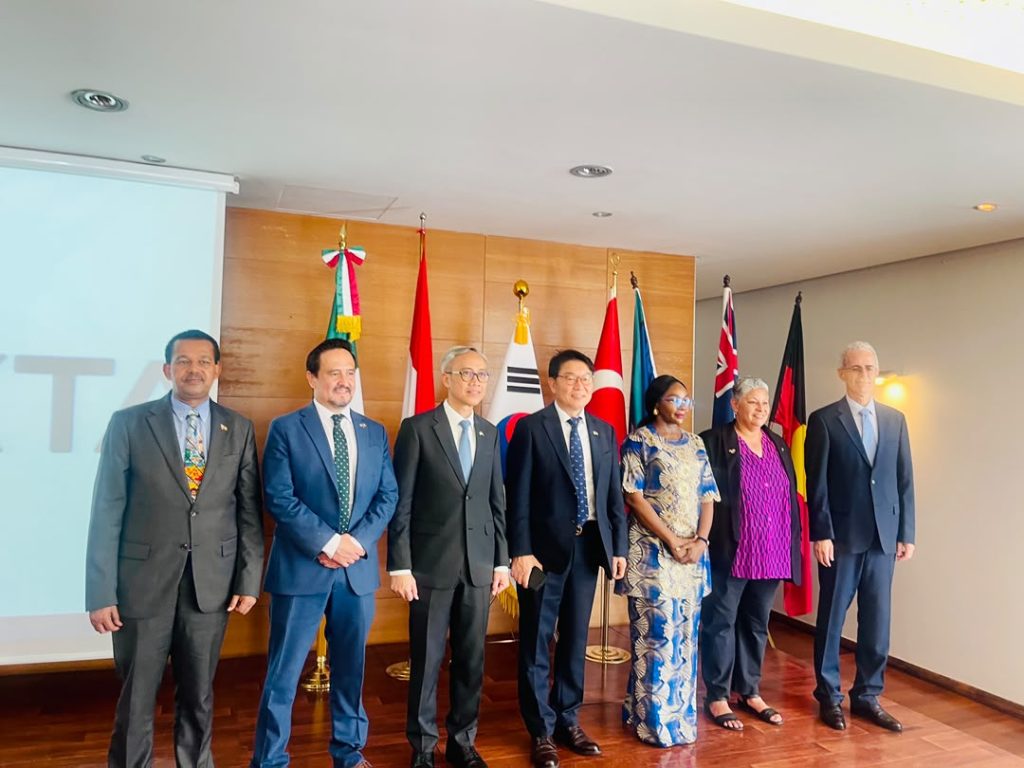
Diplomats from the cross‑regional partnership MIKTA and officials of Nigeria's federal government met on Tuesday in Abuja to demand better access to climate finance, deeper international cooperation and greater investment in practical solutions for developing countries ahead of the 31st United Nations Climate Change Conference, known as COP31, scheduled for 9‑20 November in Antalya, Turkey.
The roundtable brought together envoys from Australia, Turkey, Indonesia, the Republic of Korea, Mexico and Ethiopia, together with key stakeholders from the climate sector, to discuss how to turn climate pledges into projects that boost economic growth, expand energy access, support agriculture and enhance community resilience.
What did the Australian High Commissioner say?
Australian High Commissioner to Nigeria, Leilani Bin‑Juda, emphasized that climate action must yield tangible results for the most vulnerable nations. She noted that many developing countries struggle to obtain climate finance because of complex applications, fragmented funding streams, onerous reporting and long delays. Bin‑Juda added that Australia is collaborating with Turkey on COP31 and with Pacific partners to ensure their priorities are reflected in global climate talks. She highlighted a Pacific‑led Action Plan launched at Pre‑COP in Fiji on 8 October, which aims to simplify funding applications, speed up approvals, mobilise private capital and build capacity for investment‑ready projects. "For Australia, COP31 is about turning climate ambition into practical outcomes," she said, urging Nigeria to back the initiative.
How is Turkey supporting climate implementation?
Turkish Ambassador Mehmet Poroy stressed that COP31 should focus on delivering on existing commitments and converting ambition into measurable results. He called for adequate financial resources, technology transfer, institutional capacity and project‑preparation support for African nations. Poroy outlined Turkey's Climate Implementation Bridge initiative, developed with the United Nations Development Programme, designed to link climate priorities with appropriate financing and private capital without creating a new fund. He also noted that cooperation between MIKTA members and African partners could strengthen implementation as the world prepares for COP31 and the subsequent COP32, which Ethiopia will host in 2027.
What financing needs did Indonesia highlight?
Indonesian Ambassador Bambang Suharto pointed out that achieving climate targets in developing economies requires a blend of public funds, private investment and international aid. Indonesia estimates a total need of about $472.6 billion to meet its climate goals, with annual financing requirements of roughly $14.5 billion through 2030, compared with a state budget allocation of $4.42 billion per year. Suharto said Indonesia is exploring green sukuk, blended finance, thematic bonds and concessional funding, and called for the delivery of existing climate finance commitments and stronger project‑preparation support. He also highlighted ocean conservation, mangrove restoration, early‑warning systems and sustainable fisheries, and expressed readiness to discuss a possible Indonesia‑Nigeria Climate Finance and Resilience Partnership covering climate‑smart agriculture, land restoration, coastal protection, clean energy and green industrialisation.
What are South Korea's climate cooperation plans?
South Korean Ambassador Jeong Yoan outlined opportunities to deepen climate collaboration with Nigeria through renewable energy, agri‑technology, infrastructure and green investment. Korea aims for carbon neutrality by 2050 and targets a 53‑61 % reduction in net greenhouse‑gas emissions by 2035 relative to 2018 levels. A joint project slated for 2026‑2030, involving the Korea International Cooperation Agency (KOICA) and the Food and Agriculture Organisation (FAO), will create green jobs for young people in agriculture and food systems, providing climate‑smart training and digital technology to improve food security and resilience. Jeong stressed that a stable investment climate, clear regulations and reliable infrastructure are essential to attract long‑term private capital. He cited Nigeria's estimate of needing about $337 billion between 2026 and 2035 to meet its climate commitments, underscoring the importance of domestic resources, international financing and private‑sector participation.
How did Mexico and Ethiopia contribute to the discussion?
Mexico's Charge d’Affaires, Jose Manuel Briseno Flores, reiterated that climate finance must translate into on‑the‑ground solutions such as renewable‑energy products that meet community needs while advancing the clean‑energy transition. Ethiopian Ambassador Legesse Geremew Haile warned that Africa bears disproportionate climate risks despite contributing minimally to global emissions. He called for direct, grant‑based financing and technology transfers, citing Ethiopia's Climate‑Resilient Green Economy Strategy and Green Legacy Initiative as models that combine environmental protection, job creation and sustainable development. Haile expressed optimism that hosting COP32 in 2027 will place African development priorities, just energy transitions and loss‑and‑damage considerations at the centre of the global climate agenda.
In closing, the Director‑General of the National Council on Climate Change (NCCC), Omotenioye Majekodunmi, affirmed Nigeria's commitment to move from pledges to implementation. She highlighted the need for predictable, accessible adaptation finance, decentralised climate action, gender inclusion and a just transition. Majekodunmi stressed that empowering women and youth as decision‑makers and beneficiaries is crucial, and that the transition to clean energy must safeguard energy security, job creation and economic equity. Nigeria stands ready to work with MIKTA, the UNFCCC and other partners to ensure COP31 yields concrete outcomes.