
The latest United Nations resolution concerning reparations tied to slavery and colonialism has transitioned the discourse from ethical debates to a legally actionable framework, allowing African nations and victims the chance to file claims in court.
In a conversation with ARISE News on Thursday, Dr. Nicholas Erameh characterized the resolution as a significant advancement, clarifying that it lays down a formal legal basis to contest the wrongs of colonialism, irrespective of whether there are immediate verdicts.
Erameh pointed out that the essence of this resolution is its formal recognition of historical grievances within the legal system. "This resolution permits cases regarding colonial exploitation and transatlantic slavery to be posed in courts with enforceable legal implications, diminishing reliance solely on moral persuasion," he stated.
He underlined the difference between moral obligations and legal ones, mentioning that several nations that engaged in reparations dialogues were often acting out of goodwill. However, he noted that the resolution now provides victims a formal legal avenue to claim compensation, irrespective of the goodwill shown by previous colonial entities.
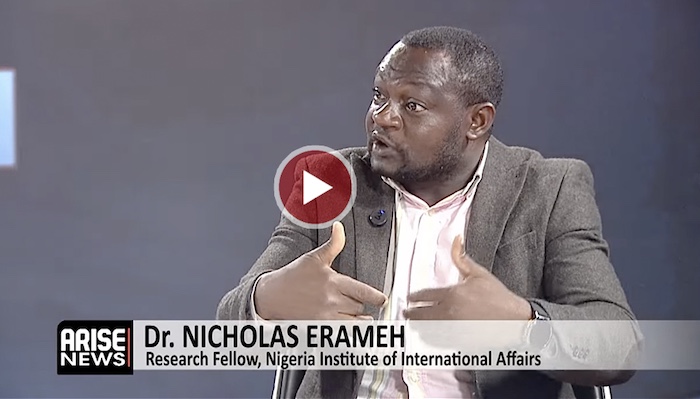
When addressing the nations that either abstained from or voted against the resolution, including the United States, Israel, and several European countries, Erameh remarked that their hesitance underscores the legal challenges that arise. "Once the aspect of legal accountability is introduced, nations tend to exercise caution. Nevertheless, the reality remains: victims now possess a platform from which to assert their entitlements under international law," he explained.
The UN resolution does not restrict the blame to states alone. Erameh emphasized that institutions, organizations, and individuals involved in the historical wrongs are also subject to legal accountability. "This change emphasizes the rights of victims and their perception and pursuit of justice," he added.
Commenting on the broader reaction from Africa, Erameh pointed out that while Ghana took the lead in the UN effort, Nigeria and other nations are integral participants within the African Union setup. He asserted that the legal empowerment under this resolution benefits all African countries, even when certain nations lead specific initiatives.
He contrasted the efforts with those of Caribbean nations in CARICOM, which have been increasingly assertive in their reparations pursuits. "Though Africa might seem slower in its responses, this resolution now grants the continent an equivalent legal standing to systematically confront historical injustices," he noted.
Addressing concerns regarding implementation, Erameh maintained that the resolution’s potency lies in its legal groundwork. "Even if political opposition arises, the embedding of these matters into international law guarantees that they cannot be dismissed purely based on moral or diplomatic considerations," he asserted.
On practical implementation, Erameh recommended that African nations and victims start developing legal systems and institutions to facilitate claims effectively while ensuring accountability and preventing misappropriation of funds. "Absent adequate structures, even legally acknowledged claims risk falling short of yielding concrete results," he warned.
He concluded that the resolution signifies a pivotal moment in Africa’s quest for justice, enabling both nations and individuals to hold historical offenders accountable. "Now, it is no longer merely about recognition or apologies; it concerns enforceable legal rights," Erameh stated emphatically.
The dialogue highlighted the critical role of legal empowerment in international relations, with Dr. Erameh asserting that the UN resolution marks a substantive step towards addressing centuries of colonial exploitation through legal channels instead of mere rhetoric.
Comments (0)
You must be logged in to comment.
Be the first to comment on this article!