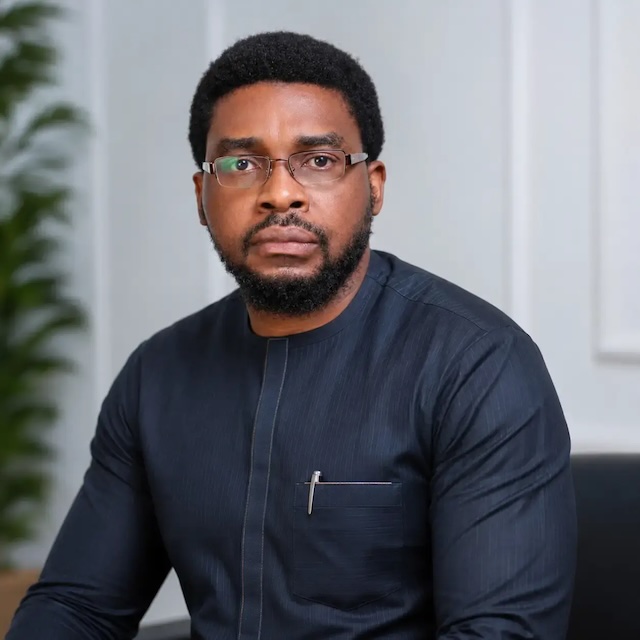
Chris Ngwodo, director general of the [Office for Strategic Preparedness and Resilience (OSPRE)](https://osprenigeria.gov.ng), contends that Nigeria’s unity cannot rely solely on rhetorical appeals. He asserts that lasting cohesion demands fair institutions, shared prosperity and leadership that recognises the common humanity of all citizens.
**Key points**
- The 2026 Nigeria Social Cohesion Survey by the [Africa Polling Institute](https://africapolling.org) recorded a Social Cohesion Index of 48.8 %, up from 46.8 % in 2025 – the highest since the survey began in 2019.
- For the first time, a majority of respondents identified primarily as Nigerians rather than by ethnic, religious or regional labels.
- 77 % expressed willingness to cooperate with people from other ethnic groups to strengthen national unity.
- Ngwodo warns that identity has become a primary currency for accessing public jobs, patronage and state resources, turning citizenship into a contest for the "national cake."
- He calls for double‑digit, inclusive economic growth, expanded education, employment programmes and social protection as the backbone of any anti‑polarisation strategy.
**What fuels the current divide?**
Nigeria’s political economy often channels public appointments, economic patronage and resource allocation through communal affiliations. This practice reinforces the indigenes‑settler distinction, elevating ancestral provenance above constitutional citizenship. Socio‑economic grievances are frequently reframed as ethnic or religious hostility, masking deeper disputes over land, livelihoods and representation.
**How can the nation reverse the trend?**
- Enforceable guarantees of equal citizenship and merit‑based public service.
- Civic education that challenges inherited prejudices and promotes a historically informed view of inter‑group interactions.
- Investment in infrastructure—roads, railways and safe transport corridors—to reduce psychological and physical distances between communities.
- Policies that accelerate urbanisation’s cosmopolitan effects, encouraging inter‑ethnic commerce, professional ties, friendships and marriages.
**Why economic transformation matters**
When legitimate opportunities are scarce, people gravitate toward narrower communal networks for security. Political entrepreneurs exploit this by offering ethnic or religious protection as a substitute for effective governance. Ngwodo notes that similar patterns have emerged in Western democracies and in South Africa’s xenophobic outbreaks, underscoring that the problem is not uniquely Nigerian.
**What does the data suggest?**
The upward trend in the Social Cohesion Index and the shift toward a national identity indicate that integrative forces remain potent. While perceptions of polarisation persist, these findings challenge the narrative that Nigeria is irredeemably fractured.
**What should the government prioritise?**
- Enact and enforce laws that guarantee equal citizenship.
- Deploy civic education programmes that interrogate historical biases.
- Ensure public institutions reward merit, fairness and inclusion.
- Restore security along highways and commercial corridors to facilitate trade and social interaction.
In summary, Ngwodo believes that Nigeria’s diversity is not a death sentence. With intelligent policymaking, inclusive citizenship and leadership that values empathy, the nation can move beyond competition‑driven conflict toward a shared, prosperous future.