
The Nigeria Customs Service (NCS) has initiated a capacity-building program focused on integrating Artificial Intelligence (AI) into its revenue operations. The goal is to significantly increase revenue collection, minimize leakages, and bolster transparency and accountability across all national activities. The announcement was made in Abuja by the Comptroller-General of Customs, Mr. Adewale Adeniyi, during the commencement of training on AI-driven revenue generation and remittances for the NCS.
Adeniyi highlighted that technology has been instrumental in improving the service's operations over the past decade, noting the effective use of risk management systems for better assessment and monitoring. He emphasized the NCS's commitment to ongoing reforms centered on transparency and accountability, aiming to strengthen revenue generation while adhering to set standards.
The service is employing artificial intelligence to enhance revenue streams without imposing additional burdens on stakeholders. This technology is expected to help identify under-declared goods and other irregularities. Adeniyi explained that AI-powered cameras and systems are now deployed to detect patterns, track movements, and flag anomalies, thereby improving the ability to prevent irregularities and enhance decision-making processes.
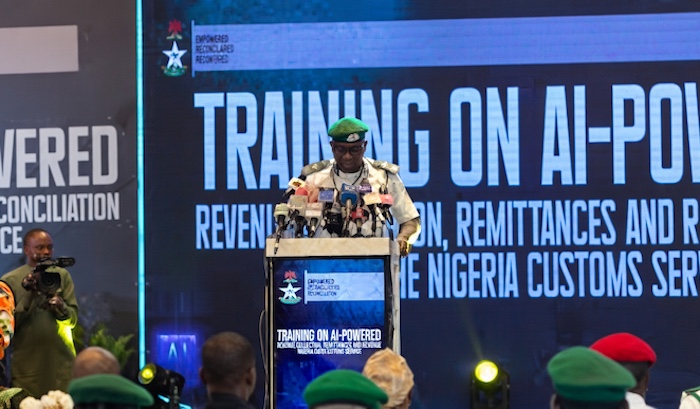
He expressed optimism about AI's potential to further transform customs operations, particularly in data analysis, risk assessment, and operational efficiency. Adeniyi acknowledged that the NCS is still in the early stages of AI adoption and stressed the importance of continuous capacity building and a deeper understanding of these technologies. He also underscored the necessity of collaboration among various stakeholders.
The AI systems are designed to identify areas requiring attention and facilitate appropriate responses. The NCS has also implemented platforms that support post-clearance audits and foster cooperation with both domestic and international partners. Furthermore, modern systems for data processing and analysis have been adopted, leading to improved efficiency and strengthened operational management.
Adeniyi indicated that the NCS plans to continue expanding its capabilities and making more effective use of AI. He encouraged other institutions to adopt similar measures for collective benefit from technological advancements. This initiative is part of a broader strategy to develop a more efficient and responsive system.
Looking ahead, Adeniyi stated that the service will continue to invest in training and development programs to equip personnel for a data-driven environment. He reiterated the importance of platforms supporting post- clearance audits and enhancing collaboration with stakeholders, including international bodies.
The Deputy Comptroller-General of Customs for Finance, Administration, and Technical Services, Kikelomo Adeola, described the initiative as a move towards tangible transformation rather than mere rhetoric. She acknowledged the dedicated efforts of individuals driving this initiative forward despite existing challenges and praised the commitment to building internal capacity, while also noting that significant work remains.
Adeola pointed out that in the current complex financial landscape, there is an increasing demand for robust systems to ensure accurate revenue processes and improve institutional coordination.
Comments (0)
You must be logged in to comment.
Be the first to comment on this article!