
Nigeria's equities market has maintained its upward trend throughout the first two months of 2026, registering an increase of N24.4 trillion in overall value. Investors have been observed moving funds from federal government bonds, which offer low yields, into stocks, spurred by positive economic indicators and robust corporate earnings reports.
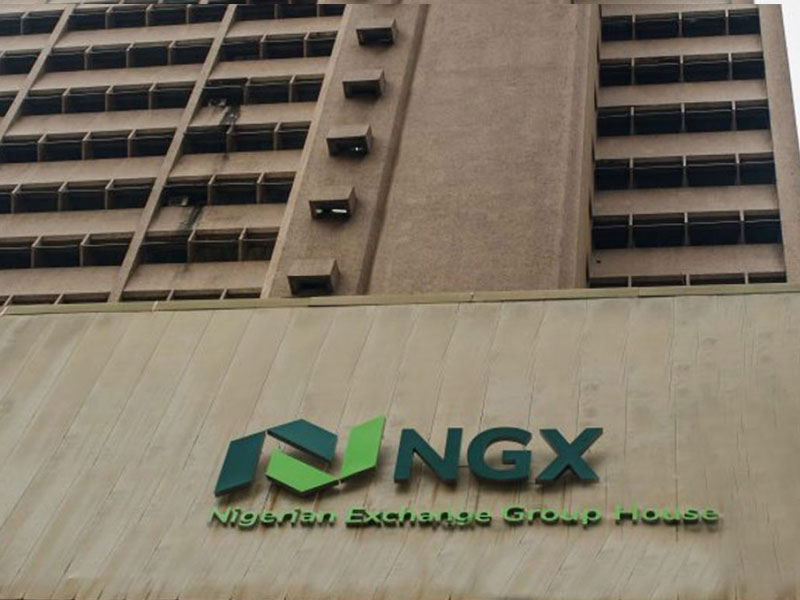
By the close of trading on Friday, the Nigerian Exchange (NGX) recorded a total market capitalization of N123.76 trillion. This represents a 24.5% increase from the N99.38 trillion reported at the start of the year. The market had previously reached a high of N125 trillion on February 20 before a slight decrease.
Detailed analysis indicates that January contributed N6.8 trillion to this rise, bringing the market capitalization to N106.15 trillion. February saw a more substantial gain of N17.61 trillion, elevating the figure to N123.76 trillion.
The significant surge in February was partly attributed to a revised investment policy from the National Pension Commission (PenCom). The commission increased the equity investment limits for pension funds, prompting increased demand for listed stocks, particularly those with strong fundamentals.
Within a single week following the PenCom announcement, the market saw an advancement of N6.79 trillion as new capital flowed into the stock market.
On February 9, PenCom adjusted the investment thresholds for ordinary shares within its RSA Funds I, II, III, and VI-Active portfolios. This adjustment expanded the capacity of pension funds to allocate more resources to equities.
Consequently, the Nigerian Exchange Limited All-Share Index (NGX ASI) concluded February at 192,826.78 basis points. This performance signifies a year-to-date growth of 23.9%, or 37,213.75 basis points, from its opening level of 155,613.03 basis points.
In January, the index experienced a growth of 6.3% to reach 165,370.40 basis points. In February, it surged by 16.6%, concluding at 192,826.78 basis points, highlighting the intensity of the market's rally.
Market analysts have pointed to several factors contributing to the market's strength. These include increased liquidity in anticipation of the 2027 general elections, strategic adjustments in investment portfolios, ongoing efforts by the Central Bank of Nigeria (CBN) to recapitalize the banking sector, greater stability in the foreign exchange market, a slowdown in inflation, and the implementation of fiscal and tax reforms.
Industry experts also highlighted the positive impact of significant reforms initiated by the federal government and regulatory bodies in 2025 on the market's performance in 2026.
The NGX ASI achieved a notable annual return of 51.2% in 2025, despite persistent double-digit inflation.
The CBN's decision to reduce the Monetary Policy Rate (MPR) to 27% aimed to support the naira and attract foreign investment, further bolstering the upward movement in the equities market.
This performance marks a distinct recovery from the sluggish period between 2015 and 2019, which followed the 2015 oil price decline and the 2016 recession. The decade of the 2020s has seen a sustained recovery, with equities emerging as a favored investment class amidst ongoing structural reforms.
Analysts maintain that the current market rally is fundamentally sound.
David Adnori, Vice President of Highcap Securities, stated that the surge witnessed in January and February is a clear indication of improving economic stability and increased participation from foreign investors.
He observed that investors are responding favorably to the full-year 2025 financial results released by listed companies, with dividend-paying stocks particularly attracting significant interest.
Similarly, Aruna Kebira, Managing Director/Chief Executive of Globalview Capital Limited, attributed the N24.4 trillion market expansion to positive expectations regarding 2025 earnings and better macroeconomic figures.
According to Kebira, the stability of foreign exchange rates and the competitive returns offered by equities compared to fixed-income investments continue to encourage investor participation, a trend he anticipates will continue into the first quarter.
"The technical rally commenced in December 2025," Kebira commented. "Most of the financial results published so far are positive, even those that may not fully meet expectations. As more earnings reports become available, the positive momentum is likely to persist."
Currently, the transition from low-yielding bonds to equities, supported by policy adjustments and strong earnings, has strengthened investor confidence, positioning the Nigerian stock market for a potentially strong first quarter in 2026.
Comments (0)
You must be logged in to comment.
Be the first to comment on this article!