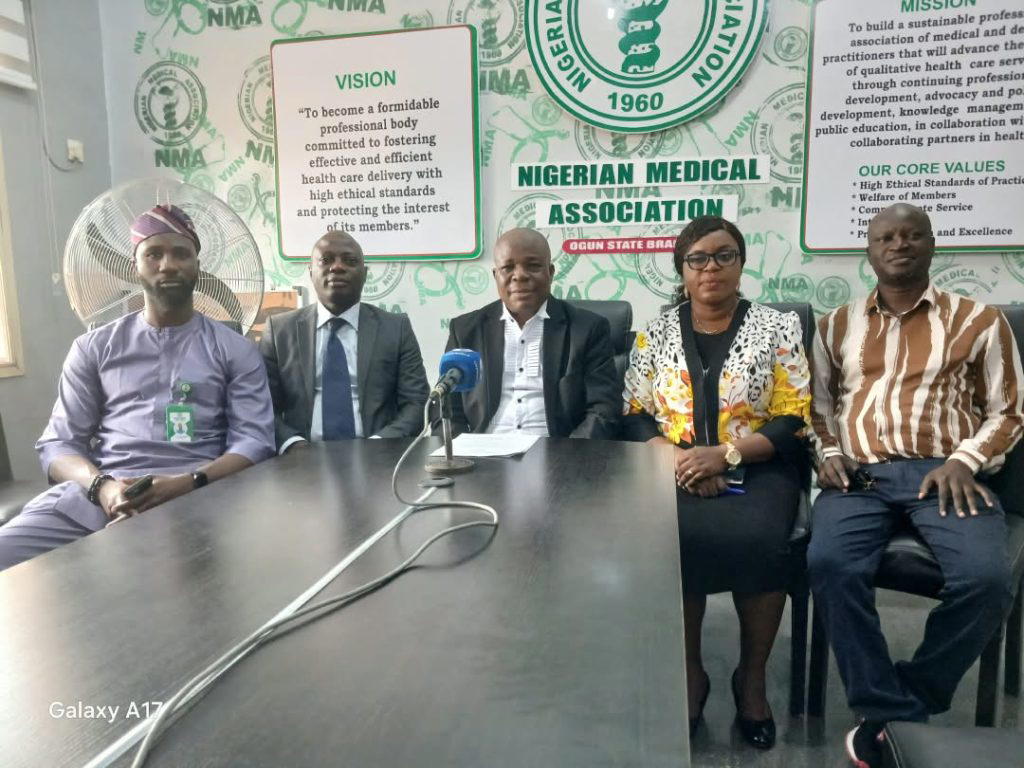
The [Nigerian Medical Association](https://en.wikipedia.org/wiki/Nigerian_Medical_Association) has appealed to the [Federal Government of Nigeria](https://www.gov.ng/) for internationally competitive salaries, safer work environments and better welfare for doctors, warning that the current conditions are driving a mass departure of medical professionals from the country.
Key points highlighted at the press conference in Abeokuta include: the association cites excessive workloads, occupational stress and inadequate infrastructure as primary drivers of the exodus; it demands that doctors receive remuneration that matches global standards; it stresses the need for secure, well‑equipped hospitals; and it calls for investment in emerging health technologies while preserving the human element of care.
**What prompted the demand?**
The NMA chairman for Ogun State, Dr Sunday Enimola, said the migration of physicians cannot be reversed by patriotic appeals alone. He argued that without concrete policies that improve salaries, working conditions and career development, doctors will continue to seek opportunities abroad.
**Which challenges are affecting physicians?**
Enimola listed long working hours, unsafe facilities, insufficient staffing, violence against health workers, delayed pay and poor benefits as factors that expose doctors to physical and psychological risks. He warned that an exhausted and stressed doctor cannot consistently deliver the quality of care patients deserve.
**How does the association propose to protect doctors?**
The chairman urged hospital executives to create environments where doctors can take leave without guilt, rest without shame and seek psychological support without stigma. He emphasized that physician wellbeing is integral to patient safety and overall health‑system performance.
**What role should technology play?**
Enimola highlighted the rapid transformation of global health care through [Artificial intelligence](https://en.wikipedia.org/wiki/Artificial_intelligence), telemedicine, electronic medical records, precision medicine, digital diagnostics, remote monitoring, robotics and genomics. He cautioned that technology should augment, not replace, the doctor‑patient relationship and called for curricula updates to equip future doctors with data‑analysis, digital health and cybersecurity skills.
**What educational reforms are needed?**
The NMA chair advocated for greater investment in undergraduate and postgraduate medical education, improved teaching hospitals, stronger research capacity and support for academic physicians. He warned against lowering training standards, noting that the quality of tomorrow’s health care depends on today’s medical education.
In summary, the association demands a comprehensive overhaul of doctors’ remuneration, safety, professional development and training, asserting that safeguarding physicians is essential for a resilient and effective Nigerian health system.