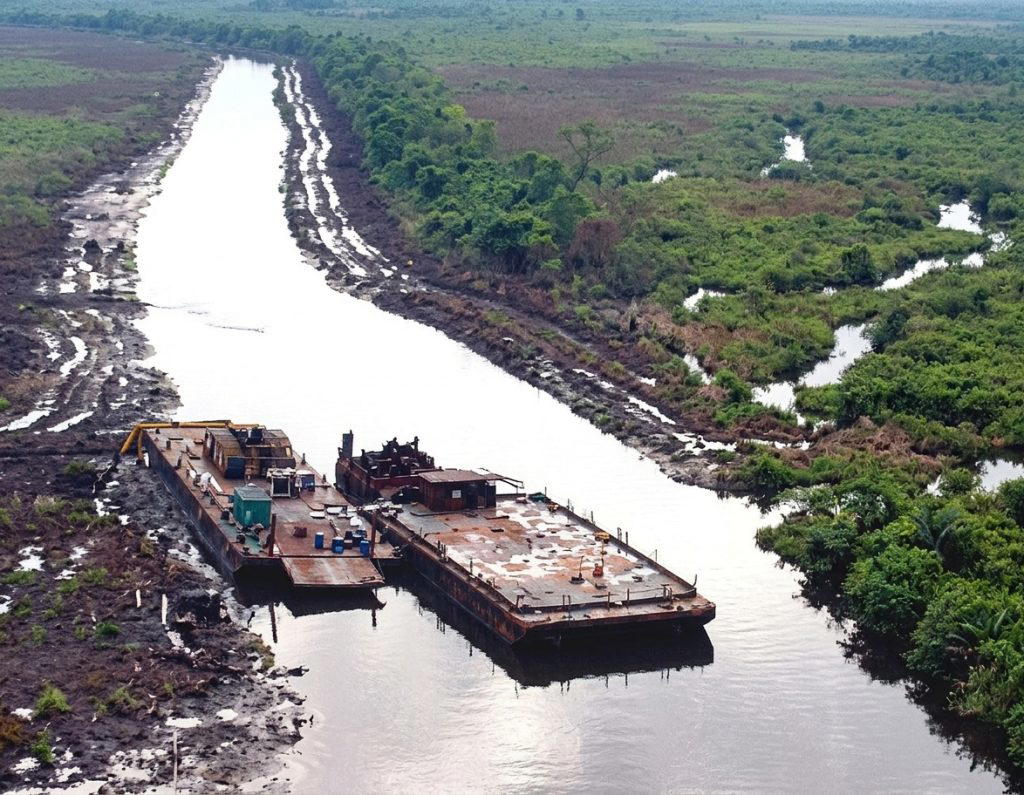
The 28‑inch Trans‑Forcados pipeline running between Kantu and Odidi in Warri South‑West LGA began leaking crude and associated gas on 19 February 2026, creating a black tide that has now engulfed more than 216 communities, according to local leaders. The spill has persisted for seven months, contaminating water, destroying fisheries and farms, and prompting legal action against the operator.
**Key facts**
- The leak was first observed on 19 February 2026 and has continued unabated for over 210 days.
- The pipeline is owned and operated by Heritage Energy Operational Services (HEOSL).
- The Joint Investigation Visit (JIV) conducted by [National Oil Spill Detection and Response Agency](https://nosdra.gov.ng) on 20‑21 February 2026 concluded the cause was corrosion and equipment failure, ruling out sabotage.
- Community chairman Comrade Justin Gbenekama said the operator has failed to contain the spill, describing recovery efforts as “futile”.
- The Federal High Court in Port Harcourt (Suit No. FHC/PH/CS/132/2026) issued an injunction ordering an immediate halt to the discharge and full remediation.
What caused the spill?
The JIV report attributes the incident to ageing infrastructure: the Trans‑Forcados line, laid in the 1970s, was designed for a 20‑25‑year service life but has been operating for about 50 years. Corrosion and equipment failure were identified as the technical reasons, with no evidence of third‑party interference.
Why do locals dispute the official verdict?
Odidi residents have long accused illegal bunkering operations of repeatedly tapping the pipeline, a practice known as “hot‑tapping”. Zik Gbemre, coordinator of the Niger Delta Peace Coalition, explained that such illicit taps weaken the pipe wall, making future leaks inevitable. He warned that “the pipeline is being killed by repeated hot‑taps” and that local leaders often tacitly allow these activities.
What are the community’s demands?
Comrade Gbenekama and other leaders are calling for an immediate shutdown of the Trans‑Forcados pipeline and a comprehensive repair before any further operation. They argue that under Nigerian environmental law, HEOSL bears full liability for cleanup and compensation because the JIV excluded sabotage.
How have civil groups responded?
The [Ijaw Youth Council](https://en.wikipedia.org/wiki/Ijaw_Youth_Council) has threatened to block operations at OML 42, OML 30 and the Forcados Terminal, accusing the operator of “heartless” conduct. Its president, Dr. Doubra Collins Okotete, dismissed sabotage claims and urged President Tinubu and Minister Heineken Lokpobiri to intervene.
What is the legal status?
The Federal High Court’s injunction mandates that HEOSL stop all discharges and fund the complete cleanup of affected ecosystems. The court’s order reinforces the operator’s responsibility to remediate the damage and compensate affected communities.
What does the future hold for the pipeline?
Experts note that most trunk lines in the Niger Delta, including Trans‑Forcados, have exceeded their design lifespan. Whether the failure stems from corrosion or sabotage, the outcome is the same: continued environmental degradation unless the pipeline is either replaced or permanently sealed. Both the ageing infrastructure and the illegal economy feeding on it must be addressed to halt the black tide.
The situation remains a stark illustration of how neglect, corporate liability, and illicit activities converge to devastate the Niger Delta’s fragile ecosystems.