
Olisa Agbakoba has emphasized the need for Nigeria to introduce a medical oversight framework similar to that of the United Kingdom, particularly for the purpose of ensuring prompt investigations and accountability in cases of malpractice.
In an interview with ARISE NEWS on Wednesday, he addressed the shortcomings in the regulation of the country's healthcare, highlighting the inefficiencies of the Medical and Dental Council of Nigeria (MDCN), which he described as slow, lacking transparency, and underfunded.
Agbakoba stated, "The Medical Dental Council of Nigeria manages regulatory oversight of offending doctors. However, it operates with a lack of transparency, exclusively comprising doctors. Their funding is insufficient, resulting in poor outcomes. The process for arriving at conclusions is excessively lengthy, so there’s little risk of punishment for wrongdoers."
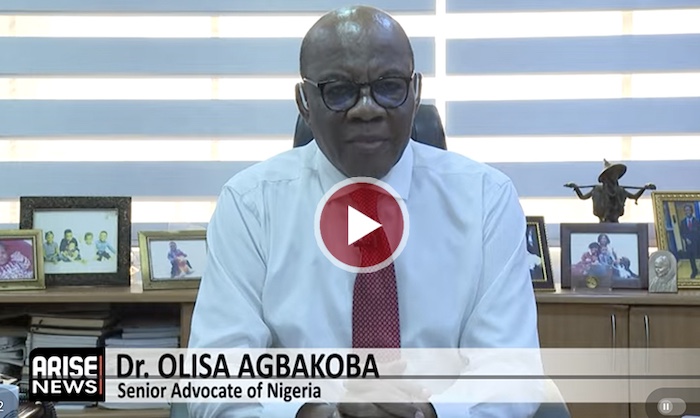
He proposed that Nigeria could benefit from a system akin to that of the UK, where the General Medical Council is mandated to conclude investigations and issue reports within a span of 90 days. He noted, "I've encountered instances where verdicts regarding errant doctors take as long as five years to resolve. The existing framework lacks necessary regulation."
Furthermore, Agbakoba suggested that the appointment of a dedicated Chief Medical Officer at both federal and state levels would enhance discipline, patient safety oversight, and ensure that sanctions against negligent practitioners are enforced.
He remarked, "To effectively tackle this issue, there must be a robust regulatory structure led by a physician, termed the Chief Medical Officer, inserted into the system at the federal level, while the minister would manage policy and political dimensions."
Agbakoba emphasized that Lagos state should appoint a single Chief Medical Officer rather than multiple officials, arguing that the current structure of the Medical Dental Council of Nigeria is in dire need of substantial reform. He criticized its lack of transparency and exclusivity to medical professionals.
He added, "In the UK, the General Medical Council is composed of doctors, laypeople, and legal experts who enforce sanctions. Here, it remains unclear how many doctors genuinely face consequences such as losing their medical licenses after decisions are made. I advocate for reform to ensure that when sanctions are imposed on a doctor, those penalties are effectively enforced, which unfortunately is not the case now."
Additionally, Agbakoba pointed out funding as a key obstacle, indicating that Nigeria allocates only 4% of its national budget to healthcare—well below the 15% recommended by the Abuja Declaration and the African Union.
"The Abuja Declaration and the African Union guidelines, along with World Health Organization standards, stipulate that 15% of the national budget should be directed towards the healthcare sector. Currently, we're only allocating around 4%. This is a fundamental part of the problem—investment is crucial," he said.
Finally, he concluded, "If we aspire for this nation to thrive and its citizens to be healthy, adequate funding is vital. Without this investment, we will continue to have ill individuals and unqualified practitioners."
Comments (0)
You must be logged in to comment.
Be the first to comment on this article!