
Vice President Kashim Shettima has indicated that non-oil sectors are pivotal to Nigeria's economic advancement. He has called for reforms and greater engagement with various stakeholders to boost revenue generation.
During the National Economic Council (NEC) meeting he chaired, Shettima highlighted the imperative of reducing reliance on oil, particularly as Nigeria embarks on a shift in its economic strategy under President Bola Ahmed Tinubu.
At the 156th meeting—conducted online on Thursday—the Council also sanctioned the formation of a bipartisan committee tasked with the execution of the President’s instructions regarding the advancement of strategic projects, including significant infrastructure such as the Lagos-Calabar Coastal Highway and the Sokoto-Badagry Super Highway.
In his remarks at the outset of the session, Shettima pointed out that the fluctuating global economy continues to expose Nigeria to vulnerabilities linked to oil price variations, exchange rate instability, and erratic capital influx, stressing the need for effective fiscal risk management.
"As global powers move forward with renewed assertions, the volatility in commodity markets will persist," he stated, adding that oil prices and capital movement have consistently hindered domestic policy goals. "This situation accentuates the necessity to decrease our economic status and income dependency on oil."
He emphasized how Nigeria's non-oil economy has now emerged as a critical driver of growth, representing approximately 96 percent of the Gross Domestic Product (GDP) and witnessing an annual growth rate of around four percent.
"Sectors such as services, agriculture, and other non-oil industries are increasingly supporting the economy. More significantly, non-oil revenues now account for nearly three-quarters of total government collections," Vice President Shettima remarked. "This signifies a noteworthy, if gradual, transition from our traditional reliance on the unpredictable oil revenues."
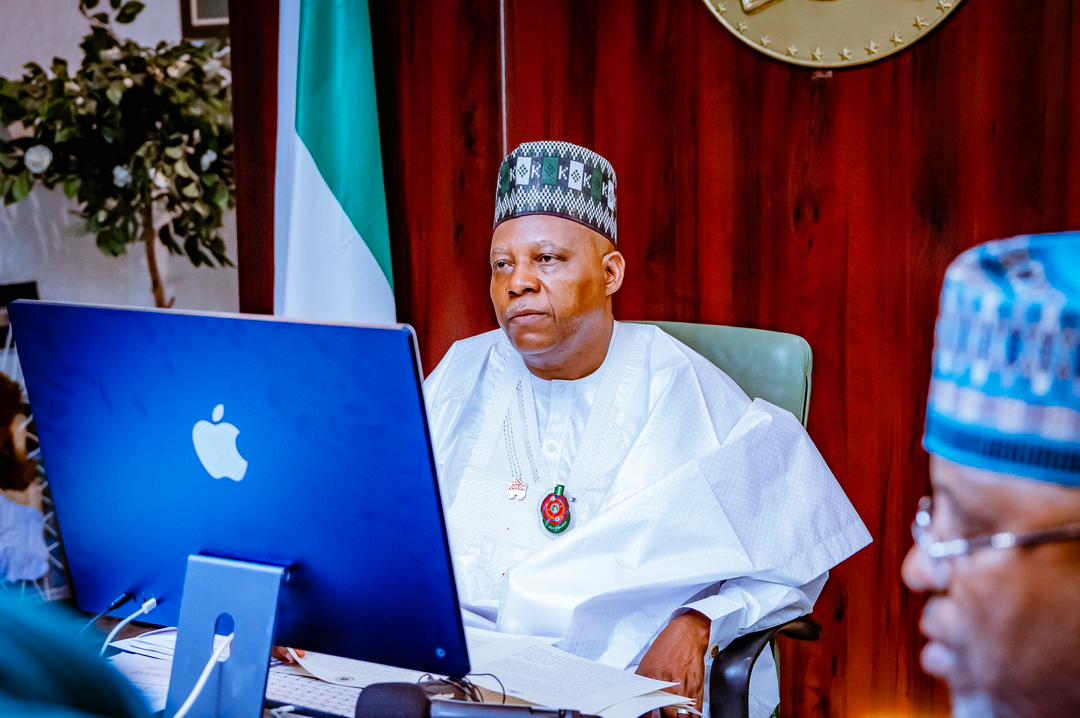
During the meeting, the Vice President articulated the importance of reinforcing the progress achieved by furthering the transition through competitive manufacturing, diversification of exports, and attracting private sector investments.
Reflecting on the previous year's economic journey, Shettima indicated that this initial NEC assembly of 2026 signifies a necessity for coherence, courage, and consistency, in light of the lasting impacts stemming from policy decisions made in 2025.
"This point in our journey neither invites unwarranted pride nor despair. What it requires is a level-headed view," he remarked. "While the Nigerian economy has faced a challenging year, it has nonetheless progressed."
He credited the economic successes of 2025 to what he termed the "visionary leadership" of President Tinubu, underscoring that Nigeria witnessed its quickest growth rate in over a decade.
"In 2025, our economy grew by 3.9 percent, marking the highest growth rate we've seen in more than ten years," noted Shettima. "The growth trend was noticeable each quarter, strengthening from 3.13 percent in the first quarter to 4.23 percent in the second before tapering to 3.98 percent in the third."
"These advancements are a result of tough decisions made in trying contexts, a reflection of leadership from someone as forward-thinking as President Bola Ahmed Tinubu," he remarked.
Nevertheless, the Vice President stressed that the growth path remains inadequate to tackle Nigeria’s development challenges.
"While a 3.9 percent growth rate is promising, it is not enough to significantly alleviate poverty, create jobs at the required scale for our population, or raise per capita income to a level felt by everyday Nigerians," he warned. "Given a population growth rate of roughly 2.6 percent annually, this expansion rate affords us minimal capacity to counteract inflationary pressures or outside shocks. Hence, our targets must be elevated."
The NEC's decisions followed a presentation from the Finance Minister and Coordinating Minister of the Economy, Wale Edun, who outlined Nigeria’s economic objectives for 2026. The presentation emphasized initiatives enacted by the Tinubu administration aimed at eliminating systemic barriers, stabilizing the economy, and positioning the nation for ongoing recovery.
Edun highlighted the increasing global acknowledgment of Nigeria’s reforms, which he argued is bolstering investor confidence, with projections suggesting an economic growth of 4.68 percent in 2026.
He outlined key priorities including enhancing competitiveness through effective governance, increasing food accessibility and affordability, advancing human capital development, improving social safety nets, and ensuring timely disbursements for debt servicing, wages, and pensions.
The NEC praised the Federal Government's strategies to unlock rapid and sustainable growth that generates quality jobs and entrepreneurial opportunities, resolving to hold a special session to tackle urgent issues regarding food security, especially in agricultural productivity.
In terms of legacy projects, the Council greenlit the creation of a Presidential NEC Committee, to be chaired by the Governor of Cross River State, comprising one governor from each geopolitical zone: Sokoto from the North West, Gombe from the North East, Niger from the North Central, Abia from the South East, and Lagos from the South West.
The Permanent Secretary of the Ministry of Budget and Economic Planning, Deborah Odoh, will serve as the committee's Secretary, joined by the Ministers of Works and Transportation as additional members.
NEC received updates concerning the execution of President Tinubu’s directions on the Lagos-Calabar and Sokoto-Badagry highways, noting that the process is monitored by the Office of the Secretary to the Government of the Federation, which also confirmed the relocation of the Office of the Surveyor-General of the Federation to the Presidency according to presidential approval.
Additionally, the Council was informed of Nigeria's account statuses as of January 14, 2026, which included $535,823.39 in the Excess Crude Account, ₦64.65 billion in the Stabilization Account, and ₦97.37 billion in the Natural Resources Account.
The NEC expressed appreciation for the World Bank Group's presentation of the new Nigeria Country Partnership Framework, focusing on expansive national programs conducted at the state level, results-based financing, and investments in early childhood development under the "First 2,000 Days" initiative.
Members of the Council commended this framework, particularly its concentration on fostering human capital and pledged to collaborate with the World Bank to support President Tinubu’s Renewed Hope Agenda.
Regarding tax reforms, NEC was updated by the Presidential Fiscal Policy and Tax Reforms Committee on new tax legislation aimed at correcting inequities, simplifying processes, and creating a more growth-oriented tax system. The Council instructed the committee to present a more thorough briefing at its February conference to prepare states for implementation.
NEC resolved to enhance dialogue with sub-national governments concerning the new taxation framework, underscoring the necessity for political leadership, harmonization of tax laws, adoption of presumptive taxation for the informal economic sector, better state revenue services, and endorsement of a National Fiscal Policy.
Comments (0)
You must be logged in to comment.
Be the first to comment on this article!