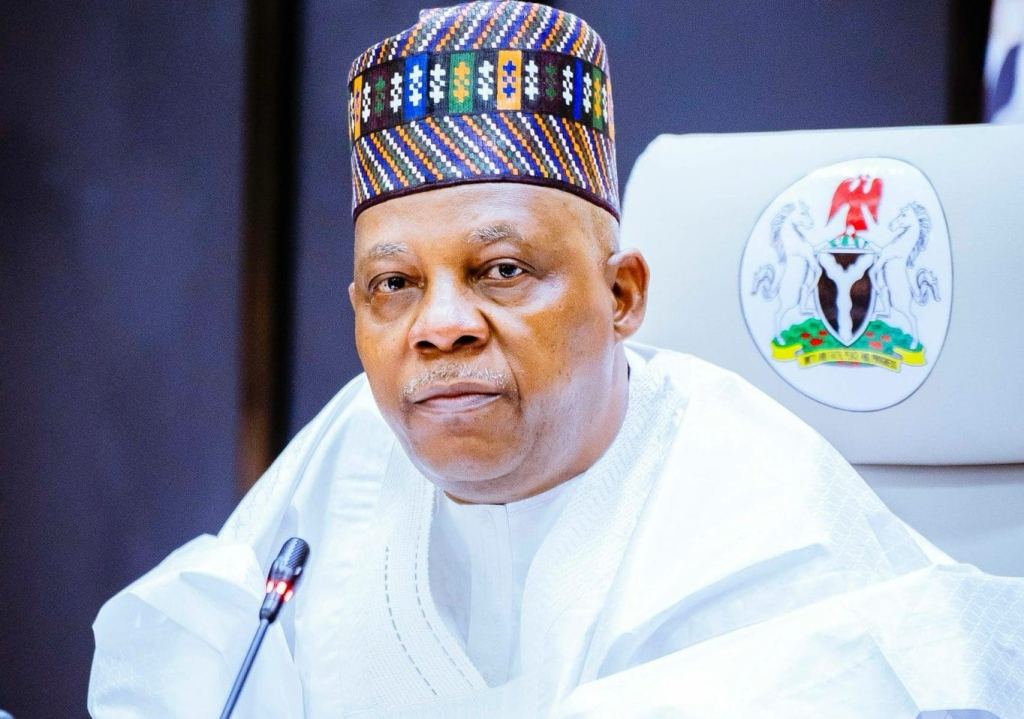
Vice President [Kashim Shettima](https://www.nass.gov.ng/members/senate/vice- president) on Monday denounced former Vice President Atiku Abubakar’s call to bring back Nigeria’s fuel subsidy, warning that the move would thrust the country back into poverty and casting doubt on Atiku’s capacity to steer a modern economy.
**What did Shettima say about the subsidy proposal?**
Shettima delivered his remarks at the [Nigerian Economic Summit](https://www.nes.gov.ng) in Abuja, stating that “one of the leading presidential candidates is advocating for the return of the subsidy scheme. He wants us to backslide into penury for political convenience.” He added that the proposal would reverse the fiscal relief achieved since the subsidy’s removal.
**How did Shettima assess Atiku’s qualifications?**
The vice president targeted Atiku’s professional background, noting that the former deputy was trained at the Kano School of Hygiene. “I dare to put forward that his skill set — he was trained in sanitation at the Kano School of Hygiene — so he doesn’t have the skill set to govern a modern economy. That’s the painful truth,” Shettima asserted. He further suggested that Atiku could not even differentiate between common flu and Ebola when it comes to environmental health decisions.
**Why is the fuel‑subsidy issue contentious?**
Atiku has consistently advocated for the restoration of the [fuel subsidy](https://en.wikipedia.org/wiki/Fuel_subsidy) as part of his economic platform. The current administration, led by President Bola Tinubu, scrapped the subsidy in May 2023, arguing that the policy was a drain on public finances. While the removal was intended to ease fiscal pressure, it has been accompanied by higher fuel prices and a noticeable rise in the cost of living for many Nigerians.
Shettima concluded by urging voters to scrutinise political promises, cautioning that “Nigerians must decide and those of you here cannot afford to play the ostrich.” He warned that ignoring the long‑term implications of subsidy reinstatement could jeopardise the nation’s economic recovery.
The debate over the subsidy remains a flashpoint between the opposition, represented by Atiku, and the Tinubu government, reflecting broader disagreements on how best to balance fiscal sustainability with affordable energy for the populace.