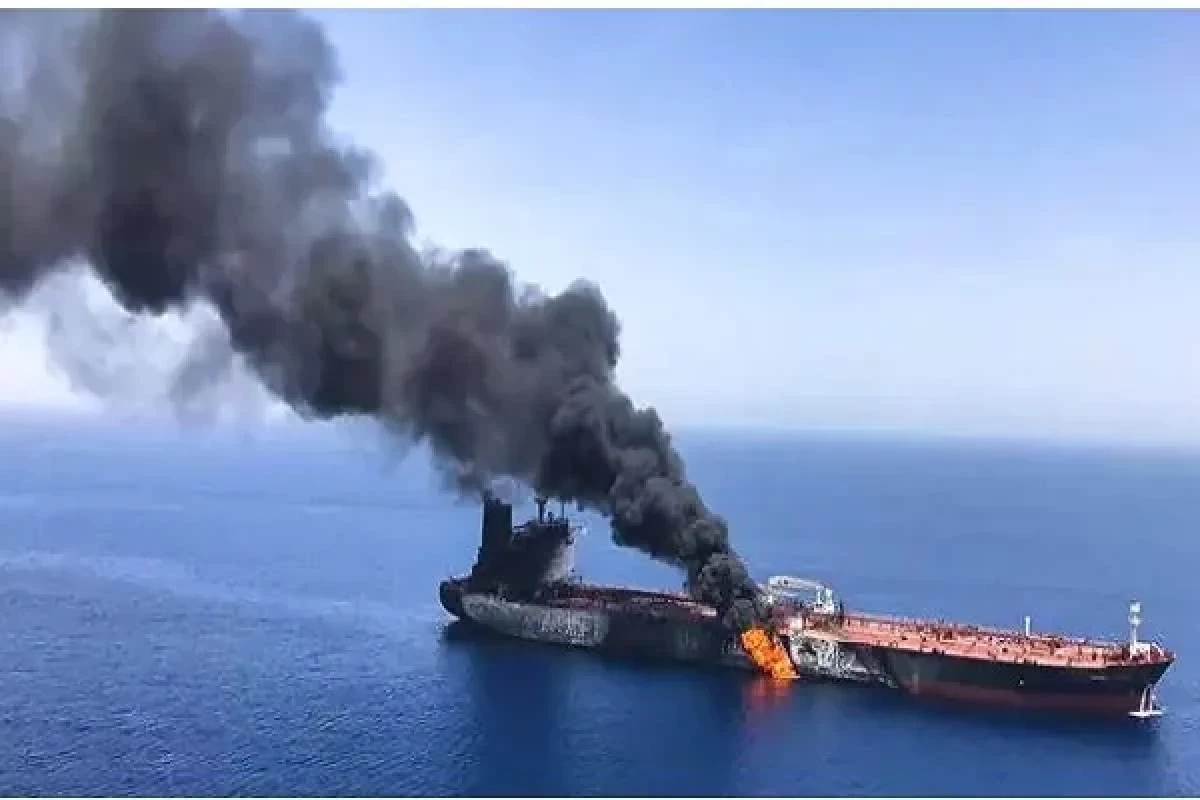
Two oil vessels burst into flames in the Strait of Hormuz after colliding with underwater naval mines while navigating unapproved pathways, Iran's Islamic Revolutionary Guard Corps announced on Sunday, citing reports from the official state news agency IRNA. The incident underscores ongoing maritime vulnerabilities in one of the world's most critical energy transit corridors, which typically handles roughly twenty percent of global oil consumption.
According to the military statement, one of the vessels struck a mine within the eastern sector of the waterway, while the second explosion occurred at a different undisclosed location along the strait. Authorities withheld the names and flags of both tankers. The Revolutionary Guards alleged that the vessels had committed several infractions, notably deactivating their tracking and positioning systems while trying to bypass officially mandated transit lanes.
What measures has Tehran implemented in the waterway?
Since the outbreak of hostilities in late February, Iranian authorities have heavily regulated navigation through the strait, mandating that all commercial vessels adhere strictly to pre-approved corridors. In response, the United States enforced a naval blockade targeting Iranian ports and provided escort assistance to help commercial tankers navigate the vital shipping lane safely.
Recent weeks have seen multiple reports from Iranian officials regarding vessels catching fire in the channel. Meanwhile, United States Central Command stated that it has facilitated the export of 1.5 billion barrels of crude oil from Gulf nations via Hormuz since the summer months, maintaining that all naval mines had previously been swept from the shipping routes.
In a parallel development, state media noted late Saturday that loud blasts reverberated across several locations in southern Iran. Telegram updates from the state news agency indicated that unexplained sounds were detected in Qeshm, Sirik, Jask, and Bandar Abbas, with authorities confirming a specific impact in the port city of Jask. However, officials stopped short of connecting these explosions to the burning oil tankers.
Geopolitical friction involving Washington and Tehran has remained high. United States President Donald Trump previously floated the prospect of launching major military campaigns against Iran before stepping back from that stance, though American forces have continued executing sporadic, targeted strikes.