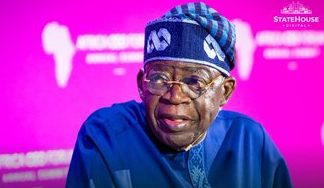
[Bola Ahmed Tinubu](https://en.wikipedia.org/wiki/Bola_Ahmed_Tinubu) has, since taking office in May 2023, built an image of unrivaled authority within Nigeria’s political arena while appearing deferential on the international stage. The president’s approach to governance, legislative relations, and foreign engagements raises questions about the durability of his coalition and the country’s sovereignty.
**What are the hallmarks of Tinubu’s domestic dominance?**
- Within weeks of inauguration, Tinubu removed Senator Abdullahi Adamu from the chairmanship of the [All Progressives Congress (APC)](https://en.wikipedia.org/wiki/All_Progressives_Congress), signalling his control over party structures.
- The [National Assembly](https://www.nass.gov.ng/) has repeatedly fast‑tracked executive bills, sometimes passing legislation in under 48 hours before many members could review the texts.
- Governors across the federation have largely defected to the APC, either formally or functionally, leaving little organized opposition.
- Cabinet reshuffles have been swift and often unexplained, underscoring that even senior appointees are not immune to dismissal.
- Media criticism and civil‑society dissent have been largely muted, with only a handful of notable exceptions.
**How has the administration handled economic reforms?**
Tinubu’s government launched an ambitious reform agenda that includes:
- Removal of fuel subsidies, leading to higher pump prices.
- A wholesale devaluation of the naira.
- Transition of free university tuition to a loan‑based system.
- Increases in electricity tariffs and a series of tax reforms.
Despite the breadth of these measures, implementation has been uneven, and the expected macro‑economic benefits remain elusive after the first year.
**What concerns arise from Nigeria’s foreign policy under Tinubu?**
- A recent agreement with the [United States](https://en.wikipedia.org/wiki/United_States) under the “America First Global Health Strategy” would see Nigerian health data shared with U.S. firms that then profit from drug and vaccine sales back to Nigeria.
- The administration has entered into deals that appear to favor France, Britain, Israel, and Saudi Arabia, such as handing over tax administration functions to France and joining a Saudi‑led Red Sea alliance.
- Critics argue that these moves are negotiated in secrecy, limiting parliamentary oversight and potentially compromising national sovereignty.
**Why might Tinubu be politically vulnerable?**
While the president commands a powerful coalition, it is largely held together by patronage and fear rather than popular enthusiasm or ideological alignment. The opposition lacks comparable financial resources, and widespread economic hardship has left many Nigerians without the means or hope to mount a sustained challenge.
**What could strengthen Nigeria’s reform agenda?**
Policy experts suggest that evidence‑based adjustments to subsidy removal, transparent stakeholder consultations, and a more assertive stance in foreign negotiations could create a more resilient political coalition capable of delivering lasting benefits.
In sum, Tinubu’s internal grip is formidable, yet his reliance on external actors and the absence of a robust, popular mandate may render his administration vulnerable as the next election approaches.