
Tomato farmers located in Kano, Katsina, Kaduna, and Plateau, among other areas, are facing a serious surplus as the harvesting period commences.
Following the devastating outbreaks of Tuta absoluta that caused enormous financial damages in the tomato industry, farmers are now contending with yet another formidable challenge.
Reports from our correspondents in various states indicate that markets are currently overwhelmed with fresh tomatoes, resulting in a drastic price decline and heavy monetary losses for farmers who had heavily invested to recuperate from prior setbacks brought on by the pest invasion.
In the last several years, infestations of Tuta absoluta, a highly destructive tomato leaf miner, have wreaked havoc on agricultural land in northern regions known for tomato cultivation.
These infestations have led to the decimation of extensive tracts of farmland, compelling many farmers to stop production. The resultant disruptions to supply chains have led to increased financial strain on farmers, leaving many heavily indebted.
In 2016, the initial infestation of Tuta absoluta devastated tomato yields across seven northern states, including Jigawa, Kano, Katsina, Kaduna, Plateau, Gombe, and Nasarawa. It has since also appeared in Lagos and Oyo states in the Southwest.
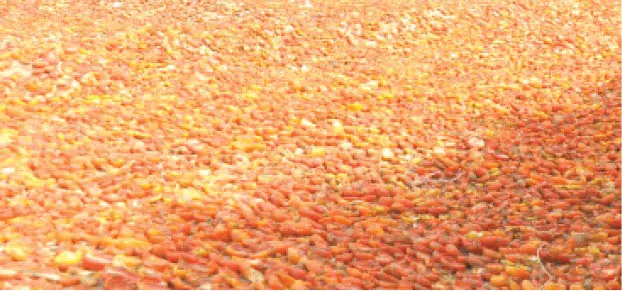
In Kano State, a farmer named Malam Abba Ibrahim Kalla from Bunkure Local Government Area expressed the difficulty of returning to the fields after suffering heavy losses from the pest last year. He stated that he could only resume farming this dry season due to loans provided by friends.
Despite the harvest season just beginning, Kalla anticipates losses due to the current oversupply of tomatoes in the market, which is expected to drive prices down significantly.
A visit to several tomato markets revealed that a full basket is now selling for under N10,000, while crates are going for less than N3,000, significantly below production costs.
Previously, baskets that could sell for over N25,000 are now valued at a fraction of that amount. Farmers are expressing their frustration at not being able to recover vital costs for fertilizers, seeds, labor, and transportation.
Another farmer, Idris Muhammed, acknowledged the efforts made by research bodies and organizations in addressing the Tuta crisis which has equipped many farmers with skills to tackle the pest, fostering a sense of assurance to increase investments in tomato cultivation this season.
However, after eagerly planting tomatoes, they are now experiencing unfortunate market oversaturation.
“Thanks to better pest management strategies, many of us resumed cultivating tomatoes, but ironically, the improved yield now exceeds market demand, resulting in the current oversupply crisis,” he elaborated.
In the Kaduna State region, farmers raised alarms over soaring fertilizer prices, recurring diseases affecting tomato crops, inadequate storage facilities, and inconsistent electricity supply, warning that these issues threaten their livelihoods and the sustainability of tomato farming throughout Nigeria.
Alhaji Auwal Ibrahim Hunkuyi, a farmer from Hunkuyi town in Kudan Local Government Area, pointed out that the escalating costs of fertilizer are severely undermining the tomato farming sector.
Speaking to Weekend Trust, Alhaji Auwal lamented that “this season, tomato cultivation was fraught with challenges as prices plummeted in the market. Our major concern, however, is the rising cost of fertilizer, which poses the most significant threat to tomato farmers.”
He revealed that a bag of fertilizer now costs N50,000 while tomatoes are sold for N1,700 to N3,000 per kilogram, highlighting a dismal financial outlook.
Alhaji Auwal added that many farmers continue to cultivate not for profits but merely for survival.
“We are farming primarily because we need food, not for profit. An investment of N1 million in farming hardly yields a profit of N200,000,” he said.
He outlined the rising expenses related to tomato farming, including fuel for irrigation, agrochemicals, labor, and fertilizers.
Comments (0)
You must be logged in to comment.
Be the first to comment on this article!