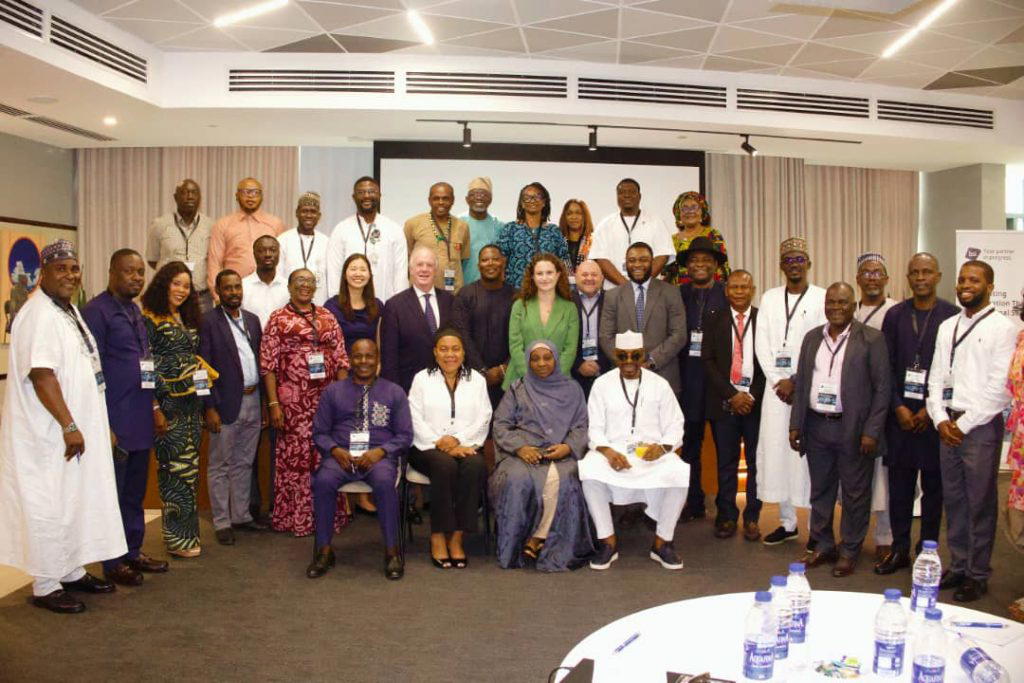
The United Kingdom, represented by its High Commission in Abuja, and the Nigerian government concluded a series of high‑level engagements in October 2026 to strengthen collaboration on artificial intelligence (AI) governance and broader digital transformation. The joint effort, which featured an executive workshop hosted by the British Standards Institution, sought to embed internationally recognised standards into Nigeria’s emerging AI ecosystem, thereby fostering responsible adoption and risk management.
Key outcomes of the programme include the introduction of ISO/IEC 42001 for AI management systems and ISO/IEC 23894 for AI risk management, the endorsement of a cross‑government Community of Practice, and the signing of memoranda with agencies such as the National Information Technology Development Agency and the Standards Organisation of Nigeria. First Secretary Grace Bell of the [British High Commission](https://www.gov.uk/government/world/nigeria) highlighted that “Artificial Intelligence presents enormous opportunities for economic growth, innovation and social development,” but stressed that “realising these benefits requires the right governance frameworks, strong institutions and trusted standards.”
**What was covered in the executive workshop?**
The workshop, delivered by the [British Standards Institution](https://www.bsigroup.com/) in partnership with the [National Centre for Artificial Intelligence and Robotics (NCAIR)](https://www.ncair.gov.ng/), convened senior officials, regulators and technology practitioners in Abuja. Participants examined how standards can underpin accountability, assurance and safe AI deployment, and they evaluated practical approaches to risk mitigation.
**Which Nigerian bodies are involved in the partnership?**
The collaboration spans several key institutions, including the [National Information Technology Development Agency](https://nitda.gov.ng/), the Standards Organisation of Nigeria, and the Federal Ministry of Communications, Innovation and Digital Economy. Together, they aim to translate policy ambitions into actionable programmes that boost digital trade, cybersecurity, data protection and, eventually, e‑health and electronic waste management.
**What are the next steps for the UK‑Nigeria AI agenda?**
Both sides agreed to expand the partnership into areas such as digital public infrastructure, electronic waste management models, and climate‑finance‑linked digital trade standards. A reception at the Afreximbank Trade Centre marked the close of the workshop, where officials were recognised for their contributions and a permanent cross‑government Community of Practice was proposed by Dr Olubunmi Ajala, National Coordinator of NCAIR.
The British High Commission reiterated its commitment to work with BSI and Nigerian agencies to promote standards that enhance trust, interoperability and cybersecurity across the digital economy, positioning Nigeria for sustainable growth in AI and related technologies.