
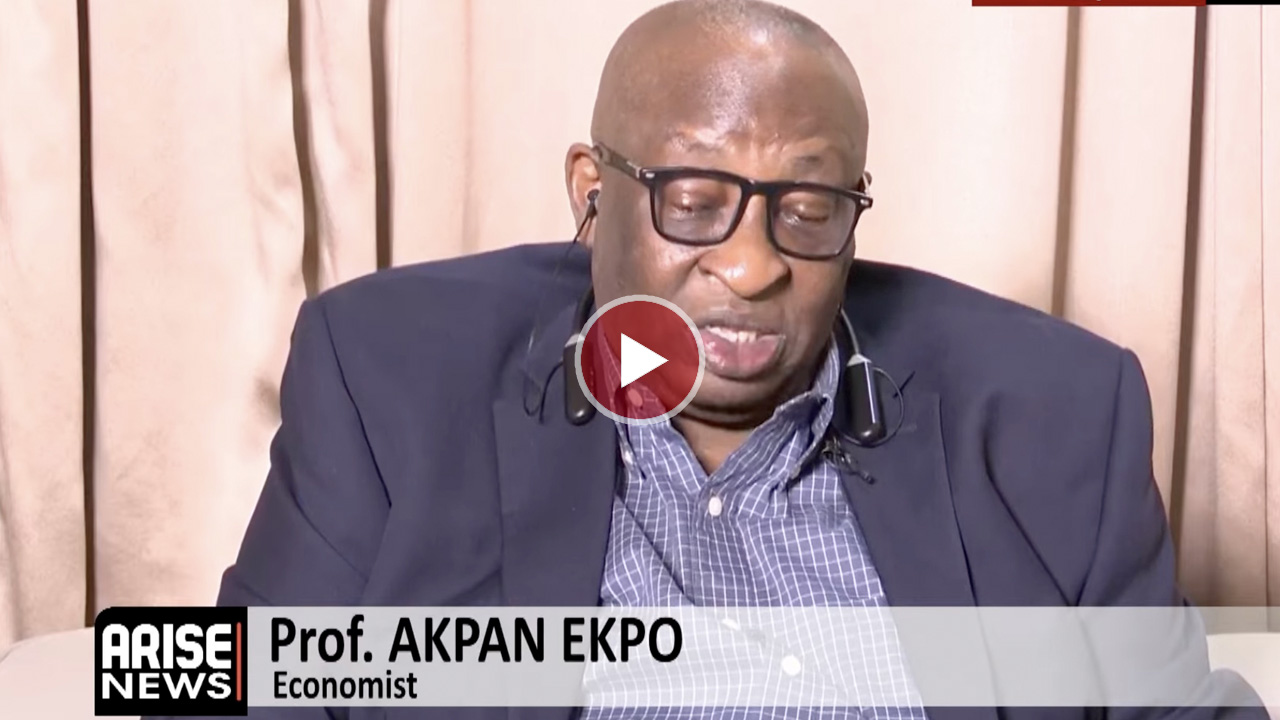
Professor Akpan Ekpo, an economist, has raised alarms regarding Nigeria's new port infrastructure deal with the United Kingdom, suggesting that it could lead the nation into significant long-term debt while offering minimal economic returns for its citizens.
In an interview with ARISE NEWS on Monday, Ekpo characterized the arrangement as predominantly beneficial to Britain, highlighting a broader tendency of unequal economic exchanges linked to Nigeria's colonial legacy.
He stated, "The British government has been quite astute. They have inverted economic diplomacy and reaffirmed our neocolonial status."
Ekpo noted that a substantial part of the agreement—reportedly amounting to hundreds of millions of pounds—would likely revert to British companies, including contractors and steel manufacturers, effectively leaving Nigeria encumbered with debt obligations.
"Ultimately, Nigeria will incur debt. The alleged job creation will be for the British, not Nigerians," he remarked.
Furthermore, he claimed that while the deal might boost faltering sectors in the UK, particularly its steel industry and financial institutions, it will provide scant local value for Nigeria.
"All equipment necessary for upgrading the ports will be sourced from Britain. Nigerians stand to gain very little from this," he added.
Ekpo questioned the rationale behind the continued dependency on foreign providers instead of revitalizing Nigeria's neglected steel industry, including the Ajaokuta Steel Mill and other local rolling mills.
"Our steel industry has collapsed. Instead of rehabilitating it, we are entering into agreements to import steel," he asserted.
He emphasized that such choices compromise local capacity and perpetuate reliance on external sources.
The economist criticized the opaque nature of the agreement, pointing out the absence of transparency regarding loan terms, procurement processes, and criteria for contractor selection.
"There is a complete lack of transparency in this arrangement. We have yet to see the loan parameters – the interest rates, the moratorium period, or the specific conditions," he remarked.
Ekpo suggested that large-scale agreements should undergo parliamentary scrutiny prior to ratification.
"In several nations, these sorts of deals would be submitted to parliament for deliberation. Our representatives should assess whether this aligns with national interests," he advised.
He expressed skepticism regarding the qualifications of the Nigerian company allegedly awarded the contract, noting a probable reliance on foreign specialists.
"The contractor lacks the necessary expertise. They will likely bring in foreign experts to execute the work," he noted.
Moreover, he pointed out potential deficiencies in the procurement process, questioning whether the contract was subject to competitive bidding.
"Was the process made public? Were bids solicited? We have not seen that. The entire process appears to be flawed," he argued.
Ekpo also highlighted the concentrated nature of port development projects in Lagos, warning that this might exacerbate regional disparities.
"A nation requires a balanced approach to development. Why prioritize Lagos exclusively when there are many viable ports throughout the country?" he inquired.
He called attention to the underused ports and deep-sea facilities in other areas, underscoring the necessity for a more inclusive national infrastructure strategy.
He cautioned that poorly structured agreements could burden future generations with unsustainable debt.
"By signing these economic accords, you are shackling the future of the populace. Successive generations of Nigerians may be obligated to shoulder this debt," he asserted.
Although he recognized that the agreement might already be underway, Ekpo urged the government to reassess the terms and ensure full disclosure to the Nigerian populace.
"The presidency needs to clarify what transpired, how the contractor was selected, and what Nigeria stands to gain from this deal," he said.
He maintained that without adequate oversight and expert evaluation, such agreements risk deepening economic dependence instead of promoting sustainable growth.
"Currently, it is not a mutually beneficial scenario. This arrangement does not serve Nigeria’s interests in any way," Ekpo concluded.
Comments (0)
You must be logged in to comment.
Be the first to comment on this article!