
The Independent National Electoral Commission (INEC) has made a request to the National Peace Committee (NPC) along with other key stakeholders to intensify initiatives aimed at restoring public trust and promoting peaceful engagement in Nigeria's electoral framework as the country approaches the 2027 general elections.
During a briefing for stakeholders and the presentation of the Annotated Peace Accord in Abuja, INEC Chairman, Professor Joash Amupitan, SAN, conveyed this appeal on Monday.
This event witnessed the participation of leaders from various political parties, heads of security agencies, and representatives from civil society organizations, all demonstrating a shared commitment to ensuring credible and peaceful elections.
The former Head of State and NPC chairman, General Abdulsalami Abubakar, GCFR, was represented at this gathering by the convener of the peace committee, Most Reverend (Dr.) Mathew Hassan Kukah.
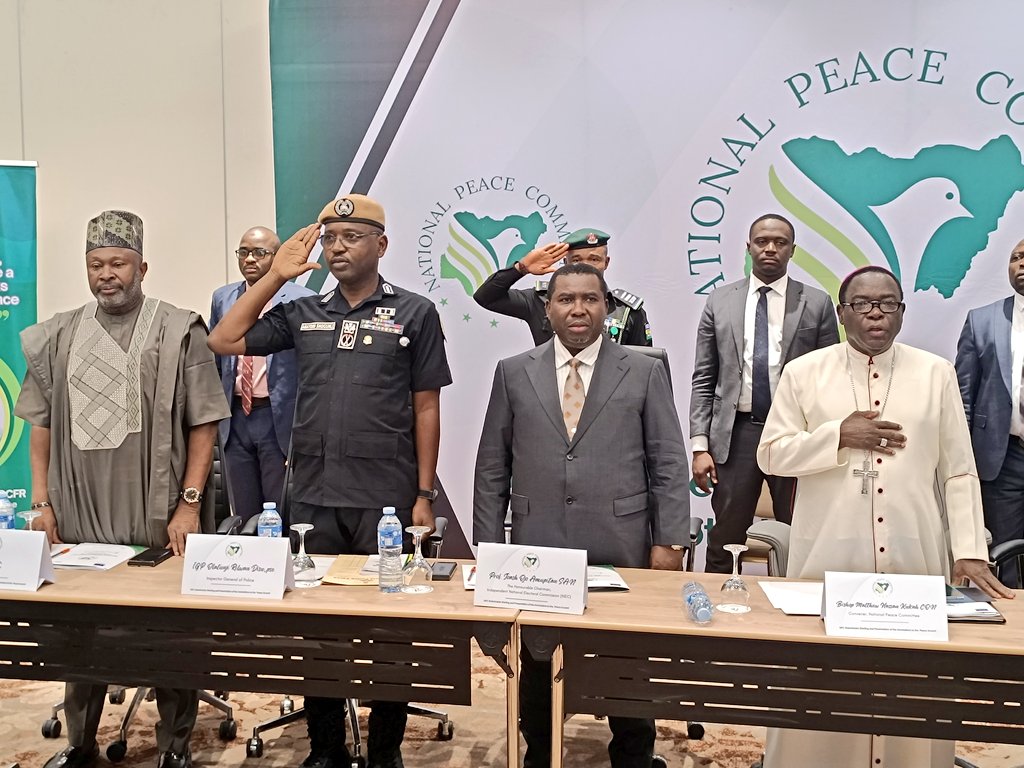
In a statement delivered through INEC’s Director of Voter Education and Publicity, Mrs. Victoria Eta-Messi, Amupitan emphasized the critical need to rebuild confidence in the electoral process, highlighting the existing trust deficit as a significant challenge for the commission.
He characterized Nigeria’s electoral landscape as diverse, intricate, and intensely competitive, asserting that the advancement of democracy necessitates a foundation rooted in both legality and legitimacy.
"Therefore, we appeal to the National Peace Committee to assist us with trust- building efforts. The current trust deficit is palpable everywhere you look," he remarked.
Amupitan expressed concern over the potential consequences of low voter participation, stating that it is vital for every citizen to continue engaging in the electoral process. "If voters abstain from participating, whoever emerges as the winner may lack democratic legitimacy," he noted, emphasizing the need for transparency in the electoral process to ensure that elected officials possess both legality and legitimacy.
Additionally, Amupitan affirmed that INEC welcomes scrutiny and constructive feedback, declaring, "As the custodians of democracy and elections in Nigeria, we process and consider all comments as avenues for improvement. We do not react angrily to criticism."
He reiterated that while INEC is actively working to enhance its processes, the burden of maintaining credible elections cannot rest solely on the commission. Instead, he urged political parties to bolster voter engagement and internal discipline, asserting that ongoing civic involvement is crucial to reversing the trend of declining voter turnout.
Earlier, Abdulsalami reaffirmed the NPC’s determination to create a neutral space for dialogue, mediation, and building trust within the electoral context. He noted that since its inception in 2015, the Peace Accord has been an important stabilizing force in Nigeria’s electoral landscape.
He described the Annotated Peace Accord as an improved structure intended to clarify, direct, and facilitate preventive measures among electoral stakeholders.
"The duty of protecting our democracy is a collective responsibility, and we must maintain collaboration, restraint, and responsible behaviour among political leaders, institutions, and citizens," he concluded.
Comments (0)
You must be logged in to comment.
Be the first to comment on this article!