
The crew of NASA's Artemis II mission has released "Hello, World," a collection of the first high-resolution photographs of Earth taken from the Orion spacecraft. These images, captured from a distance of 100,000 miles from our planet, provide a stunning, deep-space view, including the first crewed perspectives of the African continent and atmospheric auroras in over five decades.
The mission, which launched on April 1, 2026, from Kennedy Space Center, is carrying NASA astronauts Reid Wiseman, Victor Glover, Christina Koch, and Canadian Space Agency astronaut Jeremy Hansen. This marks the first crewed journey beyond low Earth orbit since the Apollo 17 mission in December 1972. Mission commander Reid Wiseman took the photographs on April 2, shortly after the translunar injection burn that set their course towards the Moon.
One of the standout images, aptly named "Hello, World," showcases Earth dramatically silhouetted against the Sun, with visible auroras at the upper right and lower left. Zodiacal light is also apparent in a band along the bottom right. A second photograph, taken with a shorter exposure, emphasizes the nighttime side of Earth, which NASA described as "a pale blue dot seen through the crew's eyes."

NASA official Lakiesha Hawkins described the images as "amazing" during a briefing, highlighting that the photographs represent all of humanity. "It’s great to think that with the exception of our four friends, all of us are represented in this image," she commented.

The astronauts have expressed their awe at the experience. Canadian astronaut Jeremy Hansen reported that the crew was captivated by the views, spending time at the window and documenting their home planet after leaving Earth's orbit. Commander Wiseman recounted a particularly spectacular moment on April 2 when mission control reoriented the spacecraft as the sun set behind Earth. "You could see the entire globe from pole to pole, you could see Africa, Europe, and if you looked really close, you could see the Northern Lights. It was the most spectacular moment, and it paused all four of us," he said.
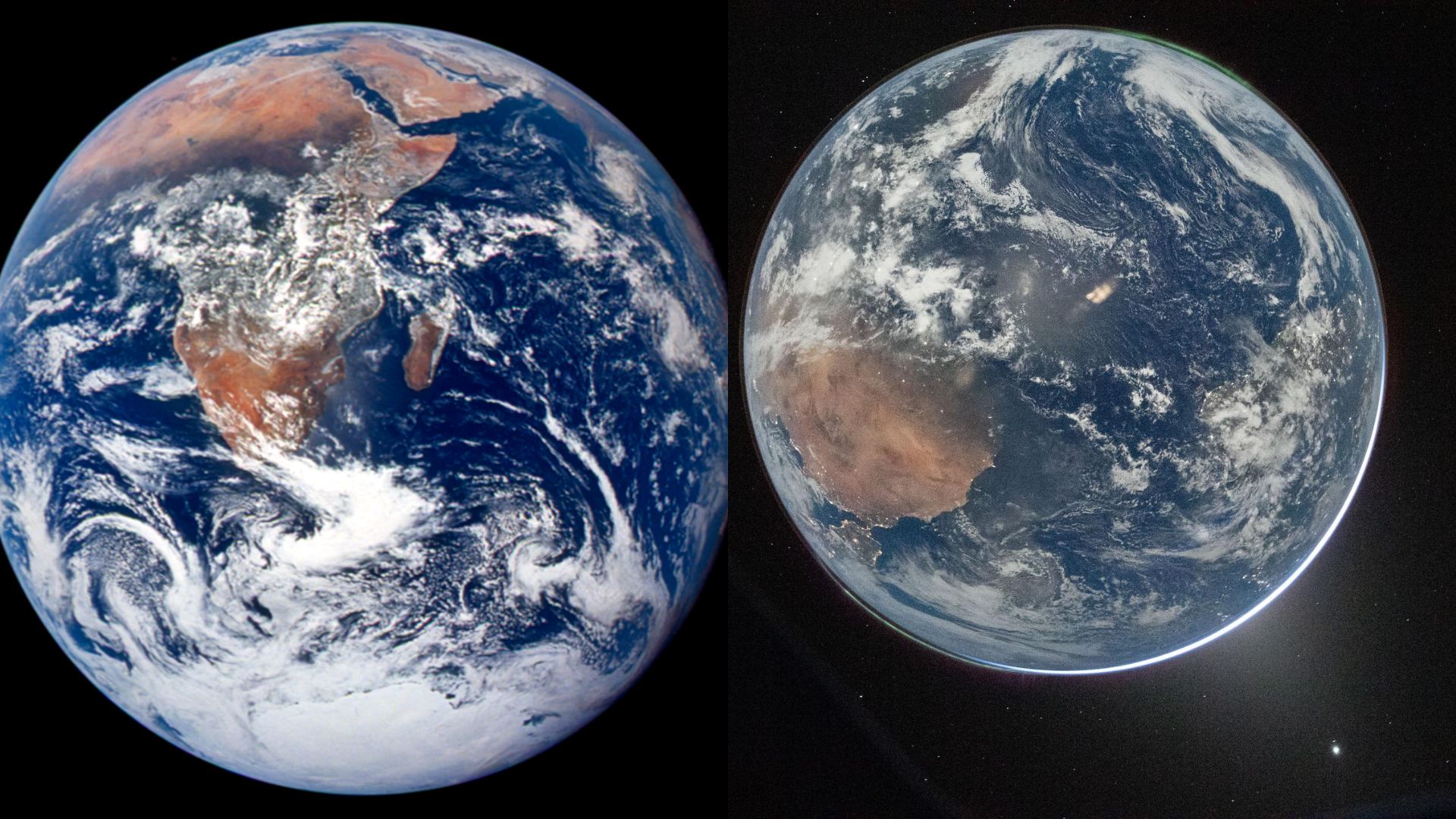
Mission specialist Christina Koch shared similar sentiments during a downlink event on the second day of the flight. "Having just experienced incredible views of planet Earth, and seeing the entire planet out the window in one pane, knowing that we’re about to have some similar views of the moon in that same way is definitely getting me more excited for it," she stated. Koch added, "I knew that that is what we would see. But there’s nothing that prepares you for the breathtaking aspect of seeing your home planet both lit up bright as day and also the moon glow on it at night, with the beautiful beam of the sunset."
As of Friday morning, the Artemis II crew was approximately 100,000 miles from Earth and continuing their journey towards the Moon, with another 160,000 miles remaining. They are scheduled to orbit the far side of the Moon on Monday, April 6, and then use lunar gravity to return to Earth, with a planned splashdown in the Pacific Ocean off the coast of San Diego on April 10. This mission serves as a critical flight test for the broader Artemis program, which aims to land humans on the lunar surface again in 2028, for the first time since the Apollo era.
Comments (0)
You must be logged in to comment.
Be the first to comment on this article!