
Central Bank of Nigeria (CBN) Governor, Mr. Olayemi Cardoso, has articulated that Africa must prioritise growth, industrialisation, and job creation to alleviate poverty, while concurrently building resilience against climate change impacts. Governor Cardoso shared these insights during his keynote address at the Egypt 30by30 Programme, an event recently organised by the Central Bank of Egypt in partnership with the International Finance Corporation (IFC).
He highlighted that the collaborative spirit driving the 30by30 initiative reflects a unified continental aspiration for a future that is not only resilient and climate-conscious but also economically sustainable.
Cardoso stated that through enhanced collaboration with the Central Bank of Egypt and various partners within the World Bank Group, the CBN is committed to developing a robust, risk-aware financial architecture. This includes advancing green finance, bolstering cross-border cooperation, and strategically positioning Africa to navigate economic challenges and flourish in a dynamic global landscape.
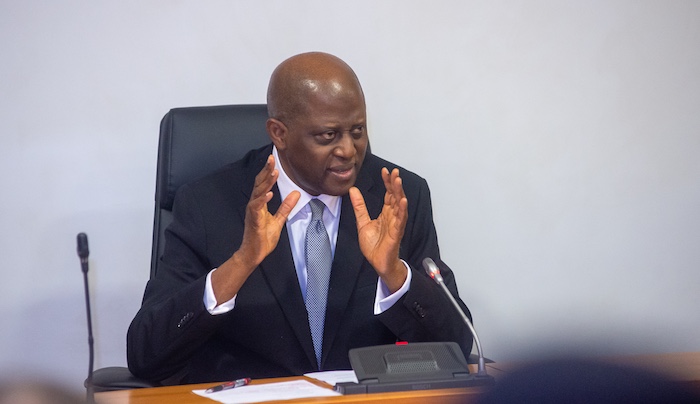
In a related statement, Cardoso underscored that credibility is the bedrock of resilience. He explained, “In Nigeria, we are implementing disciplined and transparent reforms that are fortifying our macroeconomic foundations and enhancing trust in the financial system, thereby paving the way for sustained growth.
“To establish resilient financial systems, it is imperative that we ground our economies in dependable institutions, sound policies, transparent markets, and innovation that considers risk.”
Cardoso further elaborated, “Climate risk is intrinsically linked to financial risk. It influences sovereign credit ratings, the cost of capital, inflation trends, food security, insurance markets, and overall fiscal stability.”
The CBN governor pointed out that while Africa contributes minimally to climate change, it disproportionately suffers its severe consequences.
He added that Africa also possesses immense potential in renewable energy, biodiversity, a youthful demographic, and rapidly developing financial markets.
“To harness these opportunities, we must foster innovation for resilience collectively, not as individual nations but as a united continent,” Cardoso urged.
“By engaging in deliberate, transparent, and steadfast collaboration, we can construct the resilient, sustainable, and inclusive financial systems that Africa requires, not only to withstand future challenges but also to achieve prosperity in the coming decades.”
The discussion underscored a critical imperative for the continent: Africa's financial future is contingent upon a dual commitment to stability and sustainability, according to the statement.
Comments (0)
You must be logged in to comment.
Be the first to comment on this article!