
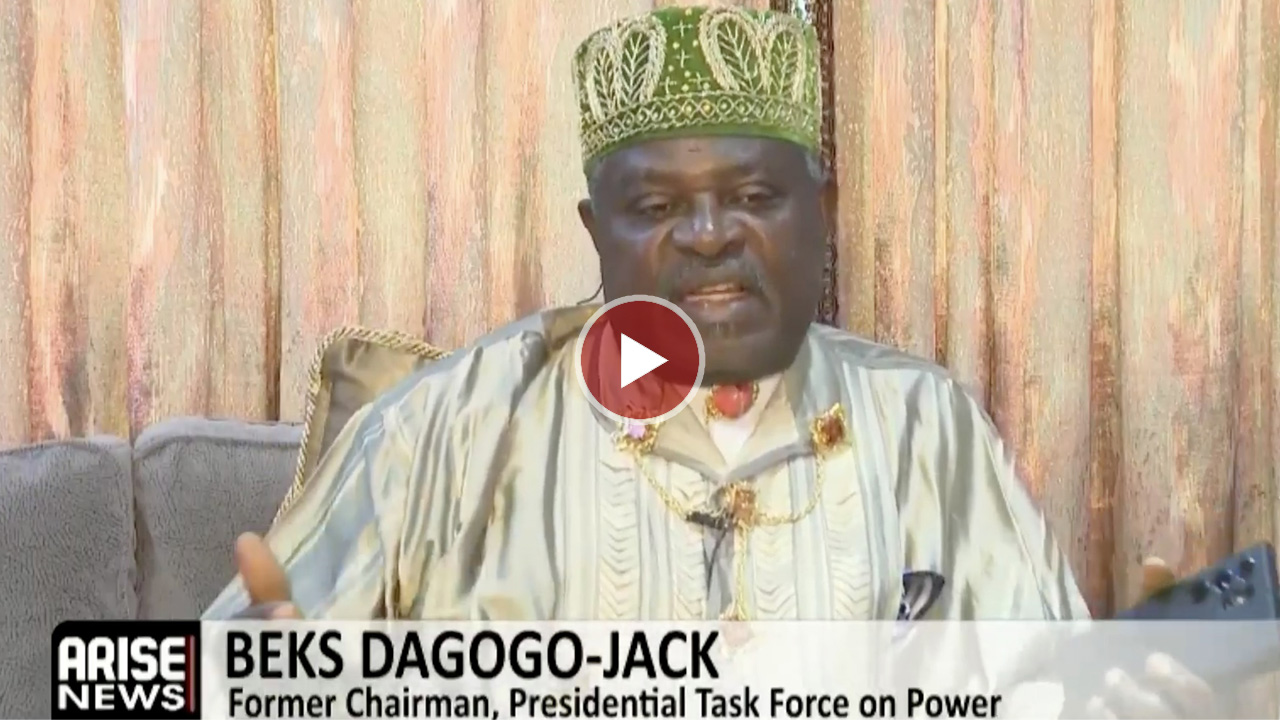
Former chairman of the Presidential Task Force on Power, Beks Dagogo-Jack, has voiced strong criticism regarding Nigeria's electricity sector reforms. He asserts that the nation is currently without a distinct strategic plan and is instead relying on mere rhetoric, lacking the essential elements of defined timelines, accountability, and clear objectives.
Dagogo-Jack's commentary came during an interview with ARISE News on Saturday, following a recent national grid failure. He indicated that the process of reforming the power sector, which commenced around 2010, has lost its intended direction due to the absence of a systematic plan.
"The truth of the matter is that we don’t even have a roadmap, a reform roadmap in play now," Dagogo-Jack stated, expressing his disappointment and heartbreak over the prolonged struggles in the sector.
He elaborated that reforms are inherently long-term undertakings, often compared to a relay race where continuity is crucial. Dagogo-Jack suggested that subsequent administrations have failed to maintain focus and consistency in pursuing these reforms, noting a "disconnect with the reform race" during the Buhari administration.
The absence of a publicly accessible reform roadmap, according to Dagogo-Jack, prevents any effective tracking of progress or holding officials accountable. He questioned the lack of a defined trajectory, asking, "If you ask anybody to show you a reform roadmap, where are we going? Where will you be in 2024, 2025, 26? You will not see any."
He further pointed out that despite Nigeria having several power ministers in recent years, none have presented a comprehensive reform package to the public. "We’ve had about three or four power ministers since Buhari to date, but none of them has considered it fit to present a reform package to the Nigerian people," he observed.
Regarding the decentralization of electricity regulation by moving power from the exclusive to the concurrent legislative list, Dagogo-Jack expressed skepticism about its impact. "We did something nominal by taking the power out of the exclusive list and making it concurrent, but go to the states and find out what has happened. Almost zero," he commented.
While acknowledging that repaying debts owed to generation companies (GENCOs) is necessary, Dagogo-Jack stressed that it is not a singular solution to the sector's underlying issues. "Oh definitely. Part of the issues bedeviling the sector is liquidity and debt history and unresolved balance sheet factors," he confirmed.
He highlighted the ongoing dysfunction within the electricity value chain, where GENCOs are not being paid sufficiently, distribution companies (DISCOs) face challenges with remittances, and energy theft remains a significant problem. "Generators, GENCOs are owed. Discos are not remitting as much as they should remit, and they too are complaining about energy theft," he explained.
Despite these difficulties, Dagogo-Jack warned that the recurring grid collapses indicate a failure in regulation and institutional management. "I know that liquidity is a problem, but it’s not meant to be so bad as to bring us down to zero electricity, grid collapses here and there," he stated, noting that grid collapses have already occurred multiple times in the current year.
Dagogo-Jack dismissed the notion that current policy documents constitute a reform roadmap, arguing that these broad policy statements lack the necessary specifics for implementation. "Those policy instruments are very broad in their dimensions. They do not have action plans with timelines and deliverables and resources required to get there," he asserted.
He emphasized that positive government intentions do not automatically guarantee successful outcomes. "Intentions are very bold, but bold intentions and delivering results are related, but they are not automatic," he stated, calling for greater clarity on investment decisions, project timelines, and specific power initiatives.
"This is the kind of details you need to tie into your pronouncement so people are marrying the data and making sense out of it. We don’t see that," he added.
Beyond the energy sector, Dagogo-Jack also addressed the political instability in Rivers State, characterizing it as economically detrimental and potentially pre-planned. "The crisis has impacted us very badly, way more than people can measure," he said. "When you don’t know what tomorrow will bring, you’re attacking the economy of the state."
He contested the idea that the crisis was personal, suggesting it might have been orchestrated. "You could argue that this crisis was premeditated," he stated. "It has nothing to do with the governor."
Dagogo-Jack argued that the situation highlights a deeper governance issue stemming from the breakdown of traditional leadership and oversight structures in the state.
"Without that fabric, you don’t have checks and balances," he explained, alleging that lawmakers now follow directives rather than performing their oversight functions. "One person makes a call, says jump, and they ask how high."
Reflecting on the broader implications for Nigeria's democratic system, Dagogo-Jack expressed concern over the degradation of values within the political landscape. "It's scary. A lot of distortions have taken place," he remarked. "I feel bad for our younger generation. What template will they aspire to imitate?"
He cautioned that without fundamental systemic changes, Nigeria is likely to experience continued instability, despite its abundant resources and potential. "The current system cannot guarantee the kind of destination that we should be looking at as a country," he concluded.
Comments (0)
You must be logged in to comment.
Be the first to comment on this article!