
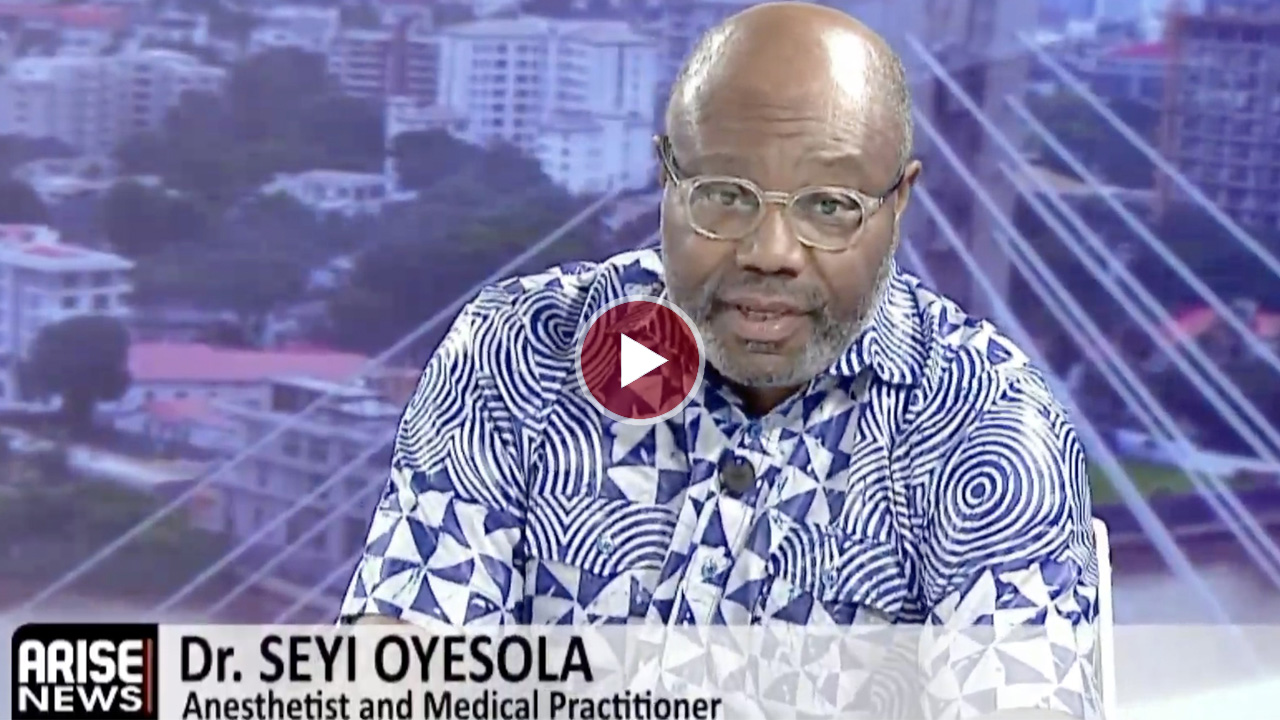
Dr. Seyi Oyesola, a distinguished anesthesiologist, explained that advancements in monitoring, training, and protocols have significantly decreased the dangers associated with anesthesia in Nigerian medical facilities.
During an appearance on ARISE News last Thursday, Dr. Oyesola emphasized that improvements in monitoring, educational standards, and critical care have positively influenced anesthesia outcomes both in Nigeria and worldwide.
He highlighted the minimal risk associated with modern anesthesia practices, stating, "The risk has diminished to such an extent that if you undergo surgery now, your chances of dying from crossing the road are greater than from anesthesia."
Dr. Oyesola pointed out that public knowledge about anesthesia often lacks depth and is frequently simplified to the concept of simply "putting people to sleep."
He elaborated, "If you ask someone who knows just a bit about it, they might say, yes, it's about putting people to sleep, and while that's accurate, the reality is that if it were merely sleep, you'd awaken as soon as the surgeon arrives with their instruments."
In discussing the essential aspects of anesthesia, Dr. Oyesola remarked that it also involves managing pain and preventing involuntary movements for safe and precise surgical procedures.
"Pain management is a critical factor. To ensure that surgical precision is maintained, it is essential to prevent any reflex actions, which is another aspect of anesthesia."
He stressed the crucial role that anesthesia plays in modern medicine, noting that many successful medical procedures, particularly complex surgeries, rely heavily on effective anesthesia and critical care.
"Many of the advancements that healthcare celebrates today, as well as the favorable outcomes experienced by patients traveling abroad, are largely due to the integral roles played by anesthesia and critical care in patient recovery."
Using open-heart surgery as an illustration, Dr. Oyesola stated that such operations cannot be conducted safely without adequate critical care provisions.
"You simply cannot conduct that type of surgery without having a critical care unit prepared and accessible."
Addressing concerns regarding anesthesia, he acknowledged that every medical procedure carries inherent risks but highlighted that informed consent from patients is vital.
"Each medical intervention, regardless of whether it involves anesthesia, toenail removal, or a circumcision, carries some level of risk."
He further emphasized the importance of ensuring that patients are well informed about potential risks, including uncommon but serious complications.
"I must inform you of at least the common complications, which may even involve mortality."
However, Dr. Oyesola reassured that the frequencies of anesthesia-related risks have drastically decreased over the years, citing changes in malpractice insurance premiums as significant indicators.
"When I was a junior doctor, anesthesiologists faced some of the highest malpractice insurance premiums."
"Upon qualifying and beginning my practice in anesthesia and critical care, we saw that our premiums decreased to the lowest levels on record."
He attributed this significant advancement primarily to stringent monitoring practices.
"There are five essential monitors required for every patient: heart rate, ECG, oxygen saturation, blood pressure, and others."
He also pointed out that the practice of anesthesia in Nigeria is regulated by stringent professional standards and mandatory legal documentation.
"It is a legal obligation to maintain an anesthesia record chart that is completed before administering anesthesia."
As he concluded, Dr. Oyesola stated that every patient should have access to this record after their procedure to promote accountability and ensure safety in anesthesia administration.
Comments (0)
You must be logged in to comment.
Be the first to comment on this article!