
The original inhabitants of Abuja have presented a list of demands, calling for the splitting of the Federal Capital Territory (FCT) into three distinct Senatorial districts. They argue this is essential to rectify the severe marginalisation, injustice, and political exclusion they have faced since the territory's establishment half a century ago.
These demands were voiced by the FCT Stakeholders Assembly during a media briefing held on Tuesday, coinciding with the 50th anniversary of the FCT.
Dr. Aliyu Kwali, the President of the FCT Stakeholders’ Assembly, stated that the indigenous people also request the creation of more federal constituencies to tackle their underrepresentation, as well as the reclassification of the Area Councils as Local Government Areas to align with those in other states of Nigeria.
Furthermore, they are advocating for the implementation of governance systems that would ensure local communities have a voice in decisions that affect their lives.
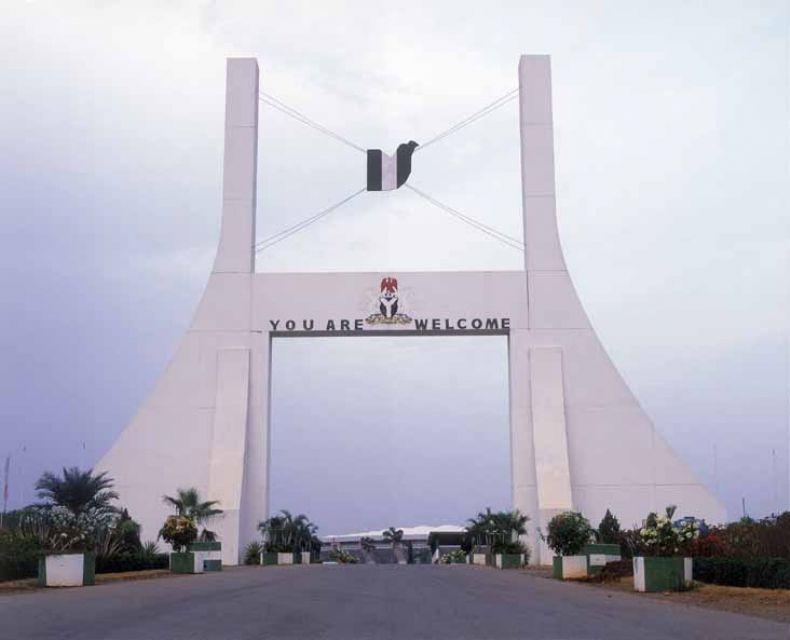
Kwali emphasized that while the federal government may celebrate achievements in urban development and infrastructure as it marks Abuja's 50th year, for the original occupants, the occasion carries a significantly different sentiment.
The indigenes expressed sorrow that the past five decades have not been a time of festivity but rather a period characterized by ongoing dispossession, exclusion, and marginalisation.
They highlighted enduring scars from socio-economic segregation, loss of ancestral land and means of livelihood, forced home demolitions, and the desecration of cultural and burial sites, alongside the pervasive poverty driven by governmental policies.
“These grievances are not mere abstractions; they reflect the lived realities that set indigenous communities in the FCT apart from other Nigerians, a situation not chosen but imposed through constitutional and administrative frameworks,” stated Kwali.
He cited Section 42(1) of the Constitution of the Federal Republic of Nigeria, which guarantees freedom from discrimination, arguing that in reality, the indigenous FCT populace faces systematic denial of rights that are readily available to other citizens.
“The Federal Government has, through legislative and administrative measures, imposed numerous restrictions on the rights of the original inhabitants of the FCT solely due to their identity as natives,” he added.
Kwali pointed out that this unfortunate trend is most evident in the forced demolition of homes, which often occurs without due notification, proper evaluation, compensation, or resettlement — a practice that uniquely affects indigenous populations within the FCT.
“Areas such as Gishiri, Karsana, and Kuchibedna have experienced such demolitions, reinforcing the belief that development in the FCT continues at the cost of its first inhabitants,” Kwali remarked.
Comments (0)
You must be logged in to comment.
Be the first to comment on this article!