
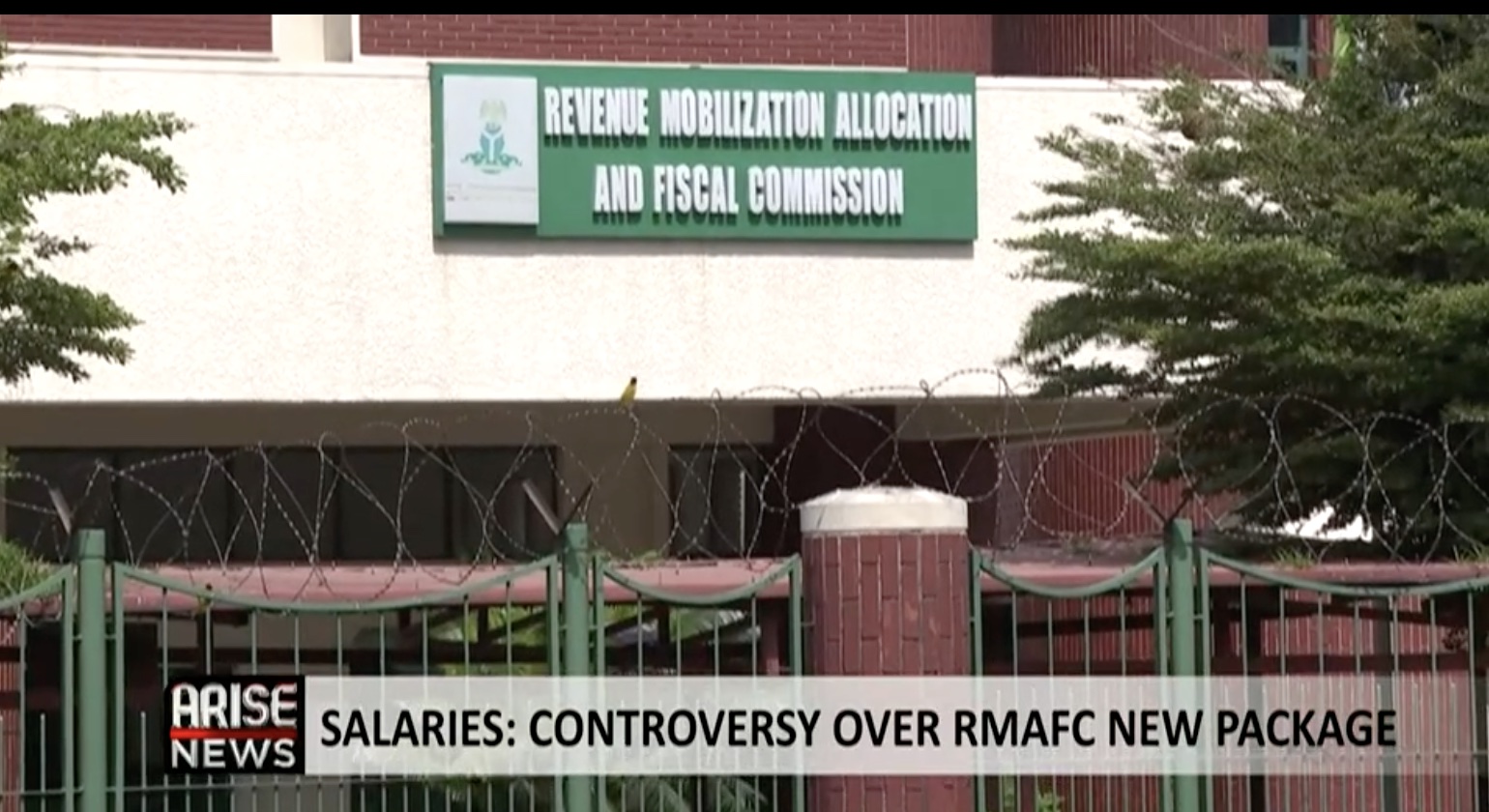
A federal panel established by the Revenue Mobilisation Allocation and Fiscal Commission (RMAFC) has advocated for the federal government to declare a state of emergency in Nigeria’s oil and gas industry. It has also suggested a forensic audit of crude oil production dating back to 2004, as well as significant revenue adjustments among oil-producing states.
These recommendations were outlined in the January 2026 report from the Inter- Agency Technical Committee (IATC), which reviewed well coordinates of disputed and newly developed oil fields from 2017 to December 2025.
Formed in June 2025, the committee included representatives from the RMAFC, the Nigerian Upstream Petroleum Regulatory Commission (NUPRC), the National Boundary Commission (NBC), and the Office of the Surveyor-General of the Federation (OSGoF).
Its mandate entailed the physical verification of wellhead coordinates onshore, offshore, and in creeks, accurately mapping them to resolve disputes regarding the 13 percent derivation payable to oil-producing states under the 1999 Constitution.
One of the pivotal recommendations from the committee involved urging the President to declare a state of emergency in the oil and gas sector to combat criminal activities committed by operators, tackle security issues in offshore operations, and restore regulatory order.
Additionally, it proposed forming an inquiry team to investigate underreporting of crude oil production and recommend the immediate metering of all crude oil and gas flow stations across the country.
The committee stressed the need for a forensic audit of oil and gas production from 2004 onwards, covering over two decades of output and associated revenue payments to the Federation Account.
Such an audit, if sanctioned, could have major financial repercussions for oil companies, regulators, and the three levels of government, especially if discrepancies in production reports or derivation payments are discovered.
According to the IATC, verification efforts identified hundreds of wells across nine oil-producing states, with Rivers State accounting for 195 wells, Delta State 171, and Imo State 169 among others.
The operation also uncovered several unfamiliar oil and gas fields and addressed enduring disputes concerning wells straddling state boundaries. Security during the verification was provided by the Nigerian Army and the Nigerian Navy to emphasize the operation's sensitive nature.
A politically sensitive part of the report includes recommendations regarding revenue adjustments and refunds of derivation payments. The committee proposed that 107 disputed wells in offshore mining leases (OMLs) 70 and 100 be equitably shared between Akwa Ibom and Rivers States, with Akwa Ibom liable to reimburse 50 percent of derivation arrears to Rivers.
Further, Delta State was advised to refund portions of derivation payments to Edo and Ondo States for specific fields, while Akwa Ibom was instructed to compensate Cross River for previously received derivation payments on certain wells.
Bayelsa and Imo States were also noted to return derivation payments to Rivers State for specifically identified fields. Additionally, several wells located between Anambra and Delta States are to be shared equally pending final boundary determinations, with appropriate revenue adjustments.
These recommendations could prompt substantial fiscal re-evaluations among oil-producing states, potentially influencing monthly allocations from the Federation Account and straining relationships among state governors.
In addition to revenue adjustments, the committee also recommended that the Vice President direct the NBC and OSGoF to examine Nigeria’s maritime boundary maps and declare a state of emergency to resolve ongoing boundary disputes.
The committee specifically called for a comprehensive review of the existing boundary decisions between Bayelsa and Rivers States, alongside the production of a definitive Map Instrument, addressing long-standing petitions from governors about oil wells and fields.
In another major recommendation, the committee suggested the Attorney General of the Federation form a group to review the Petroleum Industry Act for possible amendments by the National Assembly, which governs regulatory structures and fiscal terms in the upstream oil sector.
Such amendments could reopen debates over derivation, licensing, and revenue- sharing arrangements. Furthermore, the report requested investigation into Chevron’s reported practice of requiring Nigerian government officials to obtain clearance under U.S. laws before accessing certain facilities, posing questions concerning regulatory authority and national sovereignty.
However, preliminary signs of institutional discord have emerged, as two representatives from the NUPRC declined to endorse the final report, stating that certain topics surpassed their agency's operational scope.
Despite their full participation during fieldwork and discussions, the NUPRC representatives' refusal to sign the report might increase scrutiny, particularly as it calls for investigations into underreporting and tighter regulatory enforcement within the upstream oil sector.
RMAFC based the verification exercise on its constitutional responsibility outlined in Paragraph 32(a), Part I of the Third Schedule to the 1999 Constitution concerning monitoring revenue accruals and disbursements from the Federation Account.
This exercise was also aimed at ensuring adherence to the 13 percent derivation principle and the Allocation of Revenue (Abolition of Dichotomy in the Application of Derivation) Act, enacted in 2004. RMAFC Chairman Mohammed Bello Shehu, when launching the exercise in Asaba in September 2025, characterized it as a proactive measure towards fair allocation of national resources and resolving lingering inter-state disputes.
Should the IATC report's recommendations for emergency measures, a comprehensive two-decade forensic audit, extensive revenue refunds, boundary reviews, and potential legislative amendments receive approval from the Presidency and the National Assembly, they could significantly alter derivation calculations, change inter-state financial dynamics, and enhance regulatory oversight of Nigeria’s vital oil sector.
Comments (0)
You must be logged in to comment.
Be the first to comment on this article!