
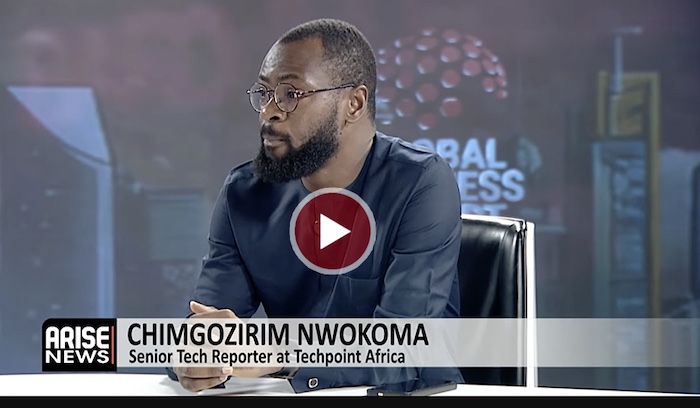
Chimgozirim Nwokoma, a senior reporter at Techpoint Africa, has indicated that Flutterwave's recent acquisition of a microfinance bank license signals a deliberate strategic shift by the fintech company to expand into lending services, moving beyond its primary function of payment processing.
During a discussion on ARISE News, Nwokoma elaborated that the new license empowers Flutterwave to accept deposits, a capability previously unavailable to the company. This contrasts with its earlier operational model, where it primarily acted as a payment intermediary, processing transactions without retaining customer funds or engaging directly in lending.
"Money just passes through you... but you can’t hold it," he explained, highlighting the limitations under previous licensing.
With the ability to hold deposits now secured, Nwokoma suggested that Flutterwave is positioned to enhance its business model by capturing greater value from the transactions it handles.
"They now want to go a step further... to extract more value from their transactions," he stated.
He identified lending as a highly probable and profitable next step, aligning well with Flutterwave's existing infrastructure and market position.
"Lending is possibly one of the highest-margin businesses you can do," Nwokoma added.
Rather than targeting the retail banking sector, Nwokoma anticipates Flutterwave will concentrate on providing loans to businesses, leveraging its established client base and transaction data.
"They process payments primarily for businesses... so they can lend based on those payment flows," he explained.
This approach offers Flutterwave a competitive edge, enabling credit assessments based on real-time transaction data, potentially reducing reliance on traditional collateral requirements.
"We see everything that you do in terms of payments... so we can lend to you," he said.
Nwokoma believes this strategy could help alleviate the significant financing challenges faced by many businesses in Nigeria that struggle to obtain loans from conventional banks.
"Businesses can’t get money from banks," he noted.
Furthermore, Nwokoma pointed to Flutterwave's recent acquisition of Mono as a move that enhances its data analytics capabilities, which could significantly improve its loan assessment and recovery processes.
"They have a better sense of the data that these businesses have," he said.
However, he also cautioned that the success of this new venture depends on effective execution, given the inherent risks associated with lending and the necessity for robust systems for credit risk management and loan recovery.
"How that plays out is an entirely different ballgame," he stated.
In summary, Flutterwave's new microfinance bank license represents a significant pivot towards lending, equipping the company to address business financing gaps within Nigeria's financial sector by leveraging its extensive payment data.
Comments (0)
You must be logged in to comment.
Be the first to comment on this article!