
Femi Kuti, the iconic Afrobeat musician, has celebrated the posthumous Grammy Lifetime Achievement Award bestowed upon his late father, Fela Anikulapo Kuti, viewing it as an international validation of his father's dedication to fighting against military oppression and corruption.
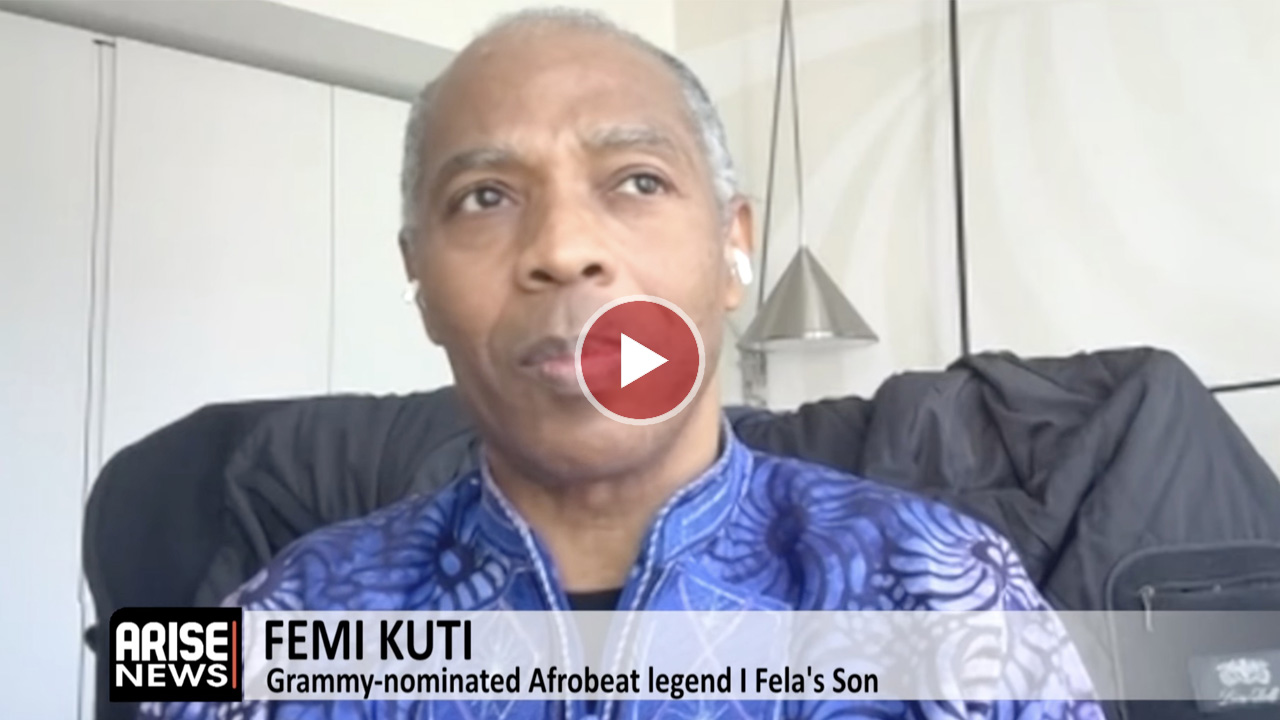
In a recent discussion with ARISE News, Femi expressed that this accolade holds profound emotional and historical importance, especially for individuals who lived during the period of military dictatorship that influenced Fela's music and activism.
"Everyone is joyful and excited about this recognition," Femi remarked. "As I sit here in Los Angeles, it’s difficult to convey what my father stood for—particularly if you weren’t alive in the 1970s—fighting against dictatorial rule in Nigeria when people were deeply afraid of the military."
He reflected on the numerous instances of violence his father faced and the impact this had on their family.
"It was a constant series of raids. The burning of Kalakuta was among the most traumatic events, and my grandmother was thrown from a window, eventually succumbing to her injuries," he recounted. "It's challenging to explain the level of terror we felt as his children during that time. We never knew when he would be detained or released; it was a cycle of arrests."
Femi emphasized that Fela's music is inextricably linked to Nigeria’s political landscape, explaining how his father's sound transformed into an instrument of resistance.
"Understanding how he evolved as an artist is crucial," he stated. "From his first hits in the 1960s, such as 'Lady' and 'Shakara,' he increasingly embraced political themes, standing against one regime after another, culminating in the destruction of his home. Fela’s life was truly remarkable."
When asked about Fela’s possible reaction to the current political climate in Nigeria, Femi firmly distanced himself and his family from politicians his father criticized.
"It frustrates me when it’s suggested that I supported Buhari or campaigned for Tinubu—it's simply false. As Fela's son, aligning myself with any government that lacks the people's interest, especially those who victimized him, is unthinkable," he asserted.
Femi noted that the Grammy recognition not only represents the efforts of the Kuti family but also reflects the global Afrobeat community's commitment to maintaining Fela's legacy.
"My sister, my brother Seun, my son Made, and the rest of our family have each contributed in our own way to honoring his memory. Numerous artists continue to play his music, while many study his contributions. Today’s Afrobeat scene is rich with influences drawn from him," he explained. "Being recognized with such a significant award as a Grammy is gratifying, but this accolade transcends our family. Fela was a father figure to many, earning him the title 'our father.' He gave a voice to the voiceless in the 1970s and 1980s."
Reflecting on Nigeria's stagnant progress, Femi lamented that many of the concerns his father raised remain unresolved.
"Nigeria and Africa as a whole should be models for the rest of the world. Our leaders witness how infrastructure functions abroad—their children attend the best universities, yet they refuse to replicate those successes at home," he said.
"It’s disgraceful that we still struggle with road construction, with projects taking years for mere kilometers. What is preventing us from making Nigeria great?" he questioned.
Femi dismissed comparisons between Fela’s legacy and those of modern Afrobeats artists as unnecessary.
"Fela is unmatched; he occupies a unique place in music. We hold him in the highest regard, and I consider artists like Wizkid as akin to family. The debates comparing them should never have been initiated," he noted.
He called upon Nigerians, particularly the youth, to focus on nation-building rather than engaging in divisive discussions.
"We should celebrate Nigeria's recognition at the Grammys. It's a positive development for Africa and the nation. However, issues like tribalism and terrorism require our immediate attention," he urged.
"If young people don’t take charge and demand accountable governance, we are heading for significant difficulties," Femi warned. "Fela’s voice has been silenced, and now, 29 years later, we still grapple with the same challenges."
He concluded with a poignant reminder about his extensive career in music.
"With over 40 years in the industry, I’ve produced songs that often critique our political realities. How long will we continue to lament corruption, abduction, and poverty? When will Nigeria unite to create a better nation?"
Comments (0)
You must be logged in to comment.
Be the first to comment on this article!