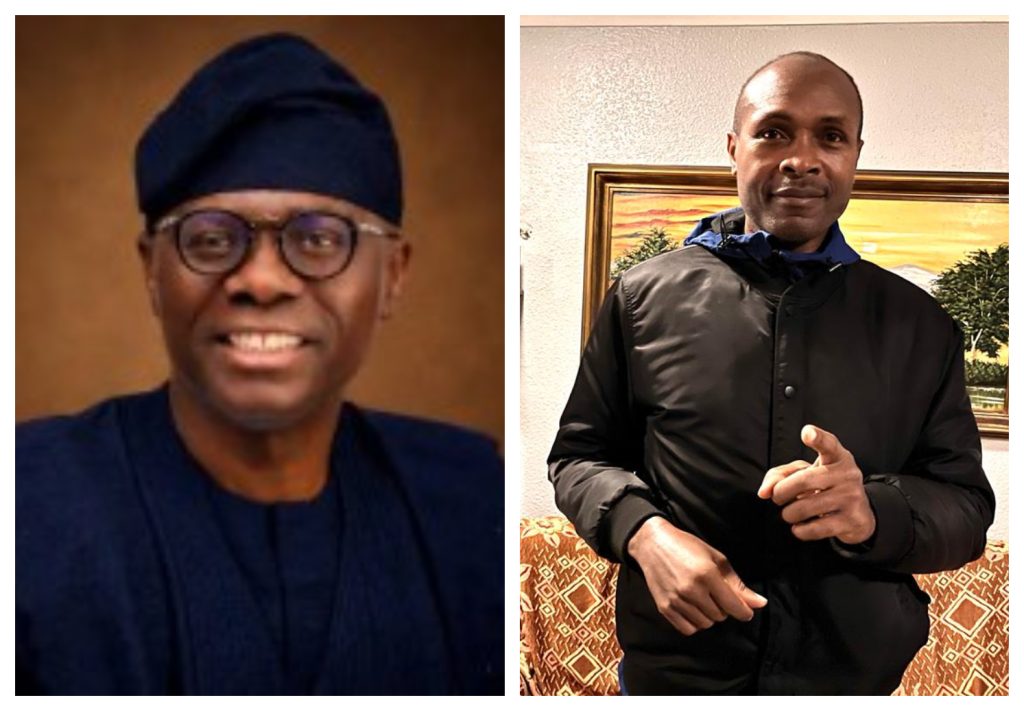
Former Commonwealth and British boxing champion Peter Idemudia Oboh, now a self‑described minister of God, publicly demanded that **[Governor Babajide Sanwo‑Olu](https://en.wikipedia.org/wiki/Babajide_Sanwo-Olu)** of **[Lagos State](https://lagosstate.gov.ng)** intervene immediately to address the massive accumulation of human waste on the **[Oshodi‑Apapa Expressway](https://en.wikipedia.org/wiki/Oshodi%E2%80%93Apapa_Expressway)**. In a statement released on Monday, 26 October 2026, Oboh warned that the filth lining the road could undermine the state’s reputation for swift health‑crisis responses and posed a danger he described as “worse than Ebola.”
**Key facts**
- The appeal was made on 26 October 2026, a Monday, via a written statement circulated to local media.
- Oboh highlighted that the median of the expressway, from Cele through Ijesha to Mile 2 and the port area, is covered in feces and other human waste.
- He quoted, “Your Excellency, Governor Babajide Sanwo‑Olu, there is a big issue that is worse than, and can escalate, Ebola.”
- The former champion stressed that the problem could jeopardise ongoing public‑health initiatives and urged the governor to act before his tenure ends in a few months.
- Oboh also questioned the role of drivers’ unions, motor‑boys and tanker drivers in contributing to the waste problem.
What did Peter Oboh say about the condition of the expressway?
Oboh described the Oshodi‑Apapa corridor as having been “turned into a toilet and waste bin by residents.” He claimed the median strip is continuously littered with fecal matter, discarded plastics and other refuse, creating a public‑health nightmare for commuters and nearby communities.
Why does he compare the waste to Ebola?
Lagos has earned praise for its rapid response to health emergencies, including past Ebola alerts. Oboh argued that while the state remains vigilant against viral outbreaks, the visible, untreated waste on a major transport artery presents an immediate, tangible threat that could facilitate disease transmission, thereby eclipsing the abstract risk of Ebola.
What actions does he request from the governor?
Oboh called for an “iron‑fist” approach, urging the governor to mobilise sanitation crews, enforce anti‑littering regulations, and hold transport unions accountable for the actions of motor‑boys and tanker drivers who exacerbate the problem. He emphasized that decisive measures are needed before his political tenure expires.
Background on Lagos’s health‑crisis reputation
Lagos has historically been lauded for its proactive stance on epidemics, often deploying rapid testing, contact tracing and public‑awareness campaigns. Recent statements from the state health ministry have reiterated that no Ebola case has been confirmed in Lagos, underscoring the city’s vigilance. Oboh’s appeal seeks to align the city’s sanitation standards with its health‑security reputation.
The broader implications
If left unchecked, the waste on the Oshodi‑Apapa Expressway could become a breeding ground for pathogens, attract vermin and undermine the city’s image as a clean, business‑friendly hub. The expressway is a critical link for goods moving to and from the Apapa port, meaning that sanitation failures could also affect trade logistics.
In closing, Oboh expressed optimism, stating that “Nigeria is blessed” and that swift action could restore Lagos’s cleanliness, urging the governor to act promptly to eradicate what he termed a “demonic mindset” behind the ongoing filth.