
Philip Mshelbila, Secretary-General of the Gas Exporting Countries Forum (GECF), has revealed that over 600 million individuals across Africa still lack electricity, while an even greater number do not have access to clean cooking facilities.
This statement was made during his address at the 2026 Nigeria International Energy Summit held at the State House in Abuja.
Mshelbila pointed out that Africa's per capita energy use is merely one-third of the average for the world, insisting that the continent's overall energy consumption must at least triple by the year 2050 if it aims to genuinely eradicate energy poverty.
“More than 600 million Africans are still without electricity, and GECF analysis suggests that the total energy consumption on the continent should at least triple by 2050 to put it on a real path to overcoming energy poverty,” he noted.
He outlined that to meet this goal, a complete transformation of Africa's energy systems is necessary, in which natural gas will play a pivotal role.
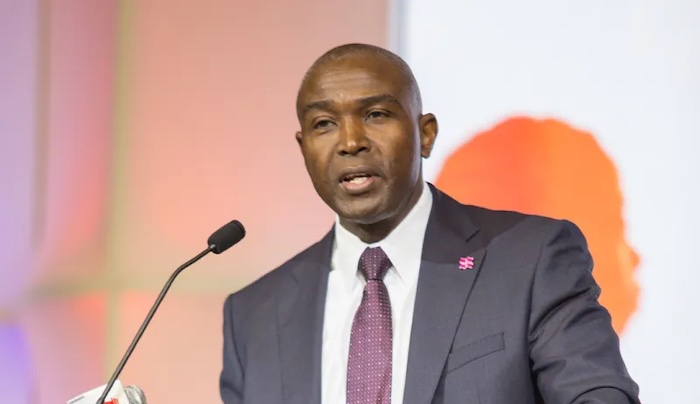
“Natural gas is central to this transformation—whether used for electricity generation, fertilizer production to enhance food security, or through LPG for clean cooking,” Mshelbila asserted.
The former Managing Director and Chief Executive of Nigeria LNG Limited (NLNG) pointed out that global energy demand has surged from approximately 40 exajoules in the 18th century to around 635 exajoules in 2024. This soaring demand has facilitated unprecedented industrial development and improved living standards, even as fossil fuels remain the principal component of the global energy composition.
He urged policymakers and business leaders to incorporate population growth into their long-term strategies, warning that neglecting this factor could jeopardize future development efforts.
“If your long-term plans do not account for the 400 million Nigerians expected in 25 years, you will need to reassess your strategy,” he advised.
Mshelbila further mentioned that Africa's population is anticipated to reach approximately 2.5 billion, underscoring the need for governments and institutions to prepare for future demands in healthcare, education, infrastructure, and services.
He pointed out the resilience of natural gas during recent global energy crises, stating that it remains the cleanest hydrocarbon and is expected to take on an even more significant role in the global energy landscape.
“GECF analysis predicts that global primary energy demand will increase by nearly 20 percent by 2050 due to economic growth and population expansion. Natural gas is key to meeting this demand in a secure, affordable, and sustainable manner,” he remarked.
Mshelbila applauded advancements in Nigeria's energy sector, calling the country a crucial player in the African gas narrative.
“Nigeria is pivotal to the story of Africa's gas. You cannot discuss African gas without including Nigeria,” he stated.
He noted that the GECF comprises 20 member countries that control around 70 percent of the world’s proven natural gas reserves and nearly half of global liquefied natural gas (LNG) exports, with Nigeria being a founding member.
Mshelbila mentioned that Nigeria not only occupies the position of Secretary- General of the forum but also holds the rotating presidency of the GECF for 2026.
By Blessing Ibunge, Port Harcourt
Comments (0)
You must be logged in to comment.
Be the first to comment on this article!