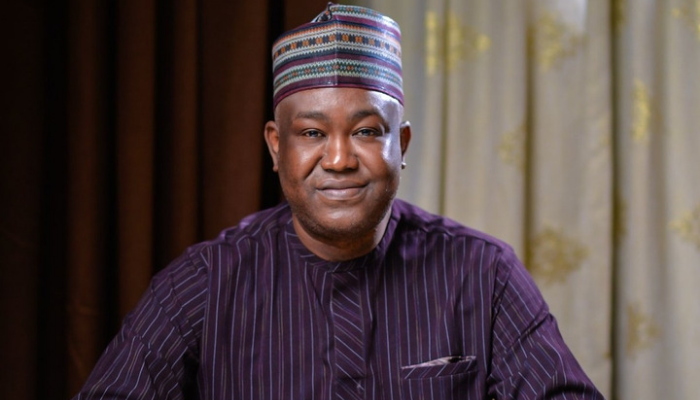
Dr Gbenga Olawepo-Hashim, the standard-bearer for the Accord Party in the previous presidential race, has formally engaged the United States Commission on International Religious Freedom (USCIRF) regarding the dire humanitarian situation in Nigeria. Speaking in Abuja on Friday, he drew attention to an estimated 3.68 million internally displaced persons (IDPs) and demanded stronger international action to curb persistent religious persecution, ethnic discrimination, and violent insecurity.
Who is Dr Gbenga Olawepo-Hashim and what did he demand? Olawepo-Hashim is a prominent Nigerian politician who used his platform with the US commission to highlight multifaceted governance and security challenges. Beyond the widespread displacement of citizens, he specifically petitioned for the immediate release of detained Hausa cultural activist Maisango and called for international investigations into recent violent onslaughts across rural settlements in Kebbi State.
What are the key facts regarding the humanitarian crisis?
- Nigeria currently accounts for approximately 3.68 million internally displaced persons, based on figures recorded by the United Nations High Commissioner for Refugees as of October 2026.
- Violence in Shanga Local Government Area of Kebbi State—including targeted raids on settlements such as Kalkami, Tungar Bori, and Kawara in April 2026—left residents dead and roughly 11 villages completely razed.
- The United States previously designated Nigeria as a Country of Particular Concern in October 2025 following persistent advocacy and recommendations by USCIRF.
- Dr Olawepo-Hashim stated: "Religious freedom is an intrinsic part of democratic right."
Why does the politician argue that religious freedom challenges are broader than commonly perceived?
During his presentation, Olawepo-Hashim pointed out that while Christians in Northern Nigeria face well-documented persecution, violations of religious liberty also heavily impact minority Muslim groups, including Shia Muslims and specific cultural demographics like Hausa communities. He argued that social and religious acceptance in certain regions is frequently dictated by ethnic identity and cultural affiliation rather than faith alone. He highlighted the alleged marginalisation of Hausa Muslims, noting that they often experience unequal treatment despite sharing the same Islamic faith with dominant regional groups.
What are the specific security concerns raised about Kebbi State?
The politician drew the commission's attention to the deteriorating security situation in northwestern Nigeria, focusing on Shanga Local Government Area. He recounted that armed groups operating in the locality are often motivated by territorial control, destruction of settlements, and violence against civilians rather than religious conversion alone. According to him, the systematic burning of 11 villages during the April 2026 attacks demands sustained international observation and a robust response.
Furthermore, Olawepo-Hashim addressed the continued detention of cultural activist Maisango. He alleged that Maisango has been held without trial following his dismissal from the Department of State Services, urging authorities to respect fundamental human rights and due process.
How has the government responded to accountability concerns?
Olawepo-Hashim heavily criticized the current administration, accusing it of failing to adequately protect vulnerable populations and decisively dismantle armed bandit networks. He alleged that political considerations have continuously weakened state institutions, leading to insufficient accountability. He concluded by urging the international community to adopt a comprehensive strategy that protects the constitutional rights of all citizens, regardless of their ethnic or religious background.