
Global equity markets suffered losses as oil prices climbed above $100 a barrel, triggered by fresh assaults on shipping by Iranian forces in the Gulf, stoking fears of increasing inflation.
On Thursday, major Asian stock indexes saw significant declines as oil prices surged by around 9%, breaching the $100 threshold in response to reports of additional vessel strikes and closures of major oil terminals in the region.
The uptick in crude oil prices has amplified concerns about escalating energy costs, which could exert upward pressure on inflation and compel central banks to maintain elevated interest rates for an extended period.
Investor sentiment was dampened despite announcements from the International Energy Agency to release 400 million barrels of oil from strategic reserves—the largest such intervention in its history. Meanwhile, the United States also indicated it would begin the release of 172 million barrels starting next week.
Brent crude futures saw an increase of 9.2%, reaching $100.37 per barrel, while U.S. crude futures rose by 8.1% to $94.26.
Asia’s stock markets faced sharp declines, with MSCI’s Asia-Pacific index, excluding Japan, falling by 1.5%. Japan's Nikkei index decreased by 1.4%, Chinese blue-chip stocks dropped by 0.6%, and Hong Kong’s Hang Seng index fell by 1.2%.
Futures contracts indicated further declines in western markets, with S&P; 500 and Nasdaq futures down by 0.9%. Similarly, EUROSTOXX 50 futures fell by 0.8% while Germany’s DAX futures decreased by 1%.
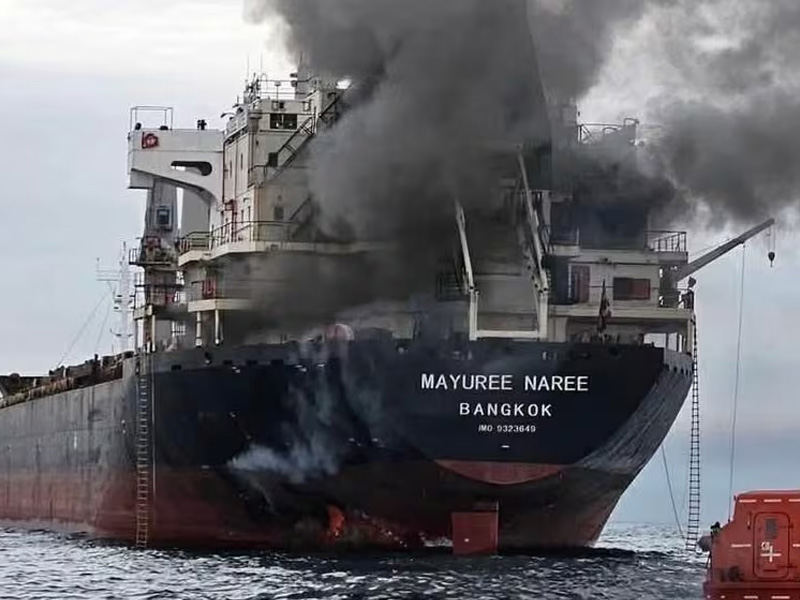
In Iraq, security sources reported two fuel tankers were struck by explosive- laden Iranian boats in its waters on Thursday morning. An Iraqi official revealed that operations at the country's oil ports had ceased completely.
Various reports indicated that Oman had also evacuated vessels from its critical oil export terminal at Mina Al Fahal as a precaution.
Rodrigo Catril, a leading foreign exchange strategist at NAB, noted persistent market concerns surrounding the Strait of Hormuz. He remarked, "The news we have received over the last 24 hours is not promising," highlighting the risk of further increases in oil prices.
Iran has intensified its assaults on merchant vessels within the Strait of Hormuz, with reports indicating at least 16 ships have been targeted since hostilities escalated. Tehran has cautioned global markets to brace for oil prices approaching $200 per barrel.
Adding to the uncertainty, U.S. President Donald Trump proclaimed on Wednesday that victories had been achieved against Iran but indicated the nation would continue its military presence to fulfill its objectives.
Recent economic data showed a 0.3% increase in U.S. consumer prices for February, aligning with expectations and surpassing January's 0.2% rise. Analysts, however, are concerned that these figures may soon be overshadowed by inflationary pressures stemming from the intensifying conflict.
The bond markets reflected these inflationary concerns, with global yields rising. Yields for 10-year U.S. Treasury notes increased by three basis points to 4.2374%, following a sharp overnight rise.
Investors recalibrated their expectations regarding potential interest rate cuts, fearing that central banks may have diminished flexibility to lower rates if energy costs continue to escalate.
In currency markets, there was a notable preference for the U.S. dollar as investors sought safety away from the currencies of energy-importing economies. The euro declined by 0.2% to $1.1539, marking its lowest point since November, while the dollar rose to 159.12, its strongest level since January.
The Australian dollar, typically seen as a risk-sensitive currency, fell by 0.4% to $0.7122 after reaching a three-year high the previous day.
Comments (0)
You must be logged in to comment.
Be the first to comment on this article!