
Families in eastern DR Congo are in mourning after the devastating landslide at a rebel-held coltan mine, which claimed the lives of at least 200 individuals. Despite the ongoing hazards, some survivors are preparing to return to their jobs.
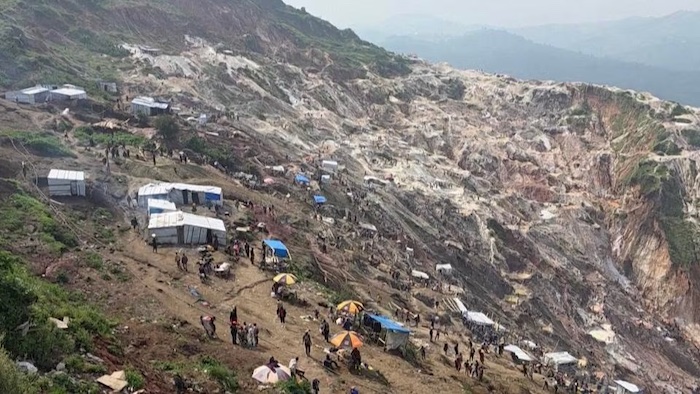
The tragedy unfolded last week when heavy rainfall caused a series of hand-dug tunnels at the Rubaya mining complex to collapse. Located approximately 40 kilometers west of Goma, the mine has been under the control of the Rwandan- backed M23 rebels since early 2024, and many miners are still unaccounted for.
In the Mugunga neighborhood of Goma, relatives of Bosco Nguvumali Kalabosh, aged 39, gathered at his home to honor his memory. Since the incident, friends and family have been surrounding a photo of Kalabosh placed against a wall in tribute.
His brother, Thimothée Kalabosh Nzanga, remarked, "He was expected back in Goma on Thursday."
Bosco had been a miner for over a decade and owned mining operations at the site. Artisanal mining was a family tradition. He leaves behind a wife and four children, the eldest just five years old.
Survivors who are returning say they are compelled to go back to the mines due to financial necessity. Tumaini Munguiko, who survived the incident, visited Kalabosh’s family to express his sympathies.
"Witnessing the death of our peers is incredibly painful. Yet, despite the grief, we have no choice but to return to the mines to support ourselves," he stated.
Munguiko has faced similar situations before, mentioning, "Such incidents have almost become a norm for us. We endure it because it is our means of survival. I survived this time but lost five friends and my elder brother."
He elaborated that landslides are a frequent occurrence at Rubaya during the rainy season, explaining, "The clay soil becomes unstable when it rains. Some people find shelter while others perish, and some just survive to watch."
The miners create extensive tunnels with minimal structural reinforcement and lack proper evacuation routes. A former miner shared with The Associated Press that these repeated collapses are tied to unsafe building practices and insufficient regulation.
"People dig without regulation or safety measures. A single pit can have up to 500 miners, and because the tunnels run parallel, a collapse in one area can endanger many others," stated Clovis Mafare.
He also pointed out the absence of insurance, saying, "Compensation is a lengthy legal process. While some money might be provided for funerals, it is hardly adequate compensation."
Kalabosh’s family has yet to receive any form of compensation. Both Munguiko and Nzanga expressed their intention to return to the mines despite the risks involved.
"I have no other choice; our entire life revolves around the mines," Munguiko declared.
The Rubaya mines, crucial for producing coltan used in technology and defense sectors, continue to be a focal point of conflict in eastern Congo and remain governed by M23. The Congolese government has accused the rebels of illegally exploiting the nation's resources, although an M23 spokesperson dismissed these allegations and asserted that the government is politicizing the disaster.
Comments (0)
You must be logged in to comment.
Be the first to comment on this article!