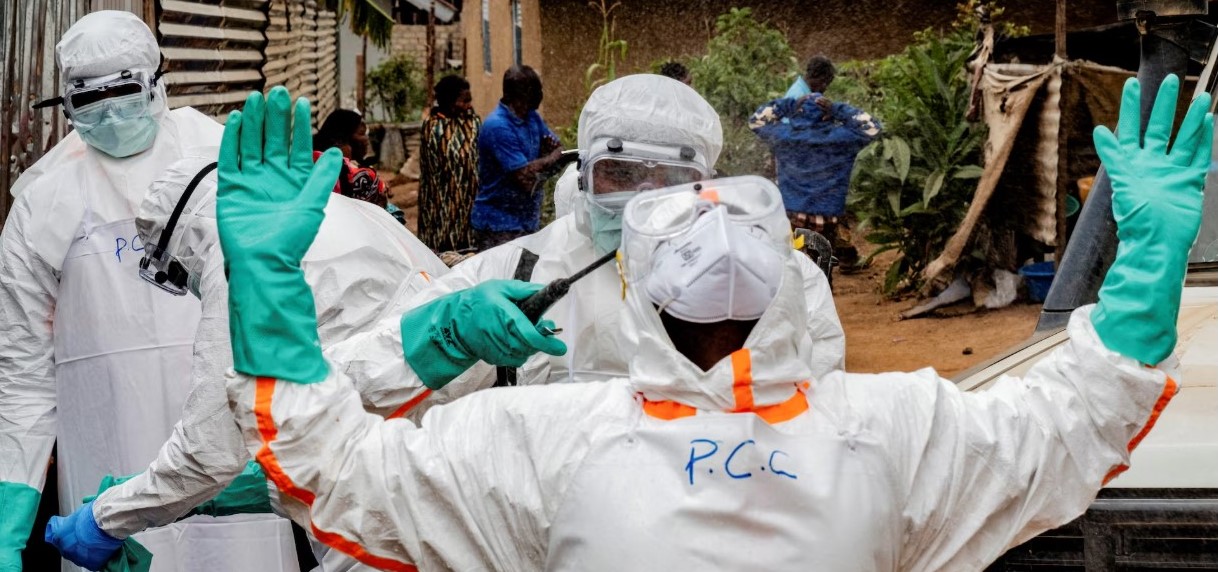
On 20 October, the Federal Government announced that a woman arriving from Uganda tested positive for Ebola in the Federal Capital Territory, prompting immediate isolation, contact tracing of 44 close contacts and a nationwide call for calm. The case underscores how a mobile phone can either accelerate accurate response or amplify deadly misinformation.
**What are the key facts?**
- One confirmed Ebola patient, a Nigerian woman who travelled through Uganda after a business trip to eastern DRC.
- 44 individuals identified as close contacts, including health workers, caregivers and fellow travellers.
- The toll‑free line **6232** remains operational 24/7 for reporting and guidance.
- Health Minister Muhammad Ali Pate warned, "There is no need for panic; Nigerians must rely on verified information."
How can your phone help?
**1. Call 6232 before seeking care** – The [Nigeria Centre for Disease Control (NCDC)](https://ncdc.gov.ng) runs a round‑the‑clock hotline for advice and case reporting. Anyone with fever or other symptoms should call first, reducing crowding at clinics and allowing contact tracers to reach them promptly.
**2. Use telemedicine for routine fevers** – Since Ebola symptoms overlap with malaria and Lassa fever, a licensed doctor can be consulted via phone or app before visiting a hospital. Telemedicine platforms such as Rigour Plus, MyMedicalBank and Health Connect 24×7 provide remote assessment, but they do not replace the 6232 line for possible exposures.
**3. Follow official statements closely** – Health Minister Muhammad Ali Pate urged Nigerians to trust information from the [Federal Ministry of Health and Social Welfare](https://health.gov.ng), the NCDC, the [World Health Organization (WHO)](https://www.who.int) and the [Africa Centres for Disease Control and Prevention (Africa CDC)](https://africacdc.org). Full statements contain critical details that abbreviated messages may omit.
**4. Verify viral claims before sharing** – Fact‑checking sites like Dubawa and Africa Check have debunked past rumours, such as the 2014 advice to bathe in hot salt water. Ebola spreads only through direct contact with infected blood or bodily fluids, not through the air, and a person is not contagious before symptoms appear.
How can your phone harm?
**5. Forwarding fake cures** – The 2014 salt‑water hoax resulted in two deaths and many hospitalisations. Similar panic‑inducing forwards resurfaced during COVID‑19, and officials warn that the same tactics may reappear now.
**6. Relying on internet searches or AI chatbots** – Symptoms like fever, weakness, headache, vomiting and diarrhoea are common to malaria and Lassa fever. Unsupervised web searches can cause unnecessary alarm; only the NCDC hotline can assess exposure risk.
**7. Donating to bogus fundraisers** – Scammers exploit crises by creating fake accounts and fundraising pages. Reports have highlighted false campaigns for a non‑existent "Toluwanisings" family and a fabricated "Father Miguel" prosthetic‑leg drive. Verify any appeal with the ministry or NCDC before sending money.
**8. Sharing personal details** – The patient’s identity and the treating hospital have not been disclosed. Spreading guesses about names, locations or photos can stigmatise innocent people and deter them from seeking care.
Bottom line
Your phone cannot stop Ebola, but it determines how quickly you obtain reliable help and whether you spread fear. Keep the 6232 line handy, heed official guidance, fact‑check before forwarding and maintain good hygiene. Nigeria successfully contained the 2014 outbreak through rigorous tracing, and health authorities are prepared to repeat that success.