
The United Nations Entity for Gender Equality and the Empowerment of Women (UN Women) has expressed concerns that Nigeria’s democratic progress and overall development face stagnation due to the alarming low representation of women in political positions, where they currently occupy only 3.9 percent of parliamentary seats.
Beatrice Eyong, the Country Representative of UN Women to Nigeria and ECOWAS, made this statement during a press briefing in Abuja, in anticipation of the 2026 International Women’s Day (IWD).
This year, the global theme is “Rights. Justice. Action.”, which underscores the increasing global concern that although women’s rights are enshrined in laws and policies, many women are still unable to access these rights in their everyday realities.
Eyong pointed out Nigeria’s extremely low levels of female political representation, noting that it ranks among the lowest globally for women in legislative roles.
She indicated that this disparity hampers democratic inclusiveness and restricts the government's ability to formulate policies that address the needs of half the nation's population.
“Gender equality is fundamentally a question of power, and the power gap in Nigeria is glaring,” said Eyong.
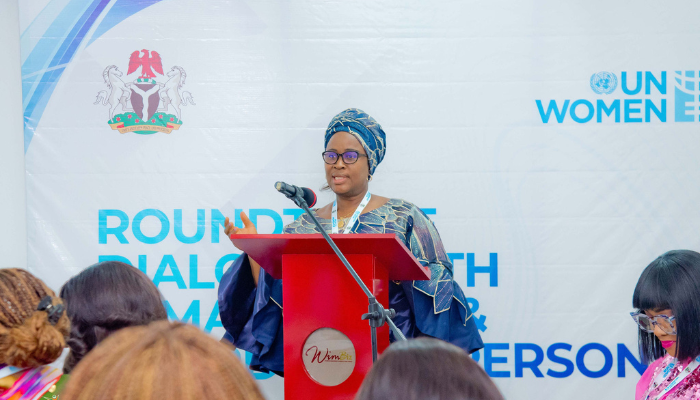
The absence of women from decision-making platforms, according to Eyong, has clear repercussions reflected in the adopted policies, funding priorities, and unvoiced concerns.
In addition to political underrepresentation, she highlighted that Nigeria continues to struggle with high incidents of gender-based violence, with survivors often encountering major obstacles in the pursuit of justice.
Eyong warned that violence against women is increasingly manifesting in digital spheres, with technology-facilitated abuse becoming more prevalent.
“Rights hold little value without justice,” she emphasized. “Justice should be reflected in the safety of women, their freedom from fear, and their capability to seek protection and hold offenders accountable, wherever violations occur.”
To tackle these issues, Eyong revealed that UN Women is ramping up efforts to advocate for the Special Seats for Women Bill, a proposed constitutional reform aimed at ensuring enhanced representation for women in Nigeria’s legislative bodies.
She also mentioned ongoing collaboration with the Federal Ministry of Women Affairs to bolster the National Sexual Offender Database, a system intended to deter convicted offenders from evading detection by relocating between states.
Eyong added that UN Women is engaging with traditional and religious leaders throughout Nigeria to challenge the cultural norms and social practices that sustain discrimination and violence against women.
The agency is also supportive of the establishment of Gender-Responsive Budgeting at federal and state levels, ensuring public spending addresses issues impacting women and girls, such as maternal health, education for girls, economic empowerment, and safety in communities.
Furthermore, there are initiatives to foster partnerships with financial institutions and the private sector to enhance access to funding for women- owned businesses and community projects.
Eyong noted the importance of strengthening women's involvement in peacebuilding and conflict prevention through Nigeria’s Third National Action Plan on Women, Peace, and Security.
Nevertheless, she insisted that significant progress necessitates more than just policy statements.
She explained that Nigeria's hurdles do not lie in the lack of gender policies but rather in ineffective implementation, insufficient financing, and irregular enforcement.
“We need to transition from commitments to actions and from plans to tangible impacts,” she urged.
Eyong called on the media to play a proactive role in revealing injustices, amplifying the voices of violence survivors, and promoting women's leadership across various sectors.
She termed journalists as essential partners in nurturing national dialogues that could influence policy reforms and public attitudes towards gender equality.
“When we secure justice and rights for women, we secure Nigeria’s stability, prosperity, and future,” Eyong concluded.
UN Women remains dedicated to collaborating with the government, civil society organizations, development partners, and communities to ensure that the principles of Rights, Justice, and Action lead to substantial advancements for women and girls throughout Nigeria.
Comments (0)
You must be logged in to comment.
Be the first to comment on this article!