
The Federal Government has rolled out a new presumptive tax system targeting informal businesses, alongside a prohibition on cash tax collection and roadside enforcement, as part of its broader initiative to standardize tax regulations nationwide.
Announced on Tuesday in Abuja, this new policy was revealed during a briefing by Olusegun Adesokan, the executive secretary of the Joint Revenue Board (JRB), flanked by key government officials. The new regulations are set to significantly influence operators within Nigeria's informal sector.
At the signing event, Adesokan noted that the intention behind the new guidelines is to eradicate irregular and coercive tax collection practices frequently associated with subnational tax authorities. "The regulations completely outlaw cash collection by tax authorities and forbid the establishment of roadblocks for tax collection purposes," he stated.
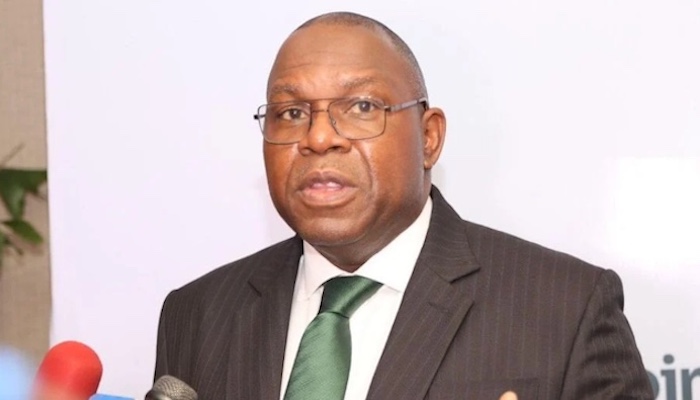
Adesokan further elaborated that this policy aims to foster fairness and accountability in tax administration, particularly for small and informal enterprises. Micro and small businesses with annual earnings below N12 million will be exempt from this new presumptive tax.
He also mentioned that the framework outlines a tax rate of one percent of turnover applicable to all other informal businesses, while promoting the use of technology-driven payment systems.
This set of guidelines is designed to create a unified structure for state and local governments, additionally facilitating the integration of informal operators into a consolidated tax identification system.
Wale Edun, the finance minister and coordinating minister for the economy, characterized this initiative as a move from merely approving policies to effectively implementing previously established tax reforms. "The signing of these regulations marks our transition from regulation to organized application of tax reforms," Edun remarked.
He emphasized that the goal of these reforms is not to escalate the burden on taxpayers but rather to broaden the tax base. "We aim to expand the tax base, not through increasing taxes, but by ensuring everyone contributes fairly to the collective good," Edun added.
The initiative was formulated in collaboration with the Joint Revenue Board to maintain coherence across all governmental layers, also featuring monitoring mechanisms and an oversight system to ensure adherence and equity.
Joseph Tegbe, chairman of the national tax policy implementation committee, indicated that this development represents a shift from policy creation to practical application. He expressed that these reforms aim to address persistent inefficiencies and supersede arbitrary tax practices with a more transparent system.
Tegbe also pointed out that while the informal sector comprises over 80 percent of Nigeria’s workforce, its contribution to formal tax revenue has been minimal due to structural hurdles, but efforts are being made to ensure a disciplined rollout of the new tax framework.
Comments (0)
You must be logged in to comment.
Be the first to comment on this article!