
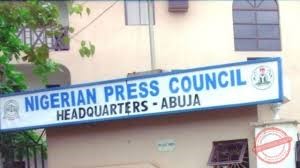
The Nigerian Press Organisation (NPO) has issued a strong appeal to the Presidency and the National Assembly, calling for immediate measures to protect the nation's information ecosystem from the escalating dominance of international digital platforms.
In a joint statement, the NPO highlighted that Nigeria is at a "critical inflexion point" in its democratic and digital journey, emphasizing that current decisions will profoundly impact the future of journalism, national security, and democratic governance.
The NPO, which includes prominent media bodies such as the Newspaper Proprietors’ Association of Nigeria (NPAN), the Nigerian Guild of Editors (NGE), the Broadcasting Organisations of Nigeria (BON), and the Guild of Corporate Online Publishers (GOCOP), posed a critical question: "Can a democracy of Nigeria’s scale, diversity, and complexity afford to surrender control of its information ecosystem to unregulated global digital gatekeepers?"
The statement was endorsed by key leaders, including Lady Maiden Alex-Ibru (NPAN President), Eze Anaba (NGE President), Salihu Abdulhamid Dembos (BON Chairman), Danlami Nmodu (GOCOP President), and Alhassan Yahaya (NUJ President).
The organisation pointed out that global platforms now command a significant share of digital advertising revenue, with algorithms controlled externally dictating what Nigerian citizens see, amplify, or disregard.
"Nigerian news content is monetised at scale without proportionate reinvestment in local journalism. Revenue that once sustained domestic newsrooms is increasingly extracted offshore," the NPO stated.
The NPO cautioned that the ramifications extend beyond media economics, warning that diminished journalism contributes to the spread of misinformation, disinformation, and societal polarization.
"No counterterrorism, policing, or intelligence framework can fully compensate for a collapsed information order," the organisation asserted.
Regarding democratic governance, the NPO stressed the crucial role of reliable information in electoral processes and citizen engagement.
"When professional journalism is displaced by algorithmic virality, democratic processes become vulnerable to distortion, foreign influence, and coordinated falsehoods," it added.
The body further argued that economic sustainability is essential for press freedom. "A press that struggles to pay salaries, fund investigations, and retain talent is, in effect, unfree, regardless of legal protections," the statement concluded.
Referencing international examples, the NPO cited actions taken by the European Union, the United Kingdom, Australia, Canada, and South Africa to address gatekeeper power and ensure financial support for domestic journalism.
It urged Nigeria to develop a "measured, Nigerian-designed framework" that acknowledges journalism as a public-interest activity, rectifies power imbalances in negotiations, and guarantees fair compensation for local content. The NPO suggested that agencies like the Federal Competition and Consumer Protection Commission (FCCPC) and the Nigerian Copyright Commission (NCC) possess the legal mandate to implement necessary remedies.
"This appeal is not a request for protectionism. It is a call for strategic leadership to ensure that Nigeria’s democratic conversation is not quietly outsourced to opaque commercial algorithms beyond national control," the NPO concluded.
Comments (0)
You must be logged in to comment.
Be the first to comment on this article!