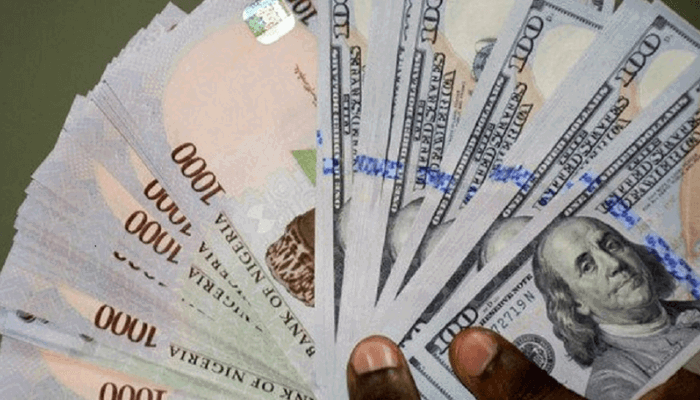
Nigeria’s total physical currency in circulation jumped 81 % to N5.44 trillion in August 2026, up from N3.01 trillion three years earlier, indicating that despite a surge in digital payments, demand for cash remains robust, according to the [Central Bank of Nigeria](https://www.cbn.gov.ng) Money and Credit Statistics.
**How fast did the cash stock grow?**
- Between August 2023 and August 2024, the cash base rose from N3.010 trillion to N4.55 trillion, a gain of N1.54 trillion or 51.1 %.
- In August 2025 the figure reached N5.057 trillion, an 11.2 % year‑on‑year increase of N508 billion.
- By August 2026 the stock hit N5.436 trillion, up N379 billion or 7.5 % from the previous year.
These numbers show that while the absolute amount of cash keeps climbing, the growth rate has slowed markedly from the 51 % surge in 2024 to just 7.5 % in 2026.
**What happened to banks’ reserves?**
- Banks’ reserves were N18.528 trillion in August 2023 and climbed to N25.456 trillion by August 2024, a rise of N6.928 trillion (37.4 %).
- The reserves grew further to N31.583 trillion in August 2025 and reached N36.067 trillion in August 2026.
- Overall, reserves expanded by N17.539 trillion, or 94.7 %, between August 2023 and August 2026.
The CBN classifies both currency in circulation and banks’ reserves as components of reserve (or base) money.
**What do analysts say about the trend?**
David Adonri, Managing Director of [High Cap Securities Limited](https://www.highcapsecurities.com), observed: “When more money is held as physical cash, a portion of liquidity is outside the immediate deposit base of commercial banks and is therefore less available for banks to intermediate through loans and other financial assets.” He added that the rising cash stock should not be automatically read as a sign of excess liquidity or inflationary pressure, noting that higher nominal prices, larger transaction values and expanding economic activity can also drive cash demand. Adonri highlighted that the increase is notable because Nigeria has simultaneously experienced rapid growth in electronic payments, mobile banking, fintech services and instant‑payment platforms, suggesting that the digital‑payment revolution has not eradicated the country’s cash economy.
In summary, Nigeria’s cash circulation continues to climb, but at a decelerating pace, while banks’ reserves have almost doubled, reflecting broader shifts in the nation’s monetary landscape.