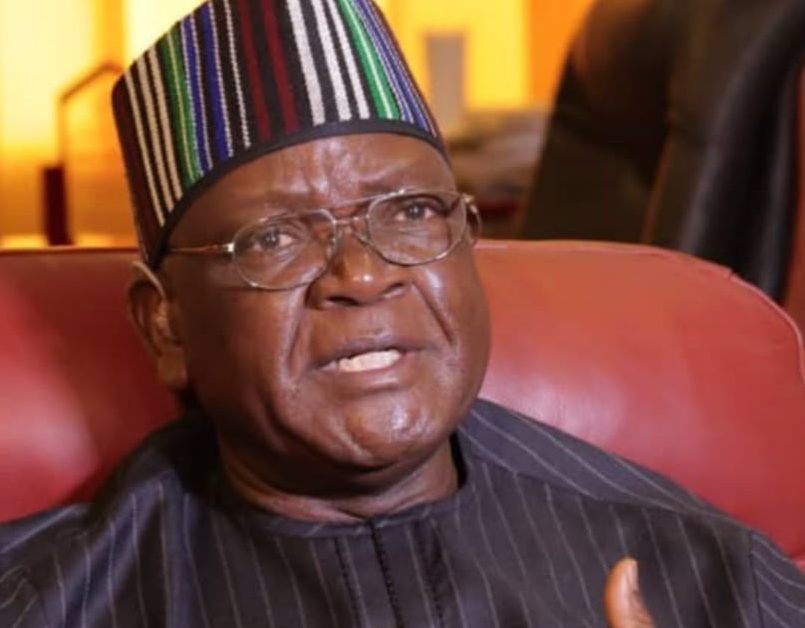
Former Benue State governor Samuel Ortom on Thursday demanded that former ambassador and ex‑Speaker of the Benue State House of Assembly, Terhemen Tarzoor, justify his public record, accusing him of a decade‑long campaign of personal attacks stemming from the 2015 governorship loss.
What accusations did Ortom level against Tarzoor?
He said Tarzoor’s recent media remarks defending Governor Hyacinth Alia were a thinly‑veiled attempt to stay politically relevant. Ortom claimed the ambassador misquoted him, alleging Ortom called Benue residents “shenanigans,” a term he insists was directed at individuals like Tarzoor, not the people of the state.
Which aspects of Tarzoor’s career were questioned?
Ortom’s media aide, Paul Zege, asked Tarzoor to list development projects he secured for his constituency while serving as Speaker of the Benue State House of Assembly. He also raised the controversial creation of a Fulani ward in Makurdi LGA, which was later reversed after being deemed fraudulent, and queried the ambassador’s diplomatic legacy in Namibia.
How does Ortom defend his own tenure?
He highlighted security initiatives, noting the 2017 Open Grazing Prohibition and Ranches Establishment Law, the formation of Benue State Livestock Guards, and support for Community Volunteer Guards. Ortom said he chose to confront powerful interests rather than remain silent, positioning himself as a defender of his people’s land.
What achievements did Ortom cite in education and health?
He reported over 1,000 primary school projects with the Universal Basic Education Commission, provision of desks, secondary school renovations, and upgrades to tertiary institutions. A first‑line funding scheme for Benue State University (BSU) and accreditation of its College of Health Sciences were also mentioned. In health, Ortom pointed to the revival of nursing and midwifery schools, the establishment of a state health insurance scheme, 42 health centres, ambulances, and investments in the Benue State University Teaching Hospital.
What infrastructure and agricultural programmes did he claim?
Ortom listed roads such as the 47‑km Zaki‑Biam‑Gbeji‑Afia road, the Agatu‑Oshigbudu‑Obagaji road, and the 30‑km Gbajimba‑Iordye‑Akaahena feeder road, alongside numerous urban roads and rural bridges. In agriculture, he noted a 50 % fertilizer subsidy for eight seasons, distribution of 50 tractors at a 60 % subsidy, collaboration with IFAD for farmer training, a revived fertilizer blending plant, agro‑processing factories in six LGAs, and a Friday‑free farming initiative.
How does Ortom address criticisms of his record?
He acknowledged economic hardships, including two recessions and the COVID‑19 pandemic, yet asserted that salaries were paid for 91 of the 96 months in office. Ortom emphasized his long‑standing free treatment for snake‑bite victims dating back to 2000. Regarding former‑governor entitlements, he urged that legal frameworks, not personal recollection, determine any disputes.
What is the broader message?
Ortom concluded that public accountability does not end with a term and that criticism of a sitting governor should not be conflated with bitterness. He urged Tarzoor to move beyond the 2015 election and focus on issues that advance Benue State’s development.