
In recent developments, a strong movement has emerged advocating for the establishment of rotational presidency within the Nigerian constitution, seeking to enhance balance and fairness in political leadership distribution between the North and the South.
Currently, reports from Weekend Trust indicate that there are no specific constitutional regulations governing power balance between these regions. This has resulted in certain areas having prolonged durations in power, adversely affecting others.
Informally, political parties engage in power-sharing practices through arrangements such as zoning, yet these agreements are frequently not upheld.
Notable figures from both current and past legislative positions, including Deputy Senate President Barau I. Jibrin, former Speaker of the House of Representatives and Chief of Staff to the President, Femi Gbajabiamila, and former Senate President Anyim Pius Anyim, have voiced their support for the constitutional inclusion of rotational presidency to promote fairness and equity in power allocation between the North and South.
Their call coincides with the National Assembly’s preparations to vote on constitutional amendment proposals in 2025, following their recess.
These positions were articulated during the 2026 National Summit of Former Legislators in Abuja, which centered on the theme “National Unity and Nation Building: Beyond 2031.” The event was organized by the National Forum of Former Legislators (NFFL), under the convenorship of Gbajabiamila, and included a diverse group of former lawmakers from across political divides.
At the summit, Gbajabiamila advocated for rotational presidency, labeling it a wise and just compromise that addresses Nigeria’s variety, mitigates political friction, and maintains national stability. He emphasized that personal ambitions should not be allowed to jeopardize arrangements that underpin unity and peace.
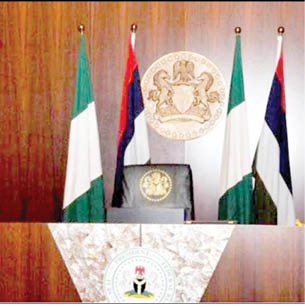
He appealed to all Nigerians across numerous political, ethnic, and regional backgrounds to recommit to national unity, underscoring its critical importance for the nation's advancement amid a tumultuous global landscape. Gbajabiamila noted the summit occurred during a period of worldwide instability, where long-held assumptions are being contested, calling for seasoned leadership and thoughtful national conversations.
Former Senate President Anyim Pius Anyim also backed the initiative for enshrining rotational presidency in the constitution, questioning why such a beneficial practice should remain unrecognized legislatively.
Deputy Senate President Barau I. Jibrin reiterated the need for rotational presidency, claiming it has historically contributed to stability since the inception of the Fourth Republic. He urged adherence to the principle of rotation that has enhanced order and equity during this period. Jibrin acknowledged President Bola Ahmed Tinubu’s first term and cautioned against disregarding established practices.
He expressed confidence in the effectiveness of the rotational system and highlighted that as mentioned by fellow stakeholders, President Tinubu should be allowed to serve two complete terms. In response to the Forum leadership's appeal, Barau committed to forwarding the proposal to the National Assembly for consideration, asserting, "I will certainly do that."
Beforehand, Raphael Igbokwe, the national coordinator for the 2026 NFFL Summit, remarked that the Forum endorses rotational presidency as a method to guarantee unity, belongingness, and fair power sharing among Nigeria’s regions. He recalled prior discussions affirming that, for the sake of unity and peace, the South should complete its eight-year term, urging support for President Tinubu to conclude the current southern presidency.
Igbokwe postulated that power struggles are deeply ingrained in Nigeria’s conflicts and that making rotational presidency constitutionally mandatory would help build trust, alleviate suspicions, and ensure fairness among the nation's diverse communities.
On a prior attempt to introduce a constitutional amendment regarding rotational presidency in the 10th House of Representatives, Weekend Trust reported that the measure was declined by lawmakers. The initiative, sponsored by Deputy Speaker Benjamin Okezie Kalu, sought to amend the Nigerian Constitution to include the principle of rotating the presidency and vice- presidency among the six geopolitical zones of the country.
Following the presentation of the bill by House Leader Prof Julius Ihonbvere, it was opened for discussions. Lawmakers expressed mixed reactions, with some like Rep Aliyu Madaki (NNPP, Kano) opposing it, arguing that similar issues were sufficiently covered by the constitutional principle of federal character.
Madaki recommended that the zoning of the presidency be determined by political parties rather than being inscribed into the constitution. Conversely, Rep Ali Isah (PDP, Gombe) contended that enshrining rotational presidency would promote fairness across the geopolitical zones.
In opposition, Rep Sada Soli (APC, Katsina) characterized the bill as detrimental to national unity, citing potential mediocrity over skill. He warned of the possibility that it might prioritize regional and ethnic affiliations over competence.
Kalu dismissed Soli's objections about mediocrity, asserting that each geopolitical area houses qualified candidates for the presidency and vice- presidency. He maintained that the bill's intention is to provide each region an opportunity to engage in governance and development.
Rep Shina Oyedeji voiced opposition, citing democracy's need for fair competition and suggesting that zoning would constrain who may contest elections. Rep Bello El-Rufai expressed that constitutionalizing rotational presidency might incite regional and ethnic rivalries due to Nigeria's diverse ethnic backgrounds, and ultimately, the bill was denied approval.
In a broader critique of embedding rotational presidency in the constitution, Prof Hassan Saliu, president of the Nigeria Political Science Association (NPSA), cautioned against overburdening the constitution with shifting political norms, arguing that such stratagems are counterproductive. He advocated for governing these arrangements through political party frameworks rather than rigidly codifying them.
Saliu cautioned that permanently establishing rotational presidency in the constitution could subject Nigeria to identity-based politics, particularly when the country requires leaders chosen for their capabilities and vision. He also highlighted Nigeria's poor compliance with its constitutional provisions, underscoring that formalization may not ensure adherence.
Dr. Edun Abdulkareem from the University of Ilorin's Department of Political Science expressed skepticism towards the proposal, arguing that it could disenfranchise citizens in certain regions at various times, thus contradicting democratic principles. He remarked that the practice would likely prevent open electoral participation, which is essential for democracy.
He urged that Nigeria should focus on merit-based leadership rather than enforcing rigid, regionally defined principles. Gbade Ojo, another political science professor, emphasized that the idea of rotational presidency dates back to the Abacha era but argued that Nigeria's intricate ethnic and religious landscape makes formal rotations complex and unworkable.
He pointed out that both Northern and Southern regions are not uniform and that defining leadership in terms of geographical divisions indicates a backwardness in Nigeria’s democratic evolution. In more mature democracies—such as the United States and the UK—diversity does not deem rotational leadership necessary; instead, competency and vision should drive leadership choices for Nigeria's future.
Comments (0)
You must be logged in to comment.
Be the first to comment on this article!