
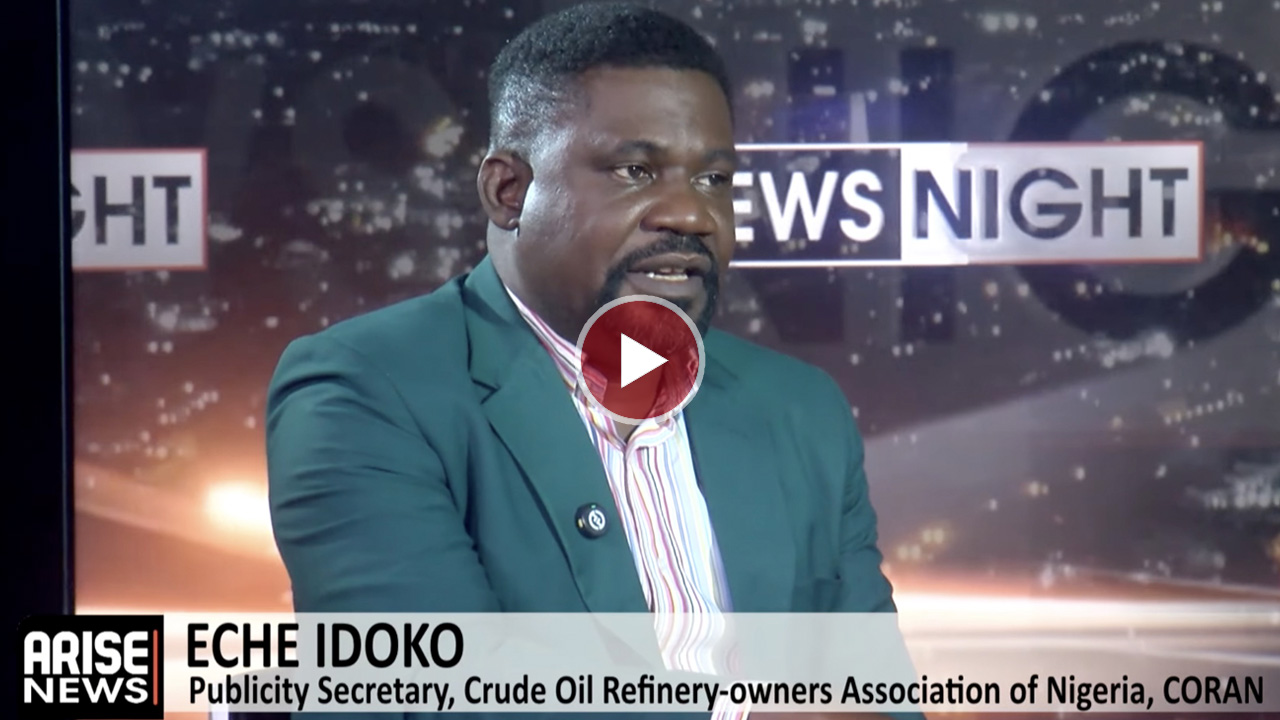
Eche Idoko, the Publicity Secretary for the Crude Oil Refinery Owners Association of Nigeria (CORAN), has stated that disruptions occurring in the Strait of Hormuz are leading to an increase in Brent crude prices. However, he noted that Nigeria is positioned to gain an advantage due to its developing local refining capabilities.
Idoko shared his perspective in an interview with ARISE NEWS on Monday, following recent military actions involving the US and Iran, which have intensified concerns about potential interruptions to oil transportation routes through the Strait of Hormuz.
When analysing Nigeria's potential exposure to these events, Idoko remarked, “Any nation reliant on that shipping lane will be impacted, not only by rising costs but also by a scarcity of supply. For us in Nigeria, there’s a significant positive aspect: our domestic refining infrastructure, spearheaded by the Dangote Refinery.
He further elaborated, “Dangote has committed to ensuring Nigeria receives priority for the supply of PMS and AGO, essential fuels for the economy. This offers a ray of hope amidst a backdrop of substantial declines in imports,” he added.
Idoko pointed out that while consumers might see higher pump prices, Nigeria would experience a degree of insulation from global price surges. He explained that increased insurance and logistics expenses are already factored into the local market.
“Nevertheless, because crude oil is a globally traded commodity, the price jump will inevitably affect pump prices, as this is the primary input. We will observe price shifts, although the impact won't be as severe as it was two years ago. This is partly because we are also contending with escalated insurance and logistics costs, which are then passed on to the final consumers,” he clarified.
Discussing potential outcomes should the geopolitical situation worsen, Idoko highlighted that developing nations like Nigeria face not only reduced revenue streams but also heightened inflationary pressures.
“The rapid escalation of events was unforeseen. Experts had projected that crude oil prices could reach as high as $120 per barrel. For economies in development, the concern extends beyond revenue; it encompasses the accompanying inflationary effects. We are already grappling with budget deficits. It's also possible we might encounter situations where crude oil cargoes are unable to find buyers, leading to ‘stranded crude.’ This is a critical juncture where the government must take proactive measures, implementing protective policies for domestic refining and fostering a strong connection between the midstream and downstream sectors with the upstream segment, ensuring that local refineries can absorb available crude,” he cautioned.
Favour Odima
Comments (0)
You must be logged in to comment.
Be the first to comment on this article!