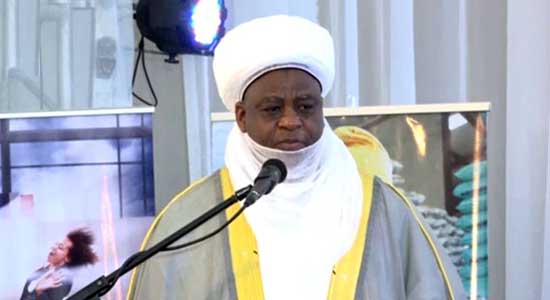
Sultan of Sokoto Alhaji Muhammad Sa’ad Abubakar III appealed on Monday for anyone circulating negative narratives about insecurity in Sokoto and across Nigeria to reconsider their approach, stressing that security threats exist in many parts of the world.
What was the occasion for the Sultan’s remarks?
The comments were delivered at the closing ceremony of events commemorating the Sultan’s 20th anniversary on the throne and the 13th Sheikh Usmanu Bin Fodio Week in Sokoto. The programme, organised by the Sultanate Council in partnership with the National Council of Muslim Youth Organisations (NACOMYO) Sokoto State chapter, carried the theme “The Sokoto Caliphate: An Egalitarian Model for Peace, Justice, Unity and Sustainable Development.”
How did the Sultan address the issue of insecurity?
He acknowledged that Nigeria, like many nations, is not immune to insecurity but argued that the focus should be on minimising threats so that citizens can carry out their daily activities without obstruction. “We are not immune to insecurity, but what we can do is to minimise insecurity so that people can go about their normal duties without any hindrance,” he said.
Did he compare Nigeria’s situation with other countries?
Yes, the Sultan cited recent developments in Iran, the United States, Germany and France to illustrate that security challenges are not unique to Nigeria.
What message did he give to state governors?
He urged governors to stay committed to good governance, reminding them that no administration can satisfy everyone regardless of its achievements. He emphasized that effective leadership is essential for reducing insecurity and fostering development.
How did the Sultan describe his own role?
Reflecting on his two‑decade reign, the Sultan portrayed himself as a “soldier of Islam and a soldier of peace,” explaining that his primary mission has always been to bring peace to communities. “Before I became Sultan here, I was a soldier. I am still a soldier, a soldier of Islam and a soldier of peace because what I spend most of my time doing is bringing peace to communities,” he affirmed.
What stance did he take on religious practice?
He stressed that Islam does not endorse coercion or forced conversion, urging Muslims to demonstrate the faith’s virtues through exemplary conduct.
What caution did he offer regarding public discourse?
The Sultan warned against insults and abusive exchanges, especially on social media, describing Nigerians as members of one family who should treat each other with dignity and respect. He reminded listeners that the traditional institution does not consider itself superior to any other segment of society, and that all humans are equal before Almighty Allah.
Who contributed to the intellectual backdrop of the event?
Guest lecturer Dr Dawud Abdallah, Director of the Middle East Monitor (MEMO) in London, delivered a talk titled “The Religious and Intellectual Traditions of the Sokoto Caliphate: Changing the Condition of Africans in the Diaspora.” He highlighted the often‑overlooked Islamic heritage and intellectual contributions of enslaved Africans, arguing that Muslim Africans played pivotal roles in resisting slavery and fighting for freedom across the Americas.
What remarks did Zamfara State Governor Dauda Lawal make?
Governor Lawal congratulated the Sultan on his 20‑year coronation anniversary, describing the period as marked by humility, unity, stability, religious tolerance and national cohesion. He praised the Sultan’s fatherly counsel and interventions as valuable to Nigeria, particularly in tackling socioeconomic and security challenges. Lawal called on Islamic scholars, traditional rulers, community leaders and youth organisations to promote peaceful coexistence, discourage extremism and revive values of honesty, compassion and respect for human life. (Dauda Lawal)
How did Sokoto State Governor Ahmed Aliyu respond?
Represented by Deputy Idris Mohammed Gobir, Governor Aliyu also extended congratulations, noting the Sultan’s contributions to religious tolerance, peaceful coexistence and national development. He said the anniversary offered an occasion to reflect on the Sokoto Caliphate’s intellectual heritage and its relevance to contemporary governance.