
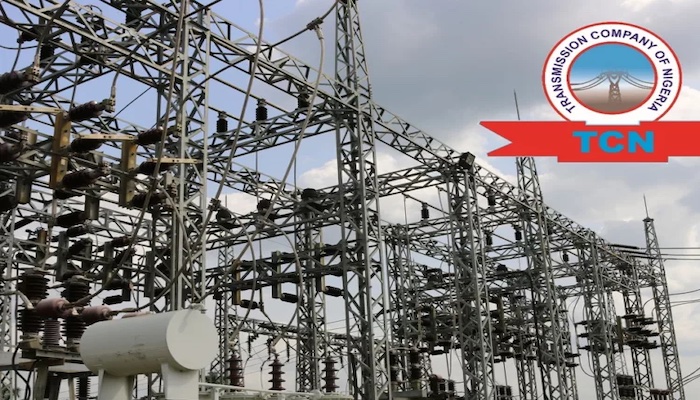
The Transmission Company of Nigeria (TCN) has announced that it is executing power transmission projects valued at over $1.3 billion, with funding from multilateral development partners, aimed at increasing grid capacity and improving power delivery throughout the country.
These projects are being carried out under various Project Management Units (PMUs) and are supported through loans and grants from the Federal Government of Nigeria. The initiatives focus on enhancing transmission capacity, bolstering weak corridors, and modernizing essential infrastructure.
In a report shared with journalists in Abuja on Wednesday, TCN emphasized that the implementation of transmission projects is capital-intensive and relies on reliable funding sources to ensure their timely completion.
To fill funding gaps, TCN indicated that it collaborates with multilateral agencies, and four dedicated Project Implementation Units (PIUs) are currently overseeing numerous donor-supported projects.
Among these, the Nigeria Electricity Transmission Project under the World Bank PMU is valued at $486 million, emphasizing the reinforcement of critical transmission lines and substations across the country.
Additionally, the document outlined that the Agence Française de Développement PMU manages both the $170 million Abuja Transmission Project and the $200 million Northern Corridor Project, both of which aim to strengthen bulk power evacuation capacity and enhance grid stability in significant load centers.
The African Development Bank (AfDB) is contributing to the $210 million Nigeria Transmission Expansion Project (NTEP), which is part of a broader national strategy for transmission rehabilitation and expansion.
"Currently, TCN has four Project Implementation Units under the Project Management Unit (PMU). Each of these PIUs supervises a specific set of projects financed by various partners, including the World Bank PMU for the $486 million Nigeria Electricity Transmission Project, Agence Française de Développement PMU for the $170 million Abuja Transmission Project, and the Northern Corridor Project worth $200 million.
Furthermore, the PMU associated with the AfDB oversees the $210 million Nigeria Transmission Expansion Project, alongside the Japan International Cooperation Agency (JICA) PMU, which is managing the $235 million Lagos-Ogun Power Transmission Project. This latter project aims to enhance supply reliability in Nigeria's commercial and industrial epicenter.
The NTEP is being rolled out in the Northwest, Southeast, and South-South regions, covering areas such as Kano, Kaduna, Delta, Edo, Anambra, Imo, and Abia States. This program consists of both brownfield upgrades and new greenfield initiatives intended to enhance existing infrastructures and expand transmission capacity in dynamic regions.
Beyond merely expanding the physical grid, TCN is actively involved in significant digital transformation initiatives spearheaded by its Information and Communication Technology (ICT) Division, with the goal of automating and integrating operational procedures.
Recently, TCN completed the acquisition of an Enterprise Resource Planning (ERP) solution, with consultancy services already in progress. The main contract, partially funded by AFD, has been finalized and is operational. This ERP platform is expected to unify current and planned digital assets while also automating manual processes within the organization.
Moreover, the company has set up mini data centers in eight regional offices located in Oshogbo, Benin, Enugu, Port Harcourt, Bauchi, Kaduna, Kano, and Abuja, functioning as sub-domains of TCN’s corporate network infrastructure, which is centralized at the headquarters.
To maintain operational resilience, Disaster Recovery Centers have also been established in the Lagos and Shiroro regions. These centers act as remote replicas of the central network hub and can assume complete control in case of a failure at the headquarters.
Additionally, Local Area Networks (LAN) have been set up across all regional offices, facilitating uninterrupted access to network resources, while dedicated internet services have been widely implemented across the country following regulatory approvals. This advancement has unified previously isolated systems into a coordinated Wide Area Network (WAN).
Furthermore, TCN has initiated the deployment of Closed Circuit Television (CCTV) systems in control rooms and switchyards nationwide to enhance security and safeguard critical infrastructure. This initiative is complete at the headquarters and is nearing completion in substations nationwide.
The primary revenue stream for TCN comes from service fees paid by Generation Companies (Gencos), Distribution Companies (Discos), international distributors, and directly connected customers. The organization also benefits from federal budget allocations for capital projects, along with grants and concessional loans from development partners such as the World Bank, AfDB, JICA, AFD, and the European Union.
Comments (0)
You must be logged in to comment.
Be the first to comment on this article!