
In a recent statement, President Bola Ahmed Tinubu characterized himself as a staunch democrat, stressing the necessity for all political players to respect the rule of law for democracy to flourish in Nigeria.
This declaration was made during an interfaith breaking of the fast at the Presidential Villa in Abuja, where Tinubu addressed leaders of the All Progressives Congress (APC) National Working Committee, executives, and members of the Inter-Party Advisory Council (IPAC).
Expressing his dedication to democratic values, the president noted that his political journey has been shaped by years of struggle, sacrifice, and commitment to the rule of law.
"I have followed the leadership path that God has ordained for me. It is undeniable that I am a die-hard democrat, and I wholeheartedly commit to this belief for a united Nigeria. This principle will always be with me," Tinubu stated.
He recounted his involvement in the pro-democracy movement during Nigeria's military rule, specifically recalling his participation in the National Democratic Coalition (NADECO) which opposed former military leader Sani Abacha.
Tinubu highlighted that many politicians who fought for democracy faced persecution, imprisonment, and exile.
"We are all democrats who willingly embraced democracy over the past 26 years. Several of us bear scars from these struggles; we faced detention and went into exile. We formed NADECO to advocate for our cause, and here we are today," he remarked.
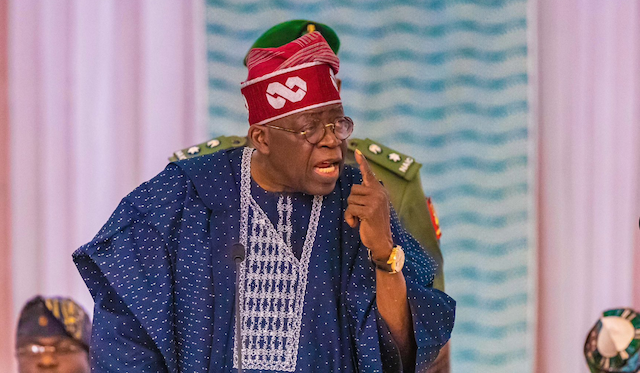
He emphasized that political affiliation should remain a voluntary choice without intimidation or threats from opponents.
"We are all democrats by choice - regardless of party alliances, ideologies, or platforms - it is a voluntary decision. There should be no threats from any democrat," he asserted.
These comments arose in the context of the ongoing debate surrounding the Electoral Act 2026, which he endorsed on February 18 following its passage by the National Assembly.
Criticism from opposition parties and civil society groups has targeted certain aspects of the law, including the optional electronic transmission of election results and new requirements for party membership registers.
Nevertheless, Tinubu defended his actions, affirming that democracy necessitates adherence to the rule of law and respect for legislative actions.
"In any democracy, the rule of law must prevail. Yes, rule of law. The majority can express their views and preferences, but the minority will also have their say, albeit it might not hold sway. This balance is the essence of democracy," he commented.
The president urged political figures to pursue constructive dialogue instead of confrontations.
"Engage in debates, have intellectual discussions, and question one another honestly, but our goal is shared—peace and stability in the country, a commitment we must adhere to," he advised.
Addressing his rationale for approving the electoral reform law, Tinubu explained that he had little alternative given the substantial backing the bill received in parliament.
"By signing the Electoral Act, I had no real choice. I aim to avoid plunging the country into turmoil over disagreements. There is a substantial majority in the National Assembly that passed this law," he elaborated.
He added that had he harbored serious concerns about the legislation, he would have voiced them, but he had none. "I have willingly submitted myself to the principles of the rule of law and democracy. I signed, and now we await the polls," he concluded.
The president also pointed out his history of being in opposition without issuing threats to rivals, reinforcing that political competition should be conducted peacefully.
"I am a registered voter. Whether I am aligned with you or not, I will maintain my stance. In previous years when opposition rose against me, I adhered to proper channels," he stated.
Acknowledging the intensity of political life, Tinubu insisted that stability and respect for democratic institutions is essential.
"Politics is enjoyable only when winning. We must learn to accommodate and support each other. It's crucial to strengthen our democratic foundations, for democracy itself demands peace, stability, and commitment to the rule of law," he emphasized.
Earlier, Yusuf Dantalle, the IPAC National Chairman, hailed Tinubu as a “listening father and a president who promotes inclusiveness,” while also voicing concerns regarding several clauses in the Electoral Act.
Dantalle shared that IPAC had previously collaborated with the Independent National Electoral Commission (INEC) during the 2023 elections to avert potential conflicts during the collation phase.
He specifically requested the government to reconsider three points within the new law: the mandate for parties to submit digital membership databases containing National Identification Numbers 21 days before primary elections, the removal of indirect primaries, and the withdrawal of governmental financial support for political parties.
"We are not asking for money for expenditures, but rather for prudent funds for the administration of our political parties. Your Excellency, you are a product of multiparty democracy," Dantalle noted.
He also sought federal aid to facilitate the relocation of IPAC from its current rented premises, recalling the organization's role in discreetly resolving various political disputes to enable the government to focus on governance.
Comments (0)
You must be logged in to comment.
Be the first to comment on this article!