
On Wednesday, Yusuf Tuggar, the Minister of Foreign Affairs, urged foreign investors to evaluate Nigeria's potential without being swayed by isolated security incidents. He claimed that these occurrences do not accurately depict the actuality of Nigeria as Africa's largest economy and its enduring investment fundamentals.
Speaking to CNN during the World Economic Forum (WEF) in Davos, Switzerland, Tuggar acknowledged the presence of security challenges in Nigeria but emphasized that these issues are localized and being actively managed by the Nigerian government.
He remarked that the tendency to generalize security concerns across the entire nation often leads to overblown risk perceptions, which obscure the investment opportunities in critical sectors. He called for a reassessment of how the international community perceives Nigeria.
The minister pointed out that Nigerians are among the continent’s most diverse populations. He underscored the country's advancing macroeconomic reforms and ongoing governance improvements under the Bola Tinubu administration.
Tuggar stated that while no nation is completely free from security threats, investors should adopt a nuanced perspective when analyzing Nigeria, focusing on specific strengths rather than broad stereotypes.
He noted, “I think it would be beneficial to perceive Nigeria as a diverse nation that actually competes favorably with more homogeneous countries. Despite some fringe conflicts in certain border areas, we have managed to coexist peacefully.”
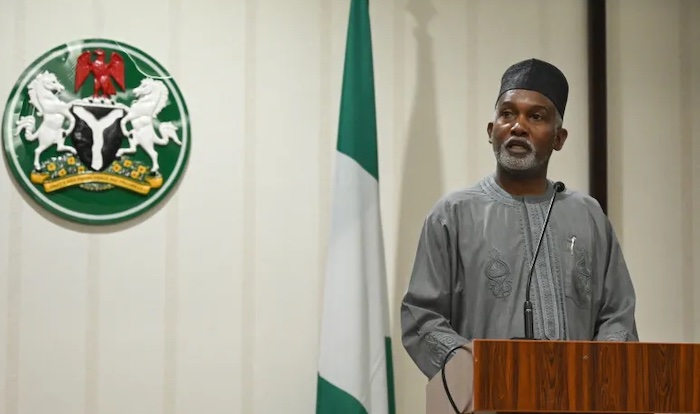
“It’s crucial to clearly define the situation to find suitable solutions. We have forest guards and various initiatives in place. Our efforts against Boko Haram have also seen progress,” he continued.
The minister countered what he described as the incorrect framing of Nigeria and Africa's circumstances, arguing that many claims regarding the continent are exaggerated.
He stated, “The dialogues happening here also touch on Africa's risk perception bias, where geopolitical risks, in particular, are often overstated when discussing the continent, unlike in other regions.”
“It is essential to recognize the advancements the Tinubu administration is implementing, including tax reforms that ease investor entry, the reduction of corporate tax, and alterations to the foreign exchange framework,” he added.
Tuggar mentioned, “We can utilize our Nigerian cards here in Davos with no limits, boasting $43 billion in foreign reserves. Our sovereign bonds and treasury bills yield between 8 and 10 percent. Thus, we must view Nigeria holistically and not allow isolated incidents to define the country as a whole.”
He further commented, “It’s also vital to consider that dwelling on such incidents can sometimes provoke further security challenges, as it allows bandits and terrorists to exploit vulnerabilities by using innocent civilians as human shields.”
Tuggar recognized the impact of the recent coup in Niger on the security landscape in the Sahel region, reaffirming that Nigeria is willing to collaborate with other nations to tackle its security issues.
He explained, “We were attempting to manage the many who had surrendered, many of whom were innocent individuals caught in conflict zones until the coup in Niger disrupted our multinational joint task force that had been effectively operating.”
He urged potential investors to regard Nigeria with the same respect they offer to other nations, stating, “An event in a country covering 923,000 square kilometers does not justify dismissing the entire nation.”
When asked about the recent U.S.-Nigeria airstrikes and their accuracy in Sokoto, the minister refrained from providing a definitive answer, emphasizing that such inquiries are best directed at military and security officials.
Tuggar mentioned, “It should be noted that there were particular targets engaged, and as with many of these operations, accuracy can sometimes be compromised.”
“But this highlights the commitment of both Nigeria and the United States, along with other nations, to better understand and address the conflicts affecting this region,” he added.
He articulated the broader implications of the conflict, stating, “Since the West African region and specifically Sahel and Lake Chad are rapidly evolving, it is crucial to address these conflicts early to prevent them from spreading globally. Nigeria's population is projected to reach 400 million in the next 24 years, making Africa the most populous continent.”
“It is imperative that we extinguish these conflicts before they escalate beyond our borders and transform the Sahel into a breeding ground for terrorism and extremism. Our regional interventions are significant,” Tuggar remarked.
He continued, “Nigeria shoulders a considerable amount of responsibility. Recently, we intervened in Benin during a coup attempt and provided refuge to an opposition leader following elections, in addition to managing the situation in Guinea-Bissau. This is a substantial burden, and we require support.”
“We need assistance in terms of equipment, training, and most importantly, a better understanding of the narratives surrounding our region and the issues within Nigeria,” he concluded.
Comments (0)
You must be logged in to comment.
Be the first to comment on this article!