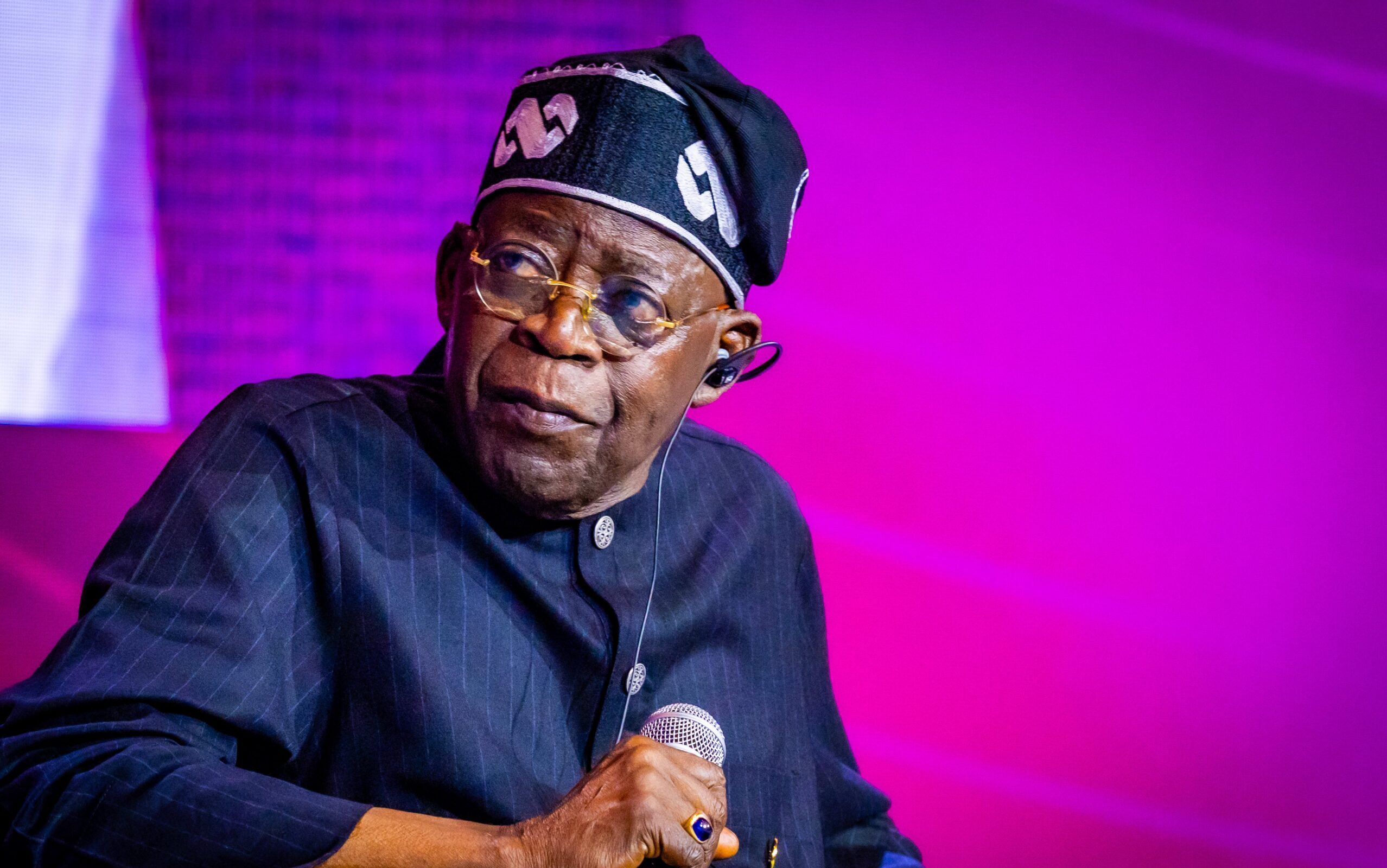
A United States federal court has dismissed an application by Aaron Greenspan, an American transparency campaigner, seeking permission to question Bola Tinubu and a strategic communications consultancy, DCI Group. The request stemmed from claims of cyber interference targeting the activist's web portal amid an active legal battle for government documents concerning the Nigerian leader.
The United States District Court for the District of Columbia issued a judgment on Friday establishing that the sought-after disclosures lacked sufficient relevance to the core Freedom of Information Act (FOIA) litigation involving federal law enforcement agencies, including the Federal Bureau of Investigation (FBI) and the Drug Enforcement Administration (DEA).
Alongside the denial of the interrogation request, the judiciary equally dismissed Mr Greenspan's motion for summary judgment, a separate application by individual Karl Von Batten to submit an amicus curiae brief, and a plea for judicial notice.
Legal representatives for the Nigerian leader, Christopher Carmichael and Oluwole Afolabi, welcomed the verdict, noting that it successfully narrowed the judicial focus strictly to the legal questions properly before the bench.
"The Court’s decision makes clear that this Freedom of Information Act proceeding cannot be used to pursue discovery unrelated to the legal questions before it," Mr Carmichael stated.
The Nigerian presidency released an official response on Saturday acknowledging the judicial outcome and corroborating the remarks made by the defense counsels.
What prompted the request to question the president?
Back in September, Mr Greenspan petitioned the court for authorization to present four specific interrogatories to Mr Tinubu regarding purported denial- of-service disruptions directed at PlainSite, his online legal database.
Within his legal submissions, the activist contended that the Nigerian administration had failed to explicitly refute allegations that official entities or associated corporate proxies, such as DCI Group AZ, LLC, orchestrated the digital intrusions.
Despite these assertions, the court filings failed to furnish concrete proof linking the Nigerian head of state or the consulting firm directly to the disruption of the platform.
In their defense, counsel representing Mr Tinubu stressed that the claims lacked any independent verification.
What is the background of the FOIA lawsuit?
The broader legal tussle originated between 2022 and 2023, when Mr Greenspan alongside Nigerian journalist David Hundeyin filed multiple transparency requests targeting several American security and financial institutions.
The inquiries sought administrative files tied to a historical multi-agency investigation involving the FBI, DEA, Internal Revenue Service, and federal prosecutors in Illinois and Indiana. According to the plaintiffs, the documentation pertained to legal proceedings connected to narcotics networks operating in Chicago during the early 1990s.
Faced with initial resistance through standard Glomar responses—where agencies decline to confirm or deny the existence of sensitive files—and subsequent unsuccessful administrative appeals, the lawsuit was formally lodged on 12 June 2023 against major US departments, with the Central Intelligence Agency later joined as a defendant. Mr Tinubu subsequently secured permission to join the proceedings as an intervenor.
What is the status of the contested government files?
The latest development coincides with parallel deliberations over historical records from a 1993 investigation. Following an explicit judicial directive, the FBI transmitted documentation to Judge Beryl Howell on 28 August, though the materials remain classified under seal pending judicial review.
Legal submissions confirmed that the bureau delivered 399 pages of files for private inspection, with several sections heavily redacted in line with statutory exemptions protecting personal privacy, grand jury proceedings, and law enforcement techniques. The applicant continues to contest these redactions, while the Nigerian leader maintains that public disclosure would infringe upon his privacy rights regarding historical financial forfeiture proceedings.