
The Arewa Consultative Forum (ACF), alongside the Northern Elders Forum (NEF), the Sir Ahmadu Bello Memorial Foundation, Arewa House, and various other Northern organizations, have expressed deep concern regarding what they perceive as a noticeable decline in the quality of leadership and governance in Northern Nigeria, a situation they attribute to the aftermath of the assassination of Sir Ahmadu Bello, Sardauna of Sokoto, 60 years ago.
On Thursday, these groups convened a press conference at the ACF headquarters in Kaduna, where they laid out their plans to organize a significant regional conference aimed at addressing the political, social, and economic issues facing the North.
The upcoming conference is being spearheaded by a coalition that includes the Arewa Consultative Forum, the Northern Elders Forum, the Sir Ahmadu Bello Memorial Foundation, Arewa House, the Centre for Democratic Development Research and Training (CEDDART), the A.R.D.P., the Arewa Defence League, and the Miyetti Allah Cattle Breeders Association of Nigeria (MACBAN), among others.
During the briefing, Bashir M. Dalhatu, Chairman of the ACF Board, articulated the organizations' sentiments by stating, 'Today marks exactly 60 years since Sir Ahmadu Bello, Sardaunan Sokoto, and several of his colleagues were tragically killed by rogue members of the military,' a pivotal moment he noted that led to a series of crises, including a protracted Civil War and the tragic loss of countless lives.
While January 15 is acknowledged nationally as Armed Forces Remembrance Day, the participating groups also highlighted that it serves as a significant moment for the North, prompting a reflection on their historical trajectory. 'It is important to remember key events from our past, especially those moments that signify important turning points in our lives as both Northerners and Nigerians,' Dalhatu remarked.
The Northern leaders pointed to the Sardauna as exemplifying visionary and accountable leadership, contrasting his legacy with current circumstances. They noted, 'Though they were flawed as leaders, their devotion to the populace, adeptness in governance, and transparent integrity set standards that remain unparalleled for subsequent leaders.'
The establishment of the Ahmadu Bello University (ABU) in Zaria, alongside substantial investments in education, healthcare, and infrastructure, were cited as lasting contributions of the Sardauna's tenure.
Moreover, they pointed out that he 'initiated with a mere few government schools in Nigeria's most populated region and left behind a legacy of hundreds of educational institutions that ensured equal access for both affluent and underprivileged children.'
Nonetheless, the coalition lamented that such triumphs now seem remote to many residents of the North, particularly the younger demographic. 'Today, over 70 percent of Northerners are under the age of 60,' Dalhatu observed, adding that the legacy of the Sardauna and his peers now feels like distant tales to many Northerners, simply because they look back in vain for authentic successors.
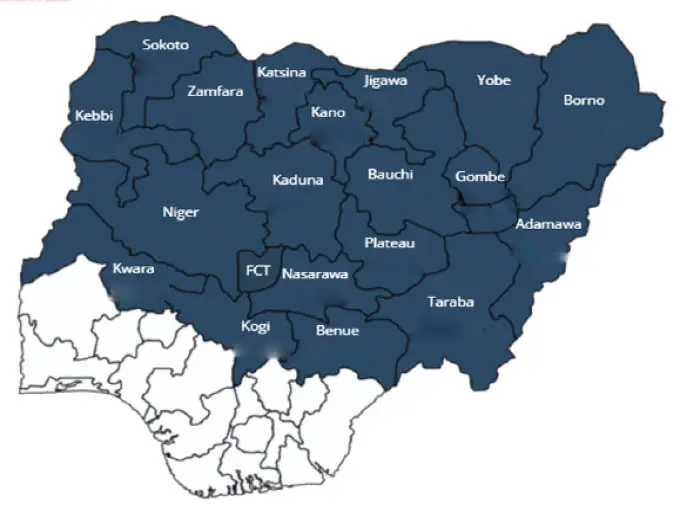
The statement portrayed a grim outline of contemporary Northern Nigeria, highlighting challenges such as the division of the once united Northern Region into 19 states, escalating governance costs, insecurity, and deteriorating communal ties.
'We are grappling with an intolerable governance cost, increasingly troubling and complex inter-communal relationships, violence resulting in daily fatalities, and conflicts that exemplify inadequate leadership and public administration,' Dalhatu conveyed.
The groups also decried the escalating poverty and disenfranchisement of youth, observing that 'millions are Almajirai with scant opportunities to develop into productive adults,' while contrasting past narratives of public accountability with present realities. 'It is difficult for our youth to believe that the Sardauna lived a life with only one personal residence,' he added.
In response to these pressing issues, the ACF, NEF, and their collaborators have initiated plans for a major conference titled 'Sixty Years Without the Sardauna,' scheduled for the first week of April.
The objective of the conference, they stated, is 'not simply to indulge in nostalgic reminiscence, but to contextualize the past in a way that genuinely influences the current and future trajectories of the Northern populace.'
They emphasized that the forum will gather elders, scholars, traditional leaders, clergy, businesspeople, women, and youth, with a structure designed to enable the North to engage in self-reflection, listen to critiques, explore limitations, and better understand its weaknesses and strengths.
Expected outcomes include actionable strategies to boost security, economic growth, and promote peaceful coexistence, along with the aim of initiating a productive turnaround in the North's fortunes.
The groups expressed optimism that the conference would also facilitate a reassessment of the North's position within Nigeria's democratic evolution and help restore values of service, discipline, and accountability that once epitomized its leadership.
Comments (0)
You must be logged in to comment.
Be the first to comment on this article!