
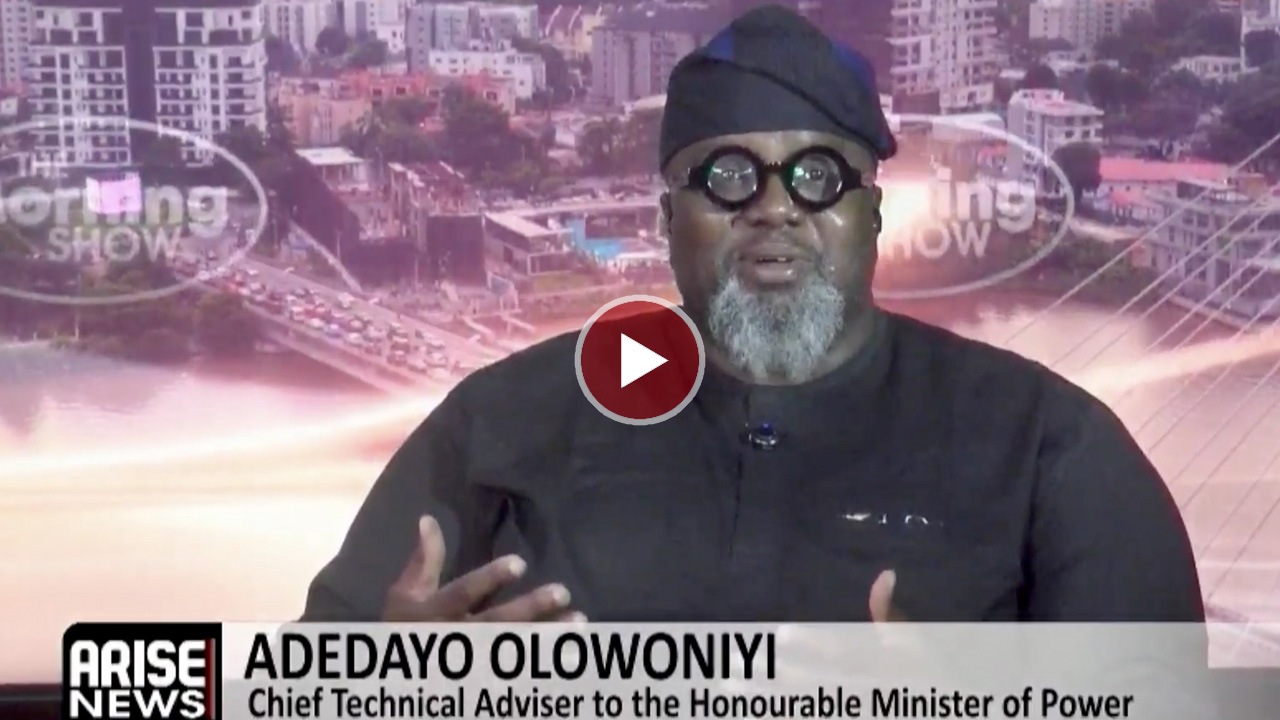
Adedayo Olowoniyi has expressed optimism that the restoration of gas pressure will enhance electricity generation and facilitate an improvement in supply across Nigeria in the near future.
During an interview on ARISE News, Olowoniyi stated that the recent nationwide power outages were primarily due to maintenance operations on a significant gas pipeline, highlighting that restoration efforts are currently in progress.
He mentioned, "Within the next two weeks, full gas pressure will return on the gas pipelines, enabling power plants to receive adequate gas to resume production levels akin to those experienced in the last two to three weeks."
Olowoniyi noted that the power disruptions had led to the Minister of Power, Adebayo Adelabu, publicly apologizing to citizens. He interpreted this action as a demonstration of leadership rather than an admission of personal error.
He elaborated, "There have been particular challenges over the past two to three weeks; it was crucial to adopt a leadership stance and acknowledge that the inadequate supply is significantly affecting the daily lives of Nigerians."
He emphasized that gas continues to play a pivotal role in electricity generation within the country, making the maintenance of pipelines essential for stable supply.
"Gas accounts for 75% of electricity generation in Nigeria, and one of the critical pipelines is currently under maintenance. This process is gradually being completed," he remarked.
Olowoniyi added that early indications show an upturn as pressure begins to return to the system, forecasting continued improvements.
In response to questions regarding frequent grid failures, he contended that such occurrences have diminished under the current administration's tenure, referencing advancements in both generation and distribution metrics.
He stated, "A review of data indicates a decline in the frequency of grid collapses annually since the Minister assumed office."
He also asserted that recent outages should be seen within the broader context of the considerable progress made in the sector over the past two years.
Olowoniyi shared, "In the past two years, we have achieved the highest peak in generation, as well as the greatest average generation and distribution consumption of energy."
Addressing more extensive structural issues facing the electricity sector, he underscored that resolving Nigeria's enduring power crisis will necessitate sustained reforms rather than short-term solutions.
He explained, "There is no one-size-fits-all answer to the energy challenges in Nigeria. It will be an ongoing process. These issues have developed over time and will require time to resolve."
He further highlighted the impact of historical debts and tariff discrepancies on the sustainability of the sector, noting that consumers currently cover just a fraction of the actual electricity costs.
He stated, "Consumers only pay 40% of the energy cost they utilize."
Olowoniyi announced that the Federal Government has set in motion initiatives to tackle outstanding debts owed to generation companies, following the approval of a ₦4 trillion payment strategy.
He revealed, "The President has sanctioned the ₦4 trillion payment, with an initial bond issuance of approximately ₦500 billion expected to be disbursed next week."
Discussing the dynamics of gas supply, he clarified that Nigeria exports gas instead of importing it, although insufficient commercial incentives and infrastructural challenges limit its domestic availability for electrical generation.
He stated, "We are not importing gas; in fact, we are exporting gas."
He added that, without a commercially viable framework, gas producers might hesitate to invest in the supply enhancements needed for the electricity sector.
Despite the current challenges, Olowoniyi conveyed hope that improving gas pressure and ongoing policy initiatives will stabilize electricity supply in the forthcoming weeks while laying the groundwork for long-term reforms.
Comments (0)
You must be logged in to comment.
Be the first to comment on this article!